

Your Guide to Outdoor Vending Machine Success
Vending has come a long way from the days of jammed coin slots and limited snack options. Today, technology is transforming the industry, making it smarter and more profitable—especially for outdoor locations. Modern smart systems offer a frictionless "Tap, Grab & Go" experience that customers love, while remote management apps give you complete control over your business from your phone. An AI-powered outdoor vending machine isn't just more convenient; it's a powerful business tool. We'll explore how this technology solves the unique challenges of outdoor vending, from managing seasonal inventory to enhancing security, helping you work smarter and grow your profits.
Key Takeaways
- Invest in an Outdoor-Specific Machine: A standard vending machine isn't built to handle the outdoors. Prioritize durable, weatherproof construction, advanced security features, and reliable temperature control to protect your products and your investment.
- Success Hinges on Smart Planning: A profitable machine requires more than just a good location. You need to secure the right business licenses and permits, accurately calculate your startup and operational costs, and get the proper insurance coverage.
- Modern Technology Simplifies Everything: Use features like cashless payments and remote management to create a better business. They provide a seamless "Tap, Grab & Go" experience for customers and give you the real-time data needed to manage inventory efficiently from anywhere.
Outdoor vs. Indoor Vending: What's the Difference?
When you think of a vending machine, you might picture one tucked away in an office breakroom or a hotel lobby. But the world of vending extends far beyond four walls. Outdoor vending machines are a fantastic way to reach customers in parks, at transit stops, and outside storefronts. While the goal is the same—offering convenient snacks, drinks, and products—the machines themselves are fundamentally different. An indoor machine simply wouldn't last long out in the wild.
Choosing between an indoor and outdoor model isn't just about where you plan to put it; it's about understanding the unique challenges and requirements of each environment. Outdoor machines are engineered from the ground up to handle everything from bad weather to security threats. They require different planning for power, connectivity, and placement. Think of them as the rugged, all-terrain vehicles of the vending world. Let's look at what truly sets them apart so you can make the right choice for your business.
Built to Withstand the Elements
An outdoor vending machine is built to be tough. Unlike its indoor counterpart, it has to stand up to rain, snow, intense sun, and fluctuating temperatures without breaking a sweat. This means its construction is far more robust. You’ll find them made with heavy-gauge steel and equipped with features like rain guards to keep water out and sealed components to protect the internal electronics. The front window is often made of a durable, impact-resistant material to prevent breakage. This weatherproof construction is non-negotiable; it’s what protects your inventory and your investment from the elements year-round.
Advanced Security and Anti-Vandalism
Security is a top priority when your machine is accessible to the public 24/7. Outdoor vending machines are designed with this in mind, incorporating features that make them incredibly difficult to break into. This includes high-security locks, anti-pry covers on the doors, and reinforced cabinets that can resist force. Some models even have shatterproof glass and protective coverings over the payment systems. These advanced security features are essential for deterring theft and vandalism, giving you peace of mind that your machine and its contents are safe, no matter where it’s located.
Smart Technology for Outdoor Use
Modern outdoor machines are more than just durable boxes; they’re also incredibly smart. The best ones leverage technology to create a better experience for both you and your customers. For example, AI-powered machines are changing the game with a simple "Tap, Grab & Go" system. Customers can tap their card, open the door, take multiple items, and walk away, with the machine automatically charging them for what they took. This frictionless process is perfect for busy outdoor locations where people want to get what they need and move on quickly. For operators, this tech also provides real-time sales data and inventory tracking.
Unique Power and Connectivity Needs
Placing a vending machine outdoors comes with a few logistical hurdles, primarily power and connectivity. You can't just put a machine anywhere; it needs to be near a reliable and weatherproof electrical outlet. For smart machines that process credit card payments and send you data, a stable internet connection is also a must, which can be provided through Wi-Fi or a cellular connection. Beyond the technical needs, the location itself is critical. To be profitable, an outdoor machine needs to be strategically located in an area with consistent foot traffic. This requires more careful planning than simply finding an empty corner inside a building.
Choosing Your Outdoor Vending Machine: Must-Have Features
Placing a vending machine outdoors opens up a world of high-traffic locations, but it also means your machine needs to be tough, smart, and reliable. Not all vending machines are built to handle the unique challenges of an outdoor setting, from unpredictable weather to different customer expectations. Choosing the right machine isn't just about finding one that's weatherproof; it's about investing in features that protect your products, streamline your operations, and make it incredibly easy for customers to buy from you.
Think of it this way: your outdoor machine is a standalone storefront, operating 24/7 without a cashier. To make it successful, it needs the right tools built-in. This means offering the payment methods people actually use, guaranteeing that every drink is cold and every snack is fresh, and giving you the ability to manage it all without having to be there in person. A great customer experience is the final piece of the puzzle. When a purchase is quick and effortless, you turn a one-time buyer into a regular. Let’s walk through the four non-negotiable features your outdoor vending machine needs to have.
Seamless Payment Options
In a world where most people pay with a tap of their card or phone, a cash-only machine feels like a relic. To capture every possible sale, your outdoor vending machine must support a variety of cashless payment options. This includes traditional credit and debit cards as well as mobile wallets like Apple Pay and Google Pay. Offering these choices makes the buying process faster and more convenient for your customers. It caters directly to the growing preference for digital transactions and ensures you don’t lose a sale simply because someone isn’t carrying cash. A smooth, modern payment system is one of the easiest ways to improve the customer experience and your bottom line.
Reliable Temperature Control
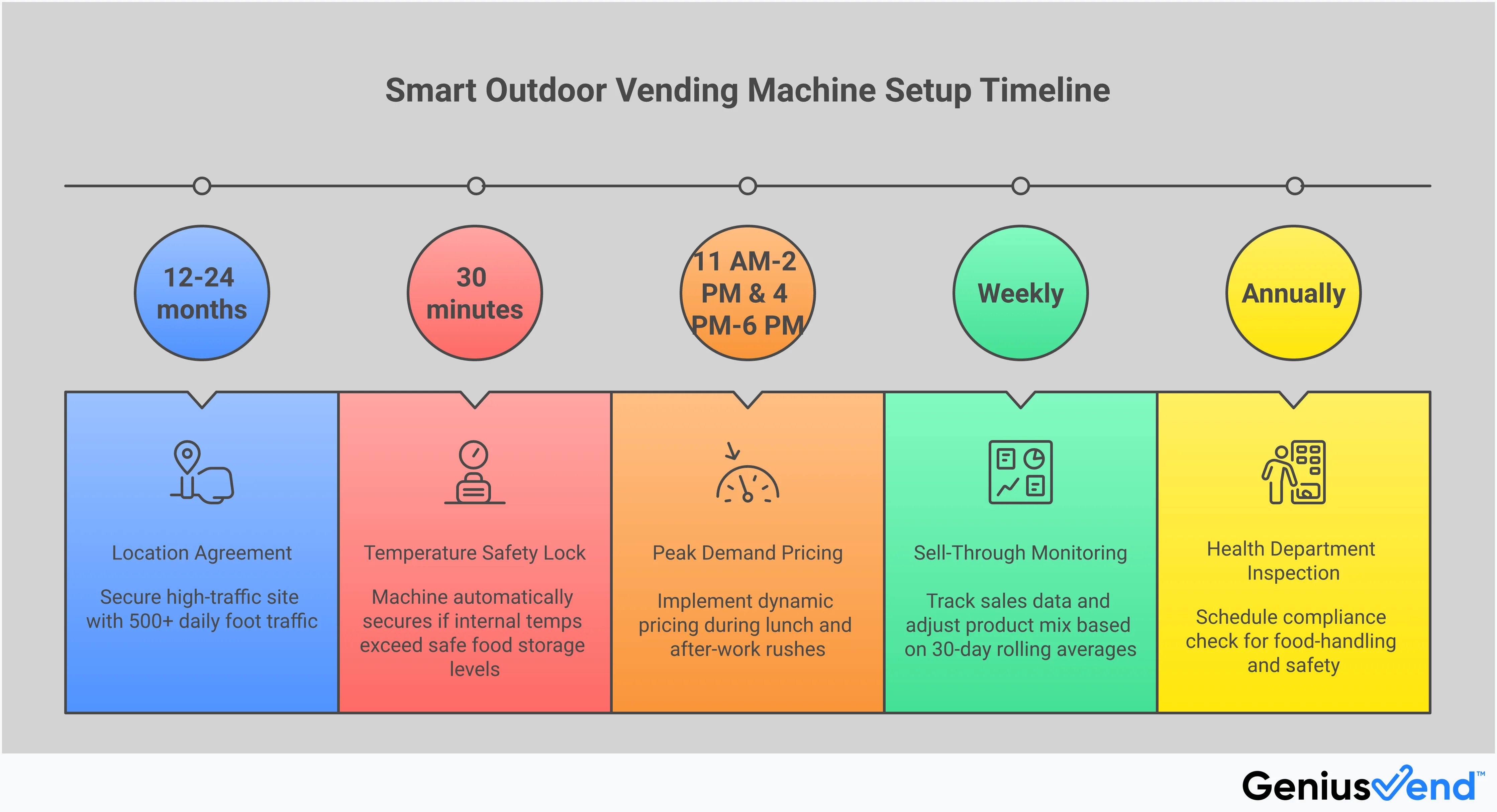
An outdoor machine is exposed to everything from summer heatwaves to winter chills, making a robust temperature control system absolutely essential. This feature does more than just keep drinks cold; it protects the quality and safety of your entire inventory. For machines stocking fresh food, look for a health safety feature that automatically locks the machine if the internal temperature rises to an unsafe level for too long. This is a critical function that safeguards your customers’ health, protects your business from liability, and ensures every item you sell meets food safety standards. It’s a non-negotiable for maintaining product integrity and customer trust.
Remote Management Technology
Gone are the days of driving to every machine just to check inventory levels. Modern vending machines equipped with remote management technology allow you to run your business from your phone or computer. This incredible tool lets you track sales data in real-time, monitor inventory, and identify any potential issues without ever leaving your office. Utilizing a smart operator’s app to manage your route transforms your operational efficiency. You can plan restocking trips perfectly, reduce fuel costs, and ensure your machines are always stocked with the best-selling products. This technology helps you work smarter, not harder, and is key to scaling your vending business.
A Smooth Customer Experience
The best technology works so well that the customer barely notices it. Your goal should be to provide a simple, intuitive "Tap, Grab & Go" experience. When a customer can easily select their items and pay in seconds, they leave happy and are more likely to return. Outdated machines with clunky interfaces or bill acceptors that jam can cause frustration and drive customers away. An AI-powered smart vending machine with a clear display and a frictionless checkout process removes these barriers. Investing in a machine that prioritizes a seamless customer journey is a direct investment in customer satisfaction and repeat business.
Breaking Down the Costs and Your Potential Return
Let's talk numbers. Starting any new business venture means getting real about the costs and figuring out when you can expect to see a return. An outdoor vending machine is no different. While the idea of passive income is exciting, it’s built on a solid financial foundation. Understanding the full picture—from the initial purchase to daily operations—will help you plan effectively and set your business up for success. This breakdown will walk you through the key financial pieces you need to consider, so you can make informed decisions and see your investment pay off. With smart planning, you can create a clear path to profitability and turn your vending machine into a thriving asset.
The Upfront Investment
Your biggest initial expense will be the machine itself. Think of this as the foundation of your business—you want something sturdy, reliable, and built for the job. New vending machines can vary quite a bit in price, but you can generally expect to spend between $3,000 and $8,000. Because outdoor machines need extra durability to handle weather and security risks, they often land at the higher end of that range. A quality upfront investment in a machine designed for the elements will save you headaches and repair costs down the line, making it a smarter choice for long-term success.
Setup and Installation Costs
Once you have your machine, you need to get it in the right spot and ready to go. This involves more than just delivery. The success of your vending business heavily depends on its location, so it’s critical to place it in a high-traffic area where people will actually see and use it. Simply putting a machine outside your house, for example, probably won't attract enough foot traffic to be profitable. You’ll also need to account for potential costs like professional installation, any necessary electrical work to ensure a safe power supply, and perhaps even preparing the ground with a concrete slab for stability.
Ongoing Operational Expenses
Your machine is placed and powered up—now what? To keep the sales coming, you’ll have ongoing expenses to manage. The most obvious is the cost of goods, or the inventory you stock in your machine. You’ll also need to factor in regular maintenance and restocking trips, which are typically needed every few weeks to keep things running smoothly. This ongoing care is essential for customer satisfaction. Other costs can include credit card transaction fees, software subscriptions for remote management, and potentially a monthly fee or commission to the property owner where your machine is located.
Calculating Your Profit and Payback Period
This is where the planning pays off. So, how much can you actually make? A single, well-placed machine can bring in over $1,600 in profit each month after you cover your product costs and any location fees. If your goal is to build a full-time income from vending, the numbers start to look even more promising. To reach a target of $100,000 per year, you would likely need a route of six to eight machines. With each machine making around $1,600 monthly, you could generate a full-time income of nearly $115,000 annually. Your payback period—the time it takes to earn back your initial investment—will depend on your sales volume, profit margins, and total startup costs.
Getting the Right Permits and Licenses
Before you place that shiny new machine and start stocking it with goodies, we need to talk about the legal stuff. I know, paperwork isn't the most thrilling part of being an entrepreneur, but getting your permits and licenses in order from day one is non-negotiable. It protects your business, keeps you on the right side of the law, and sets a solid foundation for your vending empire. Let's walk through exactly what you'll need.
Essential Business Licenses
Think of a business license as your official permission slip to operate. If your machine accepts money for a product—whether it's a cold drink or a fresh salad—you'll need one. The specific requirements can vary quite a bit depending on your city and state, so your first move should be to contact your local city hall or county clerk's office. They'll give you the rundown on what you need to apply. In some cases, you may also need an inspection from the local health department to get the green light. The U.S. Small Business Administration offers a great starting point for understanding what business licenses and permits you might need.
Food Safety and Health Regulations
Since most vending machines sell food or drinks, you'll likely need a specific food and beverage license from your state's health department. This ensures you're meeting safety standards for storing and selling consumable products. Beyond that, you'll need to get an Employer Identification Number (EIN) from the IRS. Don't let the name fool you; you need one even if you don't have employees. An EIN is essentially a Social Security number for your company, and it's required for filing taxes and opening a business bank account. Getting it is free and straightforward to do online.
Understanding Zoning and Location Rules
This is a big one, especially for outdoor machines. You can't just place a vending machine anywhere you'd like. Cities and counties have zoning laws that dictate what kind of commercial activity is allowed in certain areas, particularly residential ones. Before you even sign a location agreement, call your local planning or zoning office. Ask them directly if vending machines are permitted at your desired address. Taking this simple step upfront can save you from hefty fines and the headache of having to relocate your machine later. It’s all about doing your homework to ensure your chosen spot is a viable, long-term home for your machine.
Insurance and Liability Coverage
An outdoor vending machine is a valuable asset, and it's exposed to everything from bad weather to potential vandalism. That's why business insurance isn't just a good idea—it's a must-have. General liability insurance will protect you if someone gets hurt using your machine, while property insurance covers the machine itself against theft or damage. Many location owners will actually require you to show proof of insurance before they'll let you place a machine on their property. Having the right small business insurance gives you peace of mind and protects your investment from the unexpected.
Location, Location, Location: Where to Place Your Machine
You can have the smartest, most well-stocked vending machine in the world, but if no one sees it, it won’t make a dime. The right placement is everything. It’s the difference between a machine that quietly blends in and one that becomes a go-to spot for hungry customers. Finding that perfect location involves a bit of research and preparation, but getting it right will pay off with every single sale. Let’s walk through how to find, prep, and optimize the ideal home for your outdoor vending machine.
How to Find High-Traffic Areas
Your first mission is to become a location scout. You’re looking for places with a steady stream of people—what we call high-traffic areas. Think about where people gather, work, or wait. Busy spots like office parks, college campuses, apartment complexes, and hospitals are classic choices for a reason. Even places with long wait times, like car dealerships or repair shops, can be goldmines. Start by observing your local area. Where do you see crowds? A bustling main street or a popular park could be the perfect place to find your future customers.
Prepping Your Site for Installation
Once you’ve secured a spot, you need to make sure it’s ready for its new arrival. Your machine needs a stable, level surface to sit on and, most importantly, a safe and reliable electrical outlet. It’s crucial to plug the machine directly into a dedicated outlet; never use an extension cord, as it can be a safety hazard and cause the machine to run poorly. Also, take a look around the immediate area. Is it clean and well-maintained? A tidy, welcoming space makes customers feel more comfortable making a purchase.
Making Your Machine Easy to See and Use
Think of your outdoor vending machine as a 24/7 brand ambassador. To do its job, it needs to be seen. Place it where it’s highly visible and easy to access, not tucked away in a dark corner. An eye-catching design or a custom wrap can do wonders for grabbing attention and boosting brand visibility. Make sure the area is well-lit, especially if you expect sales after dark. The goal is to create an experience that feels safe, simple, and inviting, encouraging passersby to stop and see what you have to offer.
Matching Your Location to Your Business Model
The best location isn’t just about foot traffic—it’s about the right foot traffic. The products you sell should align with the people who frequent the area. For example, a machine outside a gym could be stocked with protein drinks and healthy snacks, while one near a construction site might do better with hearty sandwiches and energy drinks. Understanding the specific needs of your location’s demographic is key. This strategic approach to matching products to people ensures your machine offers exactly what customers are looking for, right when they want it.
Common Outdoor Vending Challenges and How to Solve Them
Placing a vending machine outdoors opens up a world of high-traffic locations, but it also comes with its own set of hurdles. From unpredictable weather to security concerns, taking your business into the great outdoors requires a solid plan. The good news is that with the right machine and a smart strategy, these challenges are completely manageable. Let’s walk through the most common issues and their practical solutions.
Handling Weather and Maintenance
Your biggest opponent outdoors is Mother Nature. Rain, snow, intense sun, and extreme temperatures can all take a toll on a vending machine that isn’t prepared. Most standard machines need a roof and a stable power source to stay safe from the elements. If you place a machine in an exposed area, you’ll need to provide some kind of shelter, like an awning or a custom-built enclosure. Regular maintenance becomes even more critical; you’ll want to frequently check for weather-related wear and tear, ensure seals are intact, and keep the machine clean to present a welcoming experience for customers.
Preventing Theft and Vandalism
An outdoor machine can be a more tempting target for theft and vandalism. Your first line of defense is choosing a durable machine with robust security features. Placing your machine in a well-lit, high-visibility area can deter potential troublemakers. For added peace of mind, installing security cameras nearby is a smart move. Modern machines that rely on cashless payments also reduce risk, as there’s little to no cash inside to attract thieves. The goal is to make your machine a hard target, encouraging anyone with bad intentions to simply move along.
Managing Inventory Through the Seasons
Customer cravings change with the weather. A hot summer day will see sales for cold drinks soar, while a chilly autumn evening might increase demand for different snacks. Managing your inventory effectively means paying attention to these seasonal shifts. This is where remote management technology is a game-changer. You can track sales data in real time from your phone, allowing you to restock popular items and swap out products that aren’t selling. This proactive approach ensures your machine is always filled with what customers want, no matter the season.
Busting Common Outdoor Vending Myths
Let’s clear up a couple of common misconceptions about outdoor vending. First is the idea that you can find a "budget" machine for an outdoor spot. The reality is that machines built to withstand the elements are a specialized investment. They are engineered with durable materials and weatherproofing that standard indoor machines lack. Second is the myth that you can just place a machine anywhere outside. Success still hinges on location. You need to find those high-traffic spots like busy parks, community pools, apartment complexes, or transit stops to build a profitable business.
Related Articles
- How to Find the Best Vending Machines for Sale Near Me
- How to Buy a Vending Machine Near Me: A 2025 Guide
- Vending Machines for Sale: A Buyer's Guide
- Where Can I Buy a Vending Machine? A 2025 Guide
- How to Buy a Vending Machine: A Starter Guide
Frequently Asked Questions
Can I just use a regular indoor vending machine if I put it under an awning? It’s a tempting thought, but I strongly advise against it. An awning can protect a machine from direct rain, but it won't do anything about humidity, condensation, or extreme temperature swings, all of which can damage internal electronics and spoil your products. Outdoor machines are built differently from the inside out, with sealed components and robust temperature control systems designed to handle those exact challenges. They also have the heavy-duty security features you need for a public, 24/7 location.
What's the first thing I should do: find a location or buy a machine? Definitely find your location first. Your location determines everything else. It will tell you what zoning laws and permits you need to follow, what kind of power source is available, and most importantly, who your customers are. Once you understand the environment and the audience, you can choose a machine and stock it with products that are perfectly suited for that specific spot. Securing a great location before you invest in a machine is the smartest way to set yourself up for success.
How does AI technology specifically help with outdoor vending challenges? AI-powered systems are a perfect match for the fast-paced nature of outdoor locations. The "Tap, Grab & Go" experience is incredibly quick, which is ideal for customers who are in a hurry at a transit stop or park. This technology also makes your machine more secure, as it relies on cashless transactions, reducing the incentive for theft. On the management side, the real-time sales data allows you to adjust your inventory for seasonal changes without having to guess what’s selling, saving you from wasted trips and lost sales.
Are outdoor machines really that much more expensive than indoor ones? Yes, you can expect the upfront cost to be higher, and for good reason. Think of it as paying for armor. That higher price tag accounts for the heavy-gauge steel, weatherproof seals, shatter-resistant glass, and advanced security locks that an indoor machine simply doesn't need. While it's a bigger initial investment, it protects you from the much higher costs of weather damage, vandalism, and theft down the road.
I'm feeling a little overwhelmed by all the permits. Where is the absolute best place to start? I completely get it. The best way to cut through the noise is to make one simple phone call to your local city hall or county clerk's office. Just tell them you plan to operate a vending machine at a specific address and ask them what you need. They will provide you with a clear checklist of the business licenses, permits, and potential inspections required for your specific area. This single step will give you a definitive roadmap and make the entire process feel much more manageable.
