

Let’s be honest: the vending industry has a reputation for being a bit old-school. But the reality is, a technological revolution has completely transformed the business. The modern food vending machine is a sophisticated, AI-powered retail point that offers everything from fresh salads to gourmet coffee, all with a simple tap of a credit card. For entrepreneurs, this means a more efficient, profitable, and scalable business model. This article will serve as your complete guide to this new world of vending. We’ll cover the essential features you need, the costs involved, and the steps to finding a location that will set you up for success.
Key Takeaways
- Opt for Smart Machines to Work Smarter, Not Harder: Modern, AI-powered machines with features like remote inventory tracking and cashless payments save you time and guesswork. This technology directly translates to more efficient restocking, happier customers, and higher profits.
- Secure Your Location Before Buying a Machine: Your machine's profitability is determined by its placement. Focus on finding a high-traffic spot and understanding its audience first, then choose a machine and products that fit that specific environment.
- Plan Your Operations from Day One: A successful vending business runs on more than just snacks. Create a clear budget, secure the necessary business licenses and health permits, and establish a routine for maintenance to ensure your operation is professional and profitable from the start.
What Exactly Is a Food Vending Machine?
At its core, a food vending machine is a self-service kiosk that dispenses food and drinks to customers. Think of it as a mini-automated storefront. A customer pays with cash, a card, or their phone, makes a selection, and the machine provides the item instantly. You’ve likely seen them everywhere, from office break rooms and school hallways to hospitals and airports. They’re designed for pure convenience, giving people quick access to snacks, drinks, and even full meals without needing a cashier.
The basic concept is simple, but the technology and the types of products offered have changed dramatically. While the classic coil machine filled with chips and candy bars is still around, the world of food vending has expanded to include options that are much more sophisticated and cater to a wider range of tastes and dietary needs. Understanding these differences is the first step to figuring out what kind of vending business you want to build.
Exploring the Different Types
When you picture a vending machine, you might think of chips and soda. But today’s machines offer so much more. Consumers are looking for convenient, affordable, and nutritious options they can grab on the go, 24/7. This has led to a rise in machines stocked with fresh salads, sandwiches, yogurt parfaits, and even complete, ready-to-heat meals. These modern food vending machines cater to health-conscious customers in places like gyms, corporate offices, and universities. As an operator, this opens up a huge opportunity to meet a growing demand and find new ways to grow your snack vending machine business beyond traditional junk food.
Smart vs. Traditional Machines: What's the Difference?
The biggest shift in the industry is the move from traditional to smart vending machines. A traditional machine is a standalone unit. It’s offline, often requires cash, and you have to physically visit it to know what’s sold out. A smart vending machine, on the other hand, is connected to the cloud. This connection is a game-changer. It allows you to monitor your inventory remotely from your phone, so you always know exactly what you need to restock before you even leave your house.
This technology explains how smart vending differs from the old way of doing things. Smart machines accept cashless payments, gather sales data to help you make better business decisions, and offer a much smoother customer experience. For entrepreneurs, this means less guesswork, more efficiency, and ultimately, a more profitable business.
Which Food Vending Machine Brands Are Best?
When you start looking for a food vending machine, you’ll find a lot of options. The brand you choose is a big deal—it affects everything from your daily operations to your long-term profits. The market is generally split between legacy brands that make traditional coil machines and newer, tech-focused companies that are changing the game with smart technology. While established names have been around for decades, their machines often rely on older, mechanical systems that can feel dated. Think coils that jam, payment systems that only take cash, and no way to know what's selling without physically checking the machine. This old-school approach can create a frustrating experience for customers and a lot of extra work for you. Modern brands, however, are built for today’s consumer and operator. They leverage technology to make buying easier and running your business simpler. This choice isn't just about the machine itself; it's about the kind of business you want to build and the experience you want to provide.
Why Genius Vend's AI Machines Stand Out
Genius Vend is all about making the vending experience effortless for both you and your customers. Our AI-powered smart vending machines are designed around a simple "Tap, Grab & Go" model. Customers just tap their card or phone, open the door, take what they want, and walk away. The machine’s sensors automatically detect which items were taken and charge the customer accordingly. This eliminates the frustration of jammed products or fumbling for cash. For you as an operator, this seamless process can lead to more sales and happier, repeat customers. Plus, the smart technology simplifies your operations, letting you manage everything right from your phone.
A Look at Other Top Brands
While traditional vending machine brands are still out there, they operate very differently. These are typically the mechanical machines you might remember from school, where you insert cash, press a clunky button, and hope your snack doesn't get stuck. They’re standalone units that can’t process cashless payments or provide you with sales data. In contrast, smart vending machines are cloud-connected, interactive systems that offer a modern retail experience. While traditional machines might seem straightforward, they lack the efficiency, customer convenience, and valuable data insights that help a modern vending business thrive.
What Features Should You Look For?
When you’re ready to invest in a food vending machine, it’s easy to get overwhelmed by the options. But the truth is, not all machines are created equal. The features you choose will directly impact your daily operations, your profitability, and your customers’ experience. Think of your machine as your most important employee—you want it to be reliable, efficient, and easy to work with.
The goal is to find a machine that makes buying a snack completely effortless for your customers while making your life as an operator as simple as possible. Modern features aren't just flashy add-ons; they are powerful tools that can save you time, reduce waste, and help you sell more products. From how people pay to how you track inventory, every detail matters. Focusing on a few key capabilities will ensure you select a machine that’s built for growth and can adapt as your business and customer preferences change. Let's walk through the must-have features to look for.
Seamless Payment Options
Imagine a potential customer walks up to your machine, craves a snack, but realizes they don’t have any cash. If your machine only takes bills and coins, you’ve just lost a sale. That’s why offering a variety of payment methods is absolutely essential. Look for a machine that accepts credit and debit cards, contactless payments, and mobile wallets like Apple Pay and Google Pay. This flexibility meets customers where they are and removes any friction from the buying process. The best AI-powered smart coolers come with this technology built-in, so you can start accepting cashless payments from day one without any complicated setup.
Temperature Control for Freshness
If you plan to sell anything beyond shelf-stable chips and candy, reliable temperature control is non-negotiable. This feature is crucial for maintaining the quality and safety of items like sandwiches, salads, yogurt, and cold drinks. A machine with precise temperature management ensures every product is kept perfectly chilled, preserving its freshness and taste. This not only prevents spoilage and protects your inventory but also builds trust with your customers. When people know they can count on your machine for a fresh, high-quality meal or a perfectly cold beverage, they’re far more likely to become repeat buyers.
Remote Management from Your Phone
One of the biggest advantages of modern vending is the ability to manage your business from anywhere. Gone are the days of driving to a location just to find out what needs restocking. With smart vending machines, you can use an app on your phone to monitor everything remotely. This technology gives you access to real-time sales data, so you know which items are best-sellers and which aren’t moving. You can also see current inventory levels for every slot, allowing you to plan your restocking routes with incredible efficiency. This saves you time, gas, and the headache of showing up with the wrong products.
Product Capacity and Flexibility
The physical design of your machine plays a huge role in its profit potential. First, consider its overall capacity. A machine that’s too small for its location will constantly sell out of popular items, leading to lost revenue. At the same time, you need flexibility. Look for a machine with adjustable shelving and versatile configurations that can accommodate a wide range of product shapes and sizes. This allows you to offer everything from small energy shots to boxed lunches. As you learn more about your customers’ preferences, this flexibility will let you easily swap out items and optimize your product mix for maximum sales.
Breaking Down the Costs of a Vending Machine
Let's talk numbers. Starting any new business venture means understanding the financial commitment, and a vending machine business is no different. The great news is that it's one of the more accessible businesses to start, with a clear path to profitability. When you're planning your budget, you'll want to think about three main areas: the initial purchase of the machine, the regular costs to keep it running, and the potential profit you can make. Breaking these down will give you a realistic picture of what to expect and help you build a solid financial plan from day one.
Your Initial Investment
Your biggest upfront cost will be the machine itself. The price for a new food vending machine can range anywhere from $1,500 to over $10,000. This wide range depends on several factors, including the machine's size, features, and technology. A basic, traditional snack machine will be on the lower end, while a sophisticated, AI-powered smart cooler with remote management capabilities will be at the higher end. Think of this as the foundational upfront investment in your business. While it's the largest single purchase you'll make, choosing the right machine is crucial for long-term success and efficiency.
Ongoing Operating Expenses
Once your machine is in place, your recurring costs are refreshingly low. Your main operating expense will be the products you use to stock the machine. Beyond inventory, you can expect to spend around $100 per month on electricity. Maintenance costs are typically minimal, as modern machines are built to be reliable workhorses. Another cost to factor in is location fees, which is sometimes a small percentage of your sales that you pay to the property owner for placing your machine there. Smart machines can also help reduce operating costs by allowing you to monitor inventory remotely, saving you from unnecessary trips for restocking.
Calculating Your Profit Potential and ROI
This is the exciting part—seeing how your investment pays off. A well-placed vending machine can generate between $300 and $600 in sales each month. After you subtract the cost of goods and your operating expenses, you’re looking at a net profit of about $100 to $300 per machine, per month. The vending industry often sees profit margins between 20% and 30%, which is quite healthy. As you get more strategic with product selection and location, you can increase those numbers. Calculating your potential return on investment will help you see how quickly you can earn back your initial purchase price and start building a profitable business.
What Kinds of Food Can You Sell?
One of the most exciting parts of starting a vending business is deciding what to sell. Gone are the days when vending machines were limited to just chips and candy bars. With modern, temperature-controlled machines, your options are incredibly diverse, opening up a whole new world of potential revenue. The key to success is to match your product selection to your location and the people you’ll be serving. A machine in a gym will have a very different inventory than one in a school or an office breakroom. Before you stock a single item, take some time to understand your audience. What are their daily routines? What do they crave?
The best approach is to offer a balanced mix of indulgent treats, healthy alternatives, and refreshing drinks. Think about what your potential customers might need at different times of the day—a morning coffee, a healthy lunch, or an afternoon pick-me-up. A little bit of planning and market research here goes a long way in keeping your customers happy and your machine profitable. Let’s look at some of the most popular and profitable categories to get you started.
Fresh Meals and Sandwiches
People are looking for more than just a quick snack; they want convenient, affordable, and nutritious meal options. This is where modern food vending machines truly shine. You can meet this growing demand by stocking items like fresh salads, sandwiches, wraps, and yogurt parfaits. These options are perfect for high-traffic locations like hospitals, corporate offices, and university campuses, where people need a quick and healthy meal on the go. Offering fresh food can set your business apart and attract customers who might otherwise skip a vending machine purchase. It’s a fantastic way to cater to health-conscious consumers and build a loyal customer base.
Classic Snacks and Packaged Foods
You can’t go wrong with the classics. Chips, cookies, candy, and pastries are vending machine staples for a reason—people love them. Make sure you stock a variety of popular, recognizable brands that customers already know and trust. At the same time, it’s smart to include some healthier choices to appeal to a broader audience. Think about adding items like trail mix, granola bars, baked chips, or fruit snacks. This balanced approach ensures there’s something for everyone. With a smart machine, you can easily track sales data to see which items are hits and which are misses, allowing you to fine-tune your inventory for maximum profit.
Popular Beverages and Drinks
Drinks are a cornerstone of any successful vending operation and often have great profit margins. Your machine should offer a wide selection of beverages to quench any thirst. This includes classic sodas, bottled water, sports drinks, energy drinks, and iced teas or coffees. Just like with snacks, your drink selection should be tailored to the location. A fitness center will likely see high sales of water and sports drinks, while an office setting might have more demand for sodas and iced coffee. A Genius Vend machine makes the entire process seamless for the customer with a simple "Tap, Grab & Go" experience, which is perfect for someone in a hurry to grab a quick drink.
How to Keep Your Products Fresh and Safe
When you’re selling food, especially fresh items, safety and quality are non-negotiable. This is where technology becomes your best friend. Smart vending machines allow you to monitor everything remotely from your phone. You can check temperature levels to ensure everything is stored safely, track inventory to know when items are nearing their expiration date, and manage your stock efficiently. This remote oversight is crucial for preventing spoilage and ensuring you always comply with food safety standards. It not only protects your customers but also protects your bottom line by minimizing waste and keeping your products at their best.
What Permits and Licenses Will You Need?
Before you can start stocking your machine, you’ll need to sort out the necessary paperwork. This process can feel overwhelming, but it’s a crucial step to ensure your business operates legally. The specific requirements vary by state, county, and even city, so it’s always best to check with your local government offices. Generally, you’ll be looking at three main areas: health department permits, a general business license, and any specific local rules that might apply to vending machines. Getting this right from the start will save you a lot of headaches down the road.
Meeting Health Department Requirements
If you're selling any type of food, your local health department is your first stop. Their main concern is food safety, especially for perishable items. The rules are specific to your location; for example, in some parts of Ohio, every vending machine location must have a Food Service Operation License. This often involves an application before you can place your machine. Selling fresh sandwiches will require more oversight than prepackaged chips. Your best move is to call your county’s public health office and ask exactly what you need to do to get compliant.
Securing Your Business License
Beyond health codes, you need to register your vending business as a legal entity. This step makes your operation official and provides important protections. While you could be a sole proprietor, many entrepreneurs form an LLC (Limited Liability Company). Creating an LLC gives you limited liability protection, which separates your personal assets from business debts, and enhances your credibility with location managers. Once structured, you'll typically need a general business license from your city or county to operate legally.
Understanding Local Rules
Every area has its own unique rules, so it’s important to know what they are. Some local regulations might make your life easier. For instance, certain health departments state you don’t need a license if the machine only sells prepackaged foods that are not "potentially hazardous," meaning they don't spoil easily. This could be a great way to start with less red tape. Other local rules might involve zoning or sales tax permits. The only way to know for sure is to contact your local city hall and ask for a checklist for starting a new vending business.
How to Find the Perfect Spot for Your Machine
The most advanced food vending machine on the market won't earn a penny if it's tucked away in an empty hallway. The success of your vending business hinges almost entirely on placement. Finding the right spot is a blend of art and science—it’s about identifying high-traffic areas, understanding the people who frequent them, and securing a solid agreement with the property owner. Don't make the common mistake of buying a machine before you have a profitable location lined up.
Your goal is to find a place where a steady stream of people will see your machine throughout the day. Think of it as prime real estate. You’re looking for a captive audience—people who are working, waiting, or studying and would appreciate a convenient snack or drink. Before you even think about what products to stock, your first mission is to become a location scout. This process involves more than just a quick glance; it requires observation, research, and a bit of friendly negotiation to land that perfect, money-making spot.
Scouting High-Traffic Locations
Finding a great location starts with putting on your detective hat. Your mission is to identify places with consistent foot traffic. Think about where people gather, work, or wait. Obvious choices include office buildings, hospitals, college campuses, and apartment complexes. But don't overlook less conventional spots like auto repair shops, laundromats, or large manufacturing plants. The key is to find a place with enough people to support your machine. Once you have a few ideas, visit them at different times of the day to observe the flow of people. Is the lunch rush the busiest time? Is there a late-night crowd? A location with steady traffic all day is a gold mine.
Considering Your Target Customer
Once you’ve found a high-traffic area, the next step is to understand the people in it. The products that sell well in a high school will be completely different from what sells in a corporate office or a fitness center. Take a moment to define your target market for each potential location. Are they health-conscious professionals who would appreciate fresh salads and kombucha? Or are they students looking for quick energy from chips and soda? Tailoring your product selection to the specific audience is critical for maximizing sales. This is where a smart machine really shines, as you can remotely track sales data to see what’s popular and adjust your inventory accordingly.
How to Negotiate a Location Agreement
You’ve found the perfect spot with the right customers—now it’s time to make it official. Never place a machine without a written agreement. This contract protects both you and the property owner. When you approach the location manager, be prepared to explain the benefits of having your machine, like offering a convenient amenity for their employees or customers at no cost to them. Your agreement should clearly outline key details, including the commission structure (if any), the length of the contract, and who is responsible for the electricity. Having a professional vending location agreement ready to go shows you’re serious and makes the process smooth for everyone.
Common Mistakes to Avoid When Starting Out
Choosing the Wrong Location
It’s easy to get excited about the machines themselves, but one of the biggest mistakes is buying equipment before you have anywhere to put it. A state-of-the-art machine in a deserted hallway won't earn a dime. Your first priority should always be to secure a great location. Think about places with consistent foot traffic like office break rooms, apartment building lobbies, or busy gyms. Before you spend a dollar on a machine, make sure you have a signed agreement for a spot with hungry, thirsty customers ready to buy. This "location-first" approach saves you from having a very expensive machine sitting in your garage.
Skipping Your Market Research
Once you have a location, don't just fill your machine with your personal favorite snacks. Assuming you know what people want is a fast track to slow sales. Taking the time to conduct market research is a non-negotiable step. Talk to the location manager or poll the employees and visitors. What are they currently snacking on? Are they looking for healthy options, classic comfort foods, or quick energy drinks? A little bit of research upfront ensures your products fly off the shelves, creating a much better experience for your customers and a healthier bottom line for you. This simple step can make all the difference.
Overlooking Maintenance and Customer Service
Your vending machine is the face of your business, and a dirty or malfunctioning machine can quickly damage your reputation. Your business relies on customer trust, and nothing breaks that trust faster than a machine that steals someone’s money or serves a stale product. Create a routine schedule for cleaning, restocking, and checking that all components are working correctly. With a Genius Vend machine, you can remotely monitor inventory and machine health, which makes this much easier. Also, make sure your contact information is clearly displayed so customers can report any issues. A quick and friendly response shows you care and keeps people coming back.
Marketing Your Business from Day One
Placing a machine and walking away isn't enough—you need to let people know it’s there and get them excited about it. Marketing doesn't have to be complicated. If your machine is in an office, ask the manager to send an email announcement. You could also create a simple social media page for your vending business to post about new products or special promotions. Think about running a "new customer" deal or a loyalty program. Building a brand, even on a small scale, helps attract customers and sets you apart from other vending options. A little promotion goes a long way in building a loyal customer base.
Ready to Start? Here's Your Game Plan
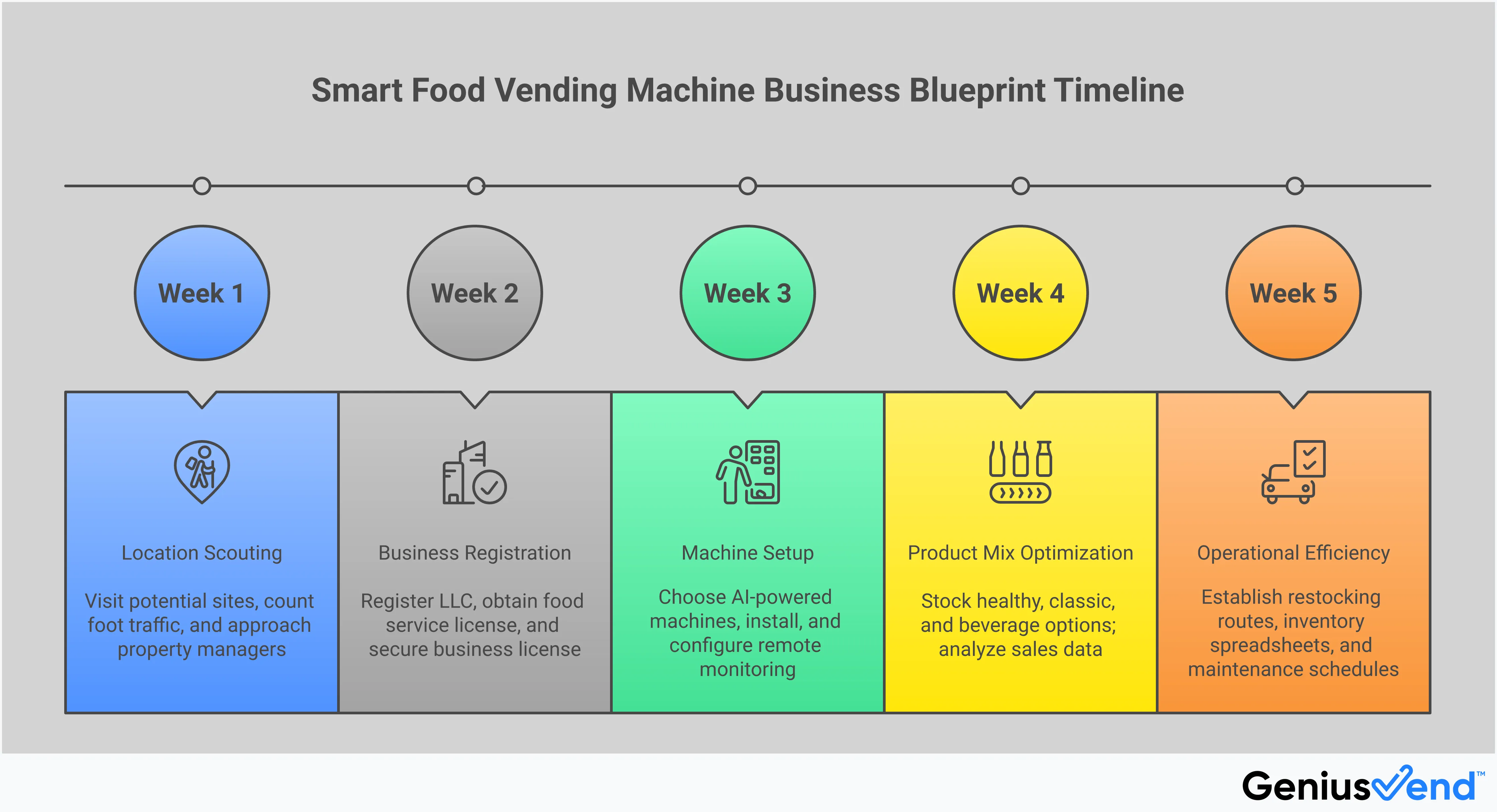
Feeling inspired to get your own vending business off the ground? That’s fantastic! Turning this idea into a reality is all about taking smart, deliberate steps. Think of it as building a foundation for a business that can grow with you. Let's walk through the essential moves you'll need to make, from your initial setup to planning for long-term success. This is your roadmap to creating a profitable and sustainable vending route.
Your First Steps: Setup and Planning
Before you even think about buying a machine, your first job is to do some homework. Solid market research is the bedrock of a successful vending business. Who are you selling to? What do they want to buy? Answering these questions will guide every decision you make, from the products you stock to where you place your machine. Once you know your audience, you can select the right equipment and find a strategic location that puts your machine in the path of hungry customers. Getting these early details right will make all the difference in your profitability down the line.
How to Build a Profitable Vending Route
The snack vending machine industry is growing, and there’s plenty of room for new entrepreneurs who get the formula right. Building a route that people love comes down to a few key things. First, keep your inventory fresh and interesting—think seasonal items or local favorites. Second, make buying from you a great experience with exceptional customer service and easy payment options. Finally, offer a balanced mix of healthy choices and classic treats. Nailing these four areas will help you stand out and build a loyal customer base from day one.
Strategies for Long-Term Growth
A successful first machine is just the beginning. To build a lasting business, you need a vision for the future. This starts with creating a Strategic Vending Machine Business Plan that outlines your goals and how you plan to reach them. As you grow, don't forget about marketing. Simple digital marketing strategies, like creating a social media profile for your business or putting a QR code on your machine, can help you connect with customers and location owners. Thinking like a business owner from the start will help you scale your operation from a single machine to a full-fledged vending empire.
Related Articles
- How to Start a Vending Machine Business
- Smart Vending Machines: The Ultimate Guide
- License & Permit Guide For All 50 States
- 7 Best Vending Machines to Buy for High Profits
- The Ultimate Guide to Freezer Vending Machines
Frequently Asked Questions
Is a smart vending machine really worth the higher initial cost? Think of it this way: a traditional machine is just a box that holds snacks, while a smart machine is a business partner. The higher upfront cost is an investment in efficiency that pays for itself. You'll save countless hours and gas money because you can check inventory from your phone instead of driving to each location. Plus, by accepting cashless payments, you'll capture sales from every customer, not just those carrying cash. These features lead to lower operating costs and higher profits that quickly make up for the initial difference in price.
What's the absolute first thing I should do before buying a machine? Before you even browse for machines, you need to secure a profitable location. This is the single most important step. A brand-new, top-of-the-line machine will just collect dust in your garage if you don't have a place with consistent foot traffic to put it. Focus all your initial energy on scouting locations, talking to property managers, and getting a signed agreement. Once you have a great spot locked in, you can then choose the perfect machine to serve that specific audience.
How much time should I expect to spend managing one vending machine per week? For a single smart machine, you can realistically expect to spend about one to two hours per week on your business. This includes a quick trip to restock the machine, a few minutes to clean it and ensure everything looks great, and some time on your phone reviewing sales data to plan your next inventory order. The remote management capabilities of a smart machine are what keep this time commitment so low, as you eliminate all the guesswork.
How do I know what products will actually sell at my location? The best way to know what will sell is to ask. Before you stock your machine, talk to the location manager or some of the people who work or visit there. Ask them what snacks and drinks they wish they had available. You can also observe what people bring from home or buy from nearby cafes. Once your machine is running, a smart system like Genius Vend gives you real-time sales data, showing you exactly what’s popular and what’s not so you can constantly refine your offerings.
Do I need to form an official business like an LLC to start? While you can operate as a sole proprietor, forming an LLC is a smart move from day one. It creates a legal separation between your personal assets and your business liabilities. This means if your business ever faces a legal issue, your personal savings and property are protected. It also makes you look more professional and credible when you're negotiating with location managers, which can give you an edge in securing those prime spots.