

How to Buy a Vending Machine Near Me: A Simple Guide
When you think of a vending machine, you might picture a clunky box that only takes crumpled dollar bills. But the industry has changed dramatically. Today’s smart, AI-powered machines offer a seamless "Tap, Grab & Go" experience for customers and powerful remote management tools for operators. Choosing the right technology is one of the most important decisions you’ll make. While your first instinct might be to simply buy a vending machine near me, it pays to understand the difference between a classic combo unit and a modern smart cooler. This guide will break down the must-have features that define a modern machine.
Key Takeaways
- Invest in Smart Features: A machine that accepts cashless payments and lets you track inventory from your phone isn't a luxury—it's essential. These features make buying easier for customers and make managing your business more efficient.
- Your Location Dictates Your Success: The most advanced machine will fail in the wrong spot. Before you buy anything, identify a high-traffic location and understand what those specific customers want to buy. This research is the foundation of your business.
- Look Beyond the Upfront Cost: The cheapest machine is rarely the best deal. Factor in the total value, including the supplier's reputation, warranty, and customer support, to avoid a purchase that costs you more in repairs and lost sales down the line.
A Guide to Vending Machine Types
Before you start searching for a machine, it helps to know what’s out there. The vending world has expanded far beyond the clunky, coin-operated boxes of the past. Today’s options range from classic workhorses to high-tech smart coolers, each suited for different locations and customers. Choosing the right type is one of the most important decisions you’ll make, as it directly impacts your product offerings, your management style, and your potential profit. A machine that’s perfect for a busy factory floor might be a poor fit for a modern tech office or a health-conscious gym.
Think of it this way: your vending machine is your storefront. Do you want a simple, traditional shop, or a sleek, automated retail experience? Understanding the key differences will help you pinpoint the perfect fit for your business goals. We’ll walk through the main categories you’ll encounter, from the familiar snack and drink dispensers to the AI-powered machines that are shaping the future of the industry. By the end of this guide, you’ll have a clear picture of which machine type aligns with your vision, your target location, and the customers you want to serve.
Classic Snack & Drink Machines
When you picture a vending machine, this is probably what comes to mind. Classic snack and drink machines are the tried-and-true staples of the industry. Typically, you’ll find separate machines for snacks—like chips, candy, and pastries—and for beverages like sodas and bottled water. They are reliable, familiar to customers, and a great fit for high-traffic areas like schools, manufacturing plants, and traditional office break rooms. While they lack some modern tech features, their straightforward, mechanical operation makes them a simple entry point into the vending business. Their main drawback is the need for manual inventory checks and the often-limited payment options, which can be a hassle for operators and customers alike.
Space-Saving Combo Machines
What if you want to offer variety but don't have the floor space for two separate units? Enter the combo machine. These versatile machines offer both snacks and drinks in a single, compact footprint, making them a fantastic solution for smaller locations like local laundromats, apartment complexes, or small office lobbies. By providing a mix of products, you can cater to different cravings without doubling your equipment costs or space requirements. This efficiency makes combo machines a popular choice for operators looking to maximize their offerings in tight spots. They bridge the gap between traditional machines and more specialized units, giving you flexibility in locations where every square foot counts.
The Future: Smart, AI-Powered Machines
This is where vending technology gets really exciting. Smart, AI-powered machines are changing the game for both customers and operators. Instead of a clunky keypad, customers get a simple "Tap, Grab & Go" experience, often paying with their phone or credit card. For operators, the real magic happens behind the scenes. These machines offer powerful remote inventory management, allowing you to track sales and stock levels from anywhere. This means no more wasted trips to restock unpopular items. You’ll know exactly what’s selling and when, making your route far more efficient and profitable while giving customers a seamless, modern experience.
Niche & Healthy Option Machines
The idea that vending machines only dispense junk food is completely outdated. As more people prioritize wellness, the demand for healthy options has skyrocketed, and modern machines are stepping up to meet it. You can now find machines offering everything from fresh salads and yogurt parfaits to kombucha and cold-pressed juices. Beyond food, niche machines can dispense almost anything, from personal protective equipment (PPE) in a factory to travel essentials in a hotel lobby. If you can identify a specific need in a location—like healthy post-workout snacks at a gym—a specialized machine can be an incredibly lucrative venture. These machines prove that vending is no longer just about convenience; it’s about providing targeted solutions.
5 Key Factors to Consider Before You Buy
Buying your first—or next—vending machine is an exciting step. It’s easy to get caught up in the potential profits and start imagining the perfect lineup of snacks and drinks. But before you pull out your wallet, it’s crucial to slow down and think like a strategist. A vending machine isn’t just a piece of equipment; it’s a small, automated retail business. And just like any business, its success depends on a solid foundation built on research and careful planning. Skipping this step is one of the biggest mistakes new operators make, often leading to a machine that sits empty or, worse, costs more than it earns.
Think of these five factors as the core pillars of your vending machine business plan. They are all interconnected, and a decision in one area will directly impact the others. For example, your location’s foot traffic will determine your potential customer base, which in turn dictates the products you should stock and the payment methods you’ll need to offer. The physical space available will limit your machine options, and your product choices will influence your long-term profitability. By taking the time to work through each of these points methodically, you’re not just buying a machine; you’re creating a roadmap for success. This thoughtful approach will help you choose the right equipment, serve your customers better, and ultimately build a more profitable vending operation from day one.
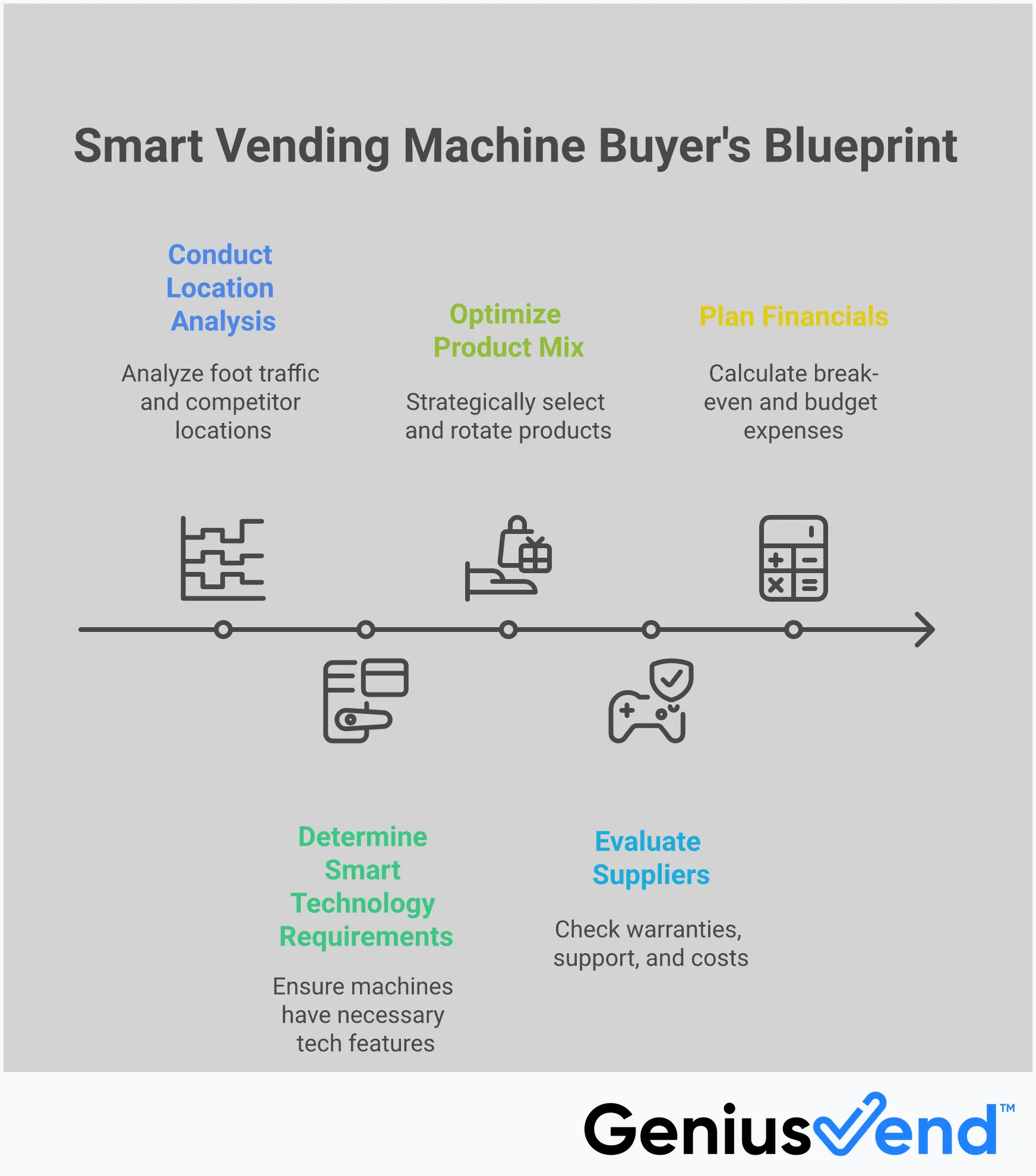
Analyzing Your Location & Foot Traffic
You’ve heard it in real estate, and it’s just as true in vending: location is everything. The success of your machine hinges entirely on where you place it. A high-traffic area is a great start, but you need to dig deeper. Who are these people? Are they office workers on a coffee break, students between classes, or gym members looking for a post-workout refuel? Spend time observing the location at different times of the day to understand its rhythm and peak hours. A modern, clean, and reliable machine helps build consumer trust, encouraging people to make a purchase. Your number one priority is finding a spot where your machine will not only be seen but also used.
Understanding Your Customer's Preferences
Stocking a machine with your personal favorite snacks is a classic rookie mistake. To succeed, you need to cater to your customers' tastes, not your own. This is where a little market research goes a long way. If you can, talk to people who frequent the location. What do they wish was available? You can also observe what’s popular at nearby convenience stores or cafes. Understanding local demand and customer preferences ensures your machine is filled with products that will actually sell. A machine in a health-conscious yoga studio should look very different from one in a blue-collar breakroom. Getting this right from the start prevents you from tying up cash in slow-moving inventory.
Sizing Up Your Space
Before you fall in love with a specific machine, get out a tape measure. You need to know the exact dimensions of the space you have available—height, width, and depth. Don’t forget to account for clearance. You’ll need enough room around the machine for proper ventilation, for the door to swing open completely, and for you to comfortably restock it. And, of course, ensure there’s a dedicated, grounded electrical outlet nearby. The last thing you want is to have the perfect machine delivered only to find it doesn’t fit. Luckily, modern vending machines come in all shapes and sizes, from compact coolers to larger combo units, so you can find an option that fits your specific location.
Choosing the Right Payment Methods
In a world where fewer people carry cash, a machine that only accepts coins and bills is a machine that’s missing out on sales. Offering a variety of convenient, cashless payment options is no longer a luxury—it’s a necessity. Your machine should be equipped to handle credit and debit cards, as well as mobile payments like Apple Pay and Google Pay. This flexibility removes a major barrier to purchase and dramatically improves the customer experience. AI-powered machines excel here, often providing a seamless "Tap, Grab & Go" experience that makes buying something as simple as tapping a card. The easier you make it for customers to pay, the more they’ll buy.
Curating Your Product Lineup
Once you’ve done your customer research, it’s time to select your products. It’s wise to start with a mix of proven best-sellers and a few items tailored to your specific location. But your work doesn’t stop there. The key to long-term success is continuously optimizing your product mix based on real sales data. This is where a smart vending machine truly shines. With remote inventory management, you can track what’s selling and what’s not from your phone. This allows you to quickly replace unpopular items with new ones, test different products, and ensure your best-sellers are always in stock. Don’t be afraid to experiment—data will tell you what your customers truly want.
How to Find Vending Machines for Sale
Once you have a solid plan, it’s time to find the perfect machine. The good news is you have plenty of options, whether you’re looking for a brand-new smart machine or a reliable refurbished classic. Think of it like car shopping—you can go to a local dealer, browse massive online lots, or buy directly from the factory. Each path has its own perks, and the right one for you depends on your budget, needs, and how hands-on you want to be. Exploring these different avenues will help you compare prices, features, and supplier reputations so you can make a confident choice for your new business venture. Let's walk through the most common places to find vending machines for sale.
Connecting with Local Suppliers
Starting your search locally is a great first step. Local suppliers are often family-owned businesses with deep roots in the community and a wealth of knowledge about the area's market. They can offer personalized service, help you understand which products sell best in your city, and provide hands-on maintenance and support. Building a relationship with a local provider means you have an expert in your corner who you can call for quick repairs or restocking advice. You can find these suppliers through a simple online search for "vending machine suppliers near me" or by asking for recommendations from other local business owners. This approach is perfect if you value personal connection and expert local insights.
Searching Online Marketplaces
If you want to see a wide variety of options all at once, online marketplaces are your best bet. Websites dedicated to new and used vending machines gather listings from sellers across the country, giving you a massive inventory to browse from your couch. You can find everything from classic soda and snack machines to specialized healthy or coffee vending options. These sites make it easy to compare models and prices, and many offer detailed descriptions and photos. Exploring a large online marketplace is an efficient way to get a feel for what’s available and what different types of machines typically cost before you commit to a purchase.
Buying Directly from Manufacturers
For those interested in the latest technology or who want the peace of mind that comes with a new machine, going directly to the source is a smart move. When you buy from a manufacturer, you often get access to the best warranty, financing options, and customer support. This is also the best way to get your hands on modern smart machines with features like cashless payments and remote inventory management. Many manufacturers also sell certified refurbished machines, which can be a cost-effective way to get a reliable unit with a solid guarantee directly from the people who made it.
Using a Zip Code Search
Many online marketplaces cover the entire country, which can feel overwhelming. To narrow your search and avoid hefty shipping fees, use the site’s zip code search tool. This simple feature filters the listings to show you only the machines available within a specific radius of your location. It’s a huge time-saver that helps you focus on sellers you could potentially visit in person or who can deliver your machine quickly and affordably. Some sites even let you set up alerts, so you get an email the moment a machine you’re interested in is listed for sale near you, ensuring you don't miss out on a great local deal.
Breaking Down the Cost of a Vending Machine
When you start shopping for a vending machine, it’s easy to focus on the sticker price. But the initial purchase is just one piece of the financial puzzle. To build a profitable vending business, you need to understand the full scope of the investment, from the day it arrives at your location to the ongoing expenses required to keep it running smoothly. Thinking through these costs upfront will help you create a realistic budget and set your new venture up for success from day one.
Upfront Purchase Price
The upfront cost of a vending machine can vary widely depending on what you’re looking for. A basic, used snack machine will cost significantly less than a brand-new, AI-powered smart cooler. Key factors that influence the price include the machine’s age, size, features, and technology. While it might be tempting to go for the cheapest option, remember that modern features like cashless payments and a simple "Tap, Grab & Go" experience can lead to more sales. Investing in a more advanced machine often pays for itself through higher customer satisfaction and increased revenue. Think of the purchase price as an investment in your business's potential.
Factoring in Delivery & Installation
One of the most common mistakes first-time operators make is forgetting to budget for delivery and installation. Vending machines are large, heavy, and require careful handling. The cost to ship the machine to your city and then move it into its final spot—whether that’s a corporate breakroom or a gym lobby—can add a few hundred dollars or more to your total. Before you finalize a purchase, always ask for a complete quote that includes freight shipping and installation fees. This transparency helps you avoid any last-minute surprises and ensures your machine is set up correctly and safely.
Planning for Ongoing Costs
Once your machine is up and running, you’ll have recurring expenses to manage. The most obvious is your inventory—the snacks, drinks, and other products you’ll stock. Beyond that, you’ll need to account for routine maintenance to keep the machine clean and functional. You should also consider utilities, as the machine will use electricity, and smart models may require an internet connection. Many modern machines come with powerful remote management software that can help you streamline operations, but be sure to check if there are any associated monthly fees. Planning for these costs is essential for accurately calculating your profit margins.
Budgeting for Unexpected Expenses
Even the most reliable machines can run into issues. A bill validator might jam, a cooling unit could fail, or you might need to repair damage from vandalism. If a customer loses money or can't buy what they want, they might not come back. That’s why it’s so important to have a financial cushion for unexpected repairs. Setting aside a small emergency fund specifically for your vending machine protects your investment and your reputation. This ensures you can handle any problem quickly, minimizing downtime and keeping your customers happy.
How to Finance Your Vending Machine
The price tag on a new vending machine can feel like a big hurdle, but it doesn't have to be a dealbreaker. There are several smart ways to finance your machine so you can get your business up and running without draining your bank account. Think of it less as a huge expense and more as the first strategic investment in your new venture. Let's walk through the most common options to see which one fits your budget and business goals.
Leasing vs. Buying: What's the Difference?
This is the classic "rent vs. own" debate, but for vending machines. A vending machine rental and leasing plan is like renting an apartment—you'll have a lower upfront cost and a predictable monthly payment. It's a great way to get started if you're watching your cash flow. However, you won't own the machine, and over time, those payments can add up. Buying, on the other hand, is like purchasing a home. It requires a larger initial investment, but you own the asset outright. In the long run, buying is usually the more cost-effective choice and gives you total control over your equipment. The right path depends on your immediate budget and long-term business plan.
Exploring Equipment Financing
If you're not ready to buy outright but don't love the idea of leasing, equipment financing is your happy medium. Many suppliers offer flexible payment plans that break the total cost into manageable monthly installments. Some even have "rent-to-own" programs where you can test out a machine, upgrade to a newer model later, or buy it for a small fee at the end of the term. Another popular option is "Buy Now, Pay Later" (BNPL), where you put down a deposit and pay off the rest over time. These options make it much easier to get the exact machine you want without needing all the cash upfront.
Looking into Manufacturer Deals
Don't forget to go straight to the source! Manufacturers and major distributors often have their own financing programs, special promotions, or partnerships with lenders. It's always worth asking what they can offer. Another savvy move is to look into certified refurbished or used snack vending machines. You can get a high-quality, reliable machine for a fraction of the price of a new one. This approach is not only budget-friendly but also a great sustainable choice. Just be sure you're buying from a reputable seller who services and stands by their equipment.
Must-Have Features for a Modern Vending Machine
If you’re picturing a clunky machine that only takes crumpled dollar bills, it’s time for an update. The vending machines of today are sophisticated, smart retail points that can seriously grow your business. Gone are the days of sold-out signs and rattling coins. Modern machines are designed to make the customer experience smoother and your life as an operator easier.
When you're shopping for a new machine, you're not just buying a box that dispenses snacks; you're investing in technology that will work for you. The right features can make a huge difference in your daily operations and your overall profitability. From payment flexibility to inventory insights, these are the non-negotiables you should look for.
Seamless Cashless Payments
How many times have you walked away from a purchase because you didn't have cash? Your customers do the same. That’s why accepting cashless payments is absolutely essential. A modern vending machine should be equipped to handle credit cards, debit cards, and mobile payments like Apple Pay and Google Pay. Offering a wide range of payment options meets customers where they are, making it incredibly easy for them to buy what they want, when they want it. This simple convenience removes a major barrier to purchase and can significantly increase your sales volume. Don't let a lack of quarters stand between a hungry customer and a sale.
Remote Inventory Management
Imagine knowing exactly what your machine needs—and when—without ever leaving your office. That’s the power of remote inventory management. Smart machines give you real-time data on what’s selling and what’s running low. This means you can say goodbye to unnecessary trips and wasted gas. Instead of guessing, you can plan your restocking routes with precision, ensuring you only visit the machines that need attention. This automated tracking not only saves you time and money but also prevents lost sales from popular items being out of stock. It’s one of the most powerful tools for running an efficient and profitable vending business.
Smart Tech & Touchscreen Interfaces
A great user experience can be the difference between a one-time purchase and a loyal customer. Clunky buttons and confusing displays are a thing of the past. Look for machines with bright, intuitive touchscreen interfaces that make browsing products simple and engaging. The best smart machines take it a step further with a "Tap, Grab & Go" system. Customers simply tap their card, open the door, grab what they want, and walk away. The machine’s AI technology automatically identifies the selected items and charges them accordingly. This personalized shopping experience is fast, frictionless, and feels like magic to the customer.
Energy-Efficient & Secure Designs
Your vending machine is a long-term investment, and its design should protect your profits. An often-overlooked feature is energy efficiency. A machine that runs 24/7 can add up on your electricity bill, so look for models with modern, energy-saving components like LED lighting and efficient cooling systems. This will keep your ongoing operational costs low. At the same time, the machine needs to be secure. A durable build with a reliable locking mechanism is crucial for protecting your inventory and cash from theft or vandalism. A well-designed machine isn't just about looking good; it's about being a smart, secure, and cost-effective asset for your business.
How to Choose the Perfect Vending Location
You’ve probably heard the real estate mantra: “location, location, location.” Well, it’s just as true for the vending business. The spot you choose can single-handedly determine whether your machine gathers dust or becomes a cash-generating powerhouse. Finding the perfect location isn’t about luck; it’s about smart, strategic thinking. A great spot is more than just a place with people—it’s a place with the right people who need what you’re selling, right when they need it.
Even the most advanced AI-powered machine won’t succeed if it’s hidden in a forgotten corner. Your goal is to find a location where your machine becomes a convenient and essential part of people’s daily routine. To do that, you need to analyze a few key factors: the flow of people, the type of customers, the machine’s visibility, and the local competition. Think of yourself as a detective, gathering clues to uncover a location with untapped potential. A little bit of research upfront will pay off immensely down the road, setting the foundation for a profitable vending machine business.
Finding High-Traffic Hotspots
The first rule of vending is to go where the people are. You need a steady stream of foot traffic to generate consistent sales. Think about places where people work, study, wait, or gather. Obvious choices include office buildings, manufacturing plants, schools, and hospitals. But don't stop there. Consider apartment complexes, 24-hour gyms, large auto repair shops, and hotel lobbies. The key is to find places with a captive audience looking for a quick and easy snack or drink. Before you commit, spend some time observing a potential location. Visit during different times of the day to get a real sense of the foot traffic patterns.
Matching Demographics to Your Products
Once you’ve found a high-traffic area, you need to think about who those people are. The products that sell well in a high school will be very different from those that succeed in a corporate office breakroom. Take the time to analyze the local demographics and tailor your product selection accordingly. For a gym, you might stock protein bars and electrolyte drinks. In a university library, you could offer energy drinks and brain-food snacks for late-night study sessions. Understanding your audience allows you to curate a product lineup that they’ll actually want to buy, turning casual passersby into repeat customers.
Ensuring Accessibility & Visibility
Your machine’s placement within a location is just as important as the location itself. If people can’t see it or easily get to it, they won’t use it. The ideal spot is highly visible, well-lit, and located along a natural path of foot traffic, like near an entrance, elevator, or reception area. A modern, clean, and attractive machine naturally inspires more trust and encourages sales. Placing a sleek, AI-powered machine in a prominent spot sends a message of quality and convenience, making it an inviting option rather than a last resort.
Scoping Out the Competition
Before you move in, take a look around. Are there other vending machines or snack bars nearby? If so, don’t be discouraged—it could mean there’s a proven market. Your job is to figure out how you can do it better. Check out what products the competition sells, their pricing, and the condition of their machines. An old, cash-only machine with a limited selection is an opportunity, not a threat. You can easily stand out by offering a superior experience with a wider variety of products, seamless cashless payments, and the simple "Tap, Grab & Go" convenience of a smart machine.
Considering Seasonal Demand
Finally, think about how demand might change throughout the year. A machine at a community swimming pool will be a huge hit in the summer but will likely sit idle in the winter. An office building might see a dip in traffic during major holidays or summer vacation periods. Look for locations with year-round stability to ensure your revenue is consistent. You can also use data from your machine to adapt to changing tastes. With remote inventory management, you can easily track what’s selling and swap in seasonal favorites—like hot chocolate K-cups in the winter or iced teas in the summer—to keep your offerings fresh and relevant.
First-Time Buyer? Avoid These Common Mistakes
Jumping into the vending world is exciting. You've got a vision for a profitable, semi-passive income stream, and you're ready to make it happen. But before you rush to buy the first machine you see, it's worth pausing to learn from those who have gone before you. A few common, yet avoidable, slip-ups can turn a promising venture into a frustrating money pit. Think of buying your first machine like buying your first car—you wouldn't just pick one based on color. You'd check the engine, the mileage, and make sure it fits your lifestyle. The same diligence applies here.
Getting it right from the start means more than just avoiding headaches; it's about setting the foundation for a scalable, successful business. The right machine in the right location, stocked with the right products, can generate consistent revenue with minimal effort. The wrong one, however, can lead to constant service calls, unhappy customers, and dwindling profits. By understanding the most common mistakes first-time buyers make, you can sidestep these issues entirely. We'll walk through the key areas where new operators often go wrong, from market research to supplier selection, so you can invest your time and money wisely and start your vending journey on the right foot.
Mismatching the Machine to the Market
It’s easy to assume that the snacks and drinks you love will be a hit with everyone, but that’s rarely the case. The key to a profitable machine is stocking it with what your specific customers want to buy. For example, a machine in a high-end gym should feature protein bars and healthy drinks, not candy bars. Similarly, customers in a lower-income area will likely choose a fifty-cent item over a dollar one. Before you buy a single product, take time to understand your target audience at your chosen location. A smart machine gives you the flexibility to offer a wide variety of items and use sales data to fine-tune your offerings over time.
Underestimating the Total Investment
That super-low price tag on a used machine might seem like a steal, but it often hides the true cost of ownership. The initial purchase price is just one piece of the puzzle. You also need to budget for delivery, installation, your first round of inventory, and potential repairs. A cheap, older machine can quickly become a money pit with frequent breakdowns and lost sales. It’s better to view your vending machine as a long-term investment. A new, reliable machine with a solid warranty might cost more upfront, but it will save you from major headaches and protect your profits down the road. Planning for all your business startup costs is essential for a successful launch.
Skipping In-Depth Location Research
You could have the best, most well-stocked vending machine in the world, but if it’s in the wrong spot, it won’t make a dime. Your location is the single most important factor for success. Don’t just settle for the first place that says yes. Spend time observing potential locations to understand their foot traffic patterns at different times of the day. Is it a busy office building, a 24/7 hospital, or a school with specific break times? Talk to the location manager to get a feel for the demographics. A successful vending machine business relies on consistent, willing customers, so make sure your machine is placed where people will actually see and use it.
Failing to Vet Your Supplier
When you buy a vending machine, you’re not just buying a piece of equipment; you’re starting a relationship with a supplier. This is especially true for modern, smart machines that rely on sophisticated software and technology. Before committing, do your homework. Look for a supplier with a strong reputation for quality and excellent customer support. Ask detailed questions about their warranty, maintenance plans, and what kind of training they provide. A great supplier will be a partner in your success, offering the support you need to get set up and troubleshoot any issues that arise. Choosing a reliable business vendor is crucial for keeping your machine running smoothly and profitably.
How to Vet Vending Machine Suppliers
Choosing a vending machine supplier is a lot like picking a business partner. You’re not just buying a piece of equipment; you’re investing in a relationship that can impact your success for years to come. A great supplier will be there to support you with reliable machines, helpful advice, and responsive service. A bad one can leave you with a broken machine and unanswered calls. Taking the time to properly vet your options is one of the smartest moves you can make. It ensures you get a quality product and the backup you need to keep your business running smoothly.
Checking Reputation & Customer Support
Before you even look at a machine, look at the company selling it. A supplier’s reputation is built on their track record with other operators just like you. Start by searching for online reviews, testimonials, and case studies. What are people saying about their experience? Don’t be afraid to ask a potential supplier for references you can speak with directly.
Beyond the initial sale, think about ongoing support. When a machine has an issue at a busy location, you need help fast. Ask about their customer support process. Do they have a dedicated support line? What are their hours? Getting clear answers on how they handle service calls will tell you a lot about how much they value their customers. Honest customer feedback is invaluable, so do your homework.
Understanding Warranty & Maintenance Plans
A vending machine is a significant investment, and a solid warranty is your safety net. Make sure you read the fine print and understand exactly what’s covered. Does the warranty include both parts and labor? How long does it last? The terms can vary widely, especially between new and used machines. For example, some sellers of used equipment might offer a 90-day parts warranty and free tech support, which is a great starting point.
Also, ask if they offer extended maintenance plans. While it’s an added cost, a good plan can save you from expensive, unexpected repair bills down the road. Get all the details in writing so you know precisely what to expect if something goes wrong. This clarity will give you peace of mind and protect your investment.
Inquiring About Training & Setup
Modern vending machines, especially smart models, are packed with technology. To get the most out of features like remote inventory management and cashless payments, you’ll need to know how to use them. Ask potential suppliers if they provide training. A good partner will walk you through the machine’s software and operational quirks, ensuring you feel confident from day one.
You should also clarify the details of delivery and installation. Is it included in the purchase price, or is it an extra fee? Will they deliver it to your location and help you get it set up and running? Some companies even offer unique rental or leasing programs that include setup. Knowing these details upfront helps you budget accurately and avoids any last-minute surprises.
Comparing Prices Strategically
While it’s tempting to go for the lowest price tag, the cheapest machine isn’t always the best deal. Instead of focusing only on the upfront cost, think about the total value. A slightly more expensive machine from a reputable supplier with a great warranty and excellent customer support is often a much smarter long-term investment. Consider the entire package: the machine’s quality, the included features, the warranty, and the supplier’s reputation.
Buying a quality used snack vending machine can be a great way to save money, but you still need to apply the same vetting process. Ultimately, the goal is to find a machine that will be reliable and profitable for years, not just the one that saves you a few dollars today.
Calculating Your Potential Return on Investment
Once you’ve found the perfect machine and location, it’s time to talk numbers. Calculating your potential return on investment (ROI) helps you understand how long it will take to earn back your initial purchase and start turning a profit. This isn't about complex spreadsheets; it's about making an educated guess so you can go into this venture with your eyes wide open. A solid financial plan is the foundation of a successful vending business.
Projecting Revenue & Your Break-Even Point
Your revenue projections hinge on one thing: knowing your audience. It’s a classic rookie mistake to stock a machine with your personal favorite snacks instead of what the location’s customers actually want. For example, placing a machine full of premium organic snacks in a blue-collar breakroom might not perform as well as one stocked with classic, affordable comfort foods. Research the demographics of your location and price your products accordingly. From there, you can estimate daily sales to project your monthly revenue and calculate your break-even point—the moment your machine’s profits have officially paid for the machine itself.
Understanding Your Profit Margins
Running a vending machine without tracking its performance is like driving with a blindfold on. You need to know which items are selling and which are just taking up space. Your profit margin is the money you make on each item after subtracting its cost. For instance, if you buy a candy bar for $0.75 and sell it for $1.50, your profit is $0.75. Keeping a close eye on these margins is essential for long-term success. Modern smart machines make this incredibly simple by providing real-time sales data, so you always know your most profitable products and can adjust your inventory from anywhere.
How Operational Efficiency Affects Your Bottom Line
Operational efficiency is just a fancy way of saying "working smarter, not harder." It’s about optimizing every part of your business to save time and money, which directly impacts your profits. This includes planning efficient routes to restock your machines, using data to avoid product spoilage, and adjusting your lineup based on customer feedback. An AI-powered machine gives you a huge advantage here. With remote inventory management, you know exactly what you need and when, eliminating wasted trips and ensuring your machine is always stocked with best-sellers. This level of business efficiency is what separates a hobby from a thriving business.
Related Articles
- Automated Vending Machines: The 2025 Guide
- Where Can I Buy a Vending Machine? A 2025 Guide
- Smart Vending Machines: The Ultimate Guide
- 7 Best Vending Machines to Buy for High Profits
- How & Where to Buy a Vending Machine in 2025
Frequently Asked Questions
What's the single most important factor for a successful vending machine? Without a doubt, it's your location. You could have the most advanced, perfectly stocked machine in the world, but if it's tucked away where no one sees it, it won't make any money. A great location provides a steady stream of the right kind of customers. It dictates what products you should sell, how often you'll need to restock, and ultimately, your entire profit potential. Everything else in your business plan flows from this one critical choice.
Is it better to buy a new or used vending machine? This really comes down to your budget and your long-term goals. A used machine can be a great way to get started with a lower upfront cost, but it comes with risks. You might face more frequent repairs and have outdated technology that can't accept mobile payments. A new machine is a bigger investment, but you get reliability, a warranty, and modern features that customers expect. In the long run, a new machine's efficiency and higher sales potential often make it the more profitable choice.
Are smart, AI-powered machines really worth the higher price? Yes, because they help you run a much smarter business. The value isn't just about having a fancy touchscreen; it's about operational efficiency. Remote inventory management means you know exactly what's sold out without driving to the location, saving you countless hours and gas money. Features like the "Tap, Grab & Go" experience and guaranteed cashless payment options also capture sales you would otherwise lose. Think of it as an investment in a tool that will make your business more profitable and easier to manage from day one.
How do I figure out what products to stock in my machine? The biggest mistake you can make is stocking a machine with your own favorite snacks. Your personal taste doesn't matter; your customers' tastes do. Start by observing the location and the people there. Are they health-conscious gym-goers or factory workers looking for a quick, hearty snack? If you can, ask people what they'd like to see. Once your machine is running, pay close attention to the sales data. A smart machine makes this easy by showing you what's selling and what's not, so you can constantly refine your lineup to maximize sales.
What's a common financial mistake first-time buyers make? A very common slip-up is only budgeting for the sticker price of the machine. The total investment is always more than that. You have to account for delivery and installation fees, the cost of your first full load of inventory, and a small emergency fund for unexpected repairs. A cheap machine can quickly become expensive if you haven't planned for these additional costs. Creating a complete budget that includes these factors will give you a much more realistic picture of your startup expenses.
