

If you're still relying on traditional vending machines, you're leaving money on the table. The days of limited selections, jammed coils, and cash-only frustrations are over. A micro market transforms a standard break room into a modern, self-service convenience store, offering fresh food, healthy snacks, and a variety of drinks. At the center of this upgrade is the micro market kiosk, the smart hub that handles every transaction. This system provides a seamless "Tap, Grab & Go" experience for customers and gives you, the operator, powerful data to optimize stock and increase profits. It’s a smarter way to meet modern demands for choice and convenience.
Key Takeaways
- Expand Your Offerings for Higher Profits: Move beyond the limits of traditional vending by offering fresh meals, healthy snacks, and a wider variety of products. This encourages customers to buy multiple items at once, increasing your average sale and overall revenue.
- Prioritize a Seamless Customer Experience: The best micro market is one that's incredibly easy to use. Focus on core technology like simple cashless payments, a user-friendly interface, and smart inventory management to keep popular items in stock and customers happy.
- Match Your Market to Your Location: Success depends on understanding your audience. Analyze your space and customer needs to curate a product selection they'll love, whether it's protein shakes for a gym or fresh sandwiches for an office break room.
What Is a Micro Market Kiosk?
Think of a micro market as a miniature, self-service convenience store set up right in your building. Instead of a row of traditional vending machines, you have open shelves, glass-front coolers, and fresh food displays, all centered around a self-checkout kiosk. This kiosk is the heart of the whole operation—it’s where customers scan their items and pay, creating a completely unattended retail space. This setup transforms a standard break room or lobby into a modern, convenient marketplace.
Unlike a vending machine that limits you to items that can drop from a coil, a micro market offers a much wider variety of products. Customers can pick up a fresh salad, a yogurt parfait, or a gourmet sandwich, examine the nutritional information, and then make their purchase. This open-concept setup feels more like a modern café or market than a sterile break room. It’s an employee amenity that provides the ultimate convenience, offering everything from snacks and drinks to full meals, 24/7. For business owners and vending operators, it’s a way to provide a premium unattended retail experience that meets the demands of today’s consumers for choice, freshness, and speed.
How Do Micro Markets Work?
The process for a customer is designed to be quick and seamless, just like any modern self-checkout experience. A person simply walks into the micro market, browses the selection of food and drinks, and picks out what they want. They then take their items to the payment kiosk, scan the barcodes on each product, and pay using a credit card, a mobile wallet like Apple Pay, or a pre-funded employee account. The entire transaction takes less than a minute.
Behind the scenes, the system automatically handles inventory tracking. Every time an item is sold, the kiosk updates your stock levels in real time. This automated inventory management gives you a clear picture of what’s selling and what needs to be restocked, eliminating guesswork and ensuring your market is always filled with popular items.
The Smart Tech Behind the Kiosk
A micro market kiosk is much more than a simple payment terminal; it’s a sophisticated piece of technology that powers the entire system. Modern kiosks use AI-driven analytics to track sales data, helping you understand customer preferences and optimize your product selection for better profitability. You can see what’s popular, identify slow-moving items, and adjust your offerings accordingly.
Through IoT integration, these systems are connected to the cloud, allowing you to manage everything remotely from your phone or computer. You can monitor sales, check inventory levels, and get system alerts from anywhere. To keep everything running smoothly and safely, these kiosks are also equipped with robust security features, including real-time monitoring and regular software updates to protect customer data and maintain the integrity of the system.
Why Your Business Needs a Micro Market
If you're looking for a way to serve your employees or customers better, a micro market is a fantastic upgrade from traditional vending. Think of it as a mini, self-service convenience store right in your building. Instead of being limited to what can fit in a machine coil, you can offer a wide range of fresh foods, healthy snacks, and satisfying meals. For vending operators, this is your chance to expand your offerings and create a more profitable, modern business. For businesses, it’s a powerful amenity that can improve workplace culture and keep your team happy and energized.
The real magic of a micro market lies in its technology. With a simple self-checkout kiosk, customers can quickly grab what they want, scan it, and pay with a card or their phone. This "Tap, Grab & Go" experience is exactly what people expect today. It’s faster, more convenient, and offers a much better selection than a standard vending machine. This setup not only makes customers happier but also simplifies operations for you. You get access to real-time sales data, which helps you stock the right products and manage your inventory without the guesswork. It’s a smart, efficient solution that benefits everyone involved.
Earn More with Every Sale
One of the most compelling reasons to switch to a micro market is the potential for higher revenue. Because you can offer a wider variety of items—including higher-priced products like fresh salads, sandwiches, and full meals—your average sale amount naturally increases. Studies show that micro markets can increase revenue by as much as 40%. The open-shelf concept encourages browsing and impulse buys, and the convenience of cashless payments means customers aren't limited by the cash in their pockets. When paying is as easy as tapping a card or phone, people tend to spend more freely, which directly contributes to your bottom line.
Lower Your Operating Costs
While you’re making more money, you can also be spending less. Micro markets are designed for efficiency, which can significantly reduce your operational costs. Smart inventory management systems track sales in real time, so you know exactly what’s selling and what’s not. This data-driven approach means you can optimize your stock, reduce food waste, and make fewer trips for restocking. You can manage your entire operation more effectively, saving time and labor. Over time, these efficiencies add up, making a micro market a financially savvy choice for any location.
Give Customers an Experience They'll Love
A micro market is more than just a place to get snacks; it's a valuable amenity that improves daily life for employees or customers. It eliminates long waits at the checkout and provides access to a much wider variety of fresh foods and healthy options that traditional vending machines can't offer. This convenience makes the workplace more enjoyable and can even contribute to a healthier, more productive environment. For vending operators, providing a superior customer experience builds loyalty and makes your service stand out. When people love the options and the ease of use, they’ll keep coming back.
Manage Everything from Your Phone
The best part about modern micro markets is that you can run your business from anywhere. Thanks to powerful remote management software, you have complete control right from your smartphone. You can check sales data, monitor inventory levels, update product pricing, and even see if a cooler door was left open. This level of oversight is a cornerstone of an effective kiosk implementation strategy. Whether you're managing a single location or a dozen, this technology allows you to run a tight ship, respond to issues quickly, and make informed decisions on the fly without being tied to a specific location.
Key Features to Look For in a Micro Market
When you’re ready to set up a micro market, it’s easy to get caught up in the excitement of choosing products and picking the perfect spot. But the technology powering your kiosk is what will truly make or break your business. Think of your micro market kiosk as the central nervous system of your entire operation. It’s not just a payment terminal; it’s the brain that handles every transaction, tracks every item, and keeps your investment secure. Choosing the right system is the single most important decision you’ll make.
A great system works so smoothly that customers barely notice it—they just know it’s incredibly easy to grab what they want and get on with their day. This seamless experience builds loyalty and encourages repeat business. For you, the operator, the right tech means fewer headaches and more profit. It automates the tedious parts of the job, giving you the data you need to make smart decisions from anywhere. A subpar system, on the other hand, leads to lost sales from payment failures, frustrated customers, and hours wasted on manual inventory counts. To make sure you choose a winner that will help your business thrive, let’s walk through the four non-negotiable features every modern micro market needs.
Simple, Cashless Payments
Let’s be honest—hardly anyone carries cash anymore. Your micro market needs to meet customers where they are by offering simple, cashless payment options. This is the absolute baseline for a modern retail experience. Look for a kiosk that accepts all major credit and debit cards, as well as mobile payments like Apple Pay and Google Pay. The goal is to make the transaction completely frictionless. A customer should be able to walk up, tap their card or phone, and walk away. This kind of streamlined checkout process not only makes customers happier but also encourages more frequent purchases since there’s no barrier to buying.
Smart Inventory Tracking
This feature is your secret weapon for running a lean, profitable micro market. Smart inventory tracking gives you a real-time, bird's-eye view of your stock levels without you ever having to be on-site. You’ll know exactly what’s selling, what’s running low, and what isn’t moving at all. This data is gold. It allows you to prevent disappointing stockouts on popular items and avoid wasting money on products that just sit on the shelf. With smart inventory management, you can plan your restocking trips with precision, saving you time, gas, and guesswork. It’s all about working smarter, not harder.
Built-in Security Features
An unattended market can feel like a big risk, but the right technology provides serious peace of mind. Built-in security is an essential feature to protect your products and your kiosk. Look for systems that include high-definition cameras that can monitor the market and deter theft. On the software side, secure payment processing is critical to protect your customers’ financial data and maintain their trust. Some advanced systems even use AI-powered monitoring to flag suspicious activity in real time. These security measures aren’t just about preventing loss; they’re about building a safe and reliable shopping environment that keeps customers coming back.
An Easy-to-Use Interface
The most powerful technology in the world is useless if people can’t figure out how to use it. A simple, intuitive interface is key to a successful micro market. The checkout process should be self-explanatory, with clear on-screen prompts, a responsive touchscreen, and a fast scanner. The ideal experience is one where a first-time user can complete a purchase in seconds without any confusion. This is where the "Tap, Grab & Go" model really shines. When the user interface is designed well, it removes any hesitation and makes your micro market the most convenient option for a quick snack or drink.
Comparing the Top Micro Market Providers
Choosing the right partner for your micro market is a big decision. The technology, payment systems, and management software you select will shape your day-to-day operations and your bottom line. To help you get a clearer picture of what’s out there, let’s look at three of the top providers in the space: Genius Vend, Cantaloupe, and Nayax. Each one brings something different to the table, from cutting-edge AI to powerful management tools. Understanding their unique strengths will help you find the perfect fit for your business goals and customer needs.
Genius Vend
Genius Vend is all about bringing AI into the micro market world. Instead of a traditional kiosk, they offer smart coolers that create a seamless "Tap, Grab & Go" experience. Their NANO™ AI Vending Machine is a great example—it’s a compact, data-smart unit that delivers chilled snacks and drinks without a checkout line. Customers simply tap their card, open the door, grab what they want, and walk away. The AI technology automatically detects what was taken and charges them accordingly. This approach is perfect for modern offices and locations where speed, convenience, and a tech-forward feel are top priorities.
Cantaloupe
Cantaloupe focuses on helping businesses build and manage traditional self-service micro markets. Think of them as a provider for the classic setup: a small, unstaffed store where customers browse shelves and pay at a central self-checkout kiosk. Their strength lies in their comprehensive management software. Tools like Seed Pro and Seed Markets help operators handle everything from scheduling deliveries and managing inventory to analyzing sales data and creating reports. If you're looking for a robust system to streamline a more traditional micro market, Cantaloupe offers the backend support to keep things running smoothly.
Nayax
Nayax is a major player in the world of unattended retail, and their specialty is flexible payment solutions. They offer a wide range of cashless payment systems designed for micro markets and self-checkout kiosks. What makes Nayax stand out is its versatility. Their solutions work just as well for a small business launching its first micro market as they do for a large enterprise managing hundreds of locations. If your primary concern is accepting every possible form of payment and having a reliable system that can scale with your business, Nayax is a strong contender to consider. They make sure the transaction part of the experience is simple and secure for everyone.
How Do They Compare?
So, how do you choose? It really comes down to your business model and the experience you want to create. Micro markets, in general, offer huge potential, with some operators seeing a 40% increase in revenue and a 60% reduction in operational costs.
Your choice of provider fine-tunes that potential. Genius Vend is the innovator, using AI to eliminate the kiosk entirely for a faster, more modern customer journey. Cantaloupe provides the tools to manage a more traditional setup effectively, focusing on operational efficiency through its software. Nayax zeroes in on the transaction itself, offering flexible and scalable payment solutions for any kind of self-service environment. Think about your priorities: is it cutting-edge tech, comprehensive backend management, or payment versatility? Your answer will point you to the right partner.
What's the Real Cost of a Micro Market?
Figuring out the price of a micro market isn't like picking an item off a shelf. The final cost depends entirely on the size of your space, the hardware you choose, and the features you need. Think of it less as a single price tag and more as a custom investment in your business. The total cost breaks down into three main parts: your initial setup, recurring software or service fees, and how you decide to pay for it all. Understanding each piece will help you build a clear budget and see the path to profitability.
Your Upfront Investment
Your biggest initial expense will be the hardware. This includes the self-checkout kiosk, coolers, freezers, and shelving that create the market's footprint. Because every location is different, most providers have you work directly with a sales representative to plan a setup that fits your space and goals. This consultative approach ensures you get everything you need without paying for things you don’t. The exact cost can vary quite a bit, so getting a custom quote from a micro market provider is the best first step to get a handle on your specific startup costs.
Ongoing Costs to Expect
Once your micro market is up and running, you’ll have some recurring costs to keep in mind. These are typically monthly fees for the software that powers the kiosk, payment processing, and customer support. Before you sign any contracts, make sure you ask for a clear breakdown of all monthly or annual fees. These ongoing expenses are a key part of your operational budget, and knowing them upfront helps you accurately calculate your long-term profitability. Don't be shy about asking for specifics—a good partner will be transparent about what you're paying for.
Financing and Leasing Options
A large upfront investment isn't always feasible, especially when you're just starting out or expanding your routes. That’s why many operators explore financing or leasing. These options allow you to get your micro market running with a much smaller initial cash outlay, spreading the cost over time through manageable monthly payments. This can be a smart way to grow your business while protecting your cash flow. Many trusted payments and technology partners offer flexible solutions designed to help you launch your market without breaking the bank.
Micro Markets vs. Traditional Vending Machines
When you think of automated retail, the classic vending machine probably comes to mind. It’s been a reliable source for snacks and drinks for decades. But micro markets are changing the game entirely. While both offer on-site convenience, they deliver vastly different experiences for both customers and operators. A traditional machine dispenses one item at a time, but a micro market functions like a miniature, self-service store.
This shift from a simple dispenser to an open-concept market is powered by smarter technology, a better customer experience, and a much higher potential for profit. If you're weighing your options, understanding these key differences is the first step. Let's break down how they stack up against each other in the areas that matter most: technology, customer satisfaction, and your bottom line.
Tech and Features
Traditional vending machines operate on a simple, time-tested mechanism: you insert payment, make a selection, and a coil turns to drop your item. It’s straightforward, but also prone to errors like product jams or payment failures. Micro markets, on the other hand, are built on modern, self-service technology. They function as tiny, unstaffed stores where customers can browse a full selection of products on open shelves and in coolers before paying at a central kiosk.
This setup allows for more advanced features, like automated inventory management that tracks what’s selling and what needs to be restocked. Genius Vend takes this a step further with AI-powered coolers that create a "Tap, Grab & Go" experience, eliminating the need for a separate kiosk altogether. Customers simply tap their card, open the door, take what they want, and walk away. The smart system automatically charges them for the items they took, making the process seamless.
The Customer Experience
Let’s be honest: using a traditional vending machine can sometimes be frustrating. The selection is limited, you can’t inspect an item before you buy it, and there’s always a slight chance your snack will get stuck. Micro markets completely transform this interaction. Customers can pick up products, read labels, and compare options just like they would in a regular store. This freedom of choice is a huge upgrade.
The checkout process is also much smoother. Instead of feeding cash into a machine, customers use an intuitive kiosk to scan their items and pay with a card or mobile app. This open, trust-based model allows you to offer a wider variety of products, including fresh foods, healthier snacks, and even non-food items. Providing these kinds of quality options can significantly improve employee satisfaction and encourage people to stay on-site for their breaks.
Profit and Revenue Potential
While a traditional vending machine can be a steady source of passive income, its profit potential is capped by its limited capacity and single-item sales. Micro markets open up a whole new level of earning potential. Because customers can buy multiple items in one transaction, the average purchase value is naturally higher. In fact, some operators see a revenue increase of 40% or more after making the switch.
Beyond higher sales, micro markets can also lower your operational costs. Smart inventory systems mean fewer wasted trips for restocking and less product spoilage. Plus, there are no labor costs associated with a cashier. The system’s data also gives you powerful insights into what your customers love, allowing you to optimize your product mix, run targeted promotions, and make smarter business decisions that keep sales growing.
Where Do Micro Markets Work Best?
Micro markets are incredibly versatile, but they truly shine in environments with a "captive audience"—places where people spend a significant amount of time and need easy access to food, drinks, and other essentials. Unlike a traditional vending machine that offers a limited selection, a micro market provides a full-blown retail experience. It’s a self-contained, unstaffed store that can be customized to fit the needs of any location. Imagine open shelving stocked with fresh food, coolers filled with a variety of drinks, and a simple self-checkout kiosk where customers can pay and go.
The key is identifying places where convenience is a top priority. Think about high-traffic areas where people might not have the time or ability to leave for a quick snack or meal. By setting up a micro market, you’re not just selling products; you’re providing a valuable amenity that makes life easier for employees, students, or customers. This approach transforms a simple break area into a hub of convenience and satisfaction, meeting people’s needs right where they are. It’s a powerful way to show you care about their well-being while also creating a profitable, low-maintenance business that runs itself.
Offices and Healthcare
Office break rooms and hospital lobbies are prime real estate for micro markets. In these settings, employees and visitors often need a quick and healthy option without leaving the building. A micro market acts as a small, on-site convenience store where people can grab a fresh salad, a sandwich, or a coffee and pay at a self-checkout kiosk. This is a huge step up from a vending machine filled with chips and candy. For businesses, this translates directly into better employee satisfaction and productivity. When your team has access to nutritious meals and snacks, they’re more likely to stay on-site during breaks, fostering a more collaborative and energized work environment. In healthcare, it offers a welcome convenience for staff working long shifts and families waiting for loved ones.
Schools and Factories
Schools and manufacturing facilities are bustling with people who need fuel to get through the day. A micro market can easily meet the daily food and beverage needs of students, teachers, and workers who may not have time for a formal meal. It provides a flexible solution that’s open 24/7, catering to different schedules and shifts, which is especially crucial in a factory setting. Instead of a few limited choices, you can offer a wide variety of items that appeal to different tastes and dietary needs. This modern approach to on-site food service ensures everyone has access to refreshments whenever they need them. It’s a simple way to solve the problem of keeping a large, diverse group of people fed and happy throughout their busy days.
Gyms and Fitness Centers
After a tough workout, members are often looking for a protein shake, a healthy snack, or a bottle of water. A micro market is the perfect solution for gyms and fitness centers, offering a modern and convenient retail experience. You can stock items that align with your members’ health goals, turning your facility into a one-stop shop for fitness and nutrition. This is a significant upgrade from older vending machines, providing a better shopping experience with more choices. Members can simply tap their card, grab what they need, and go. It’s a seamless addition that enhances the member experience and creates an additional revenue stream for your business. It shows you understand their needs beyond the gym floor.
Common Challenges (and How to Solve Them)
Switching to a micro market is an exciting move, but like any business upgrade, it comes with a few potential hurdles. The good news is that with a little planning, these challenges are easy to manage. By thinking through the hardware, security, and user experience ahead of time, you can set your micro market up for success from day one. Let’s walk through the most common questions operators have and the straightforward solutions for each.
Choosing the Right Hardware
The first step is picking the right equipment for your specific location. This isn’t just about aesthetics; it’s about matching the hardware to your customers' needs and the physical space you have. Before you choose a machine, think about who will be using it and what they’re likely to buy. An office of health-conscious professionals might want fresh salads and kombucha, requiring a smart cooler. A factory floor with workers needing hearty meals might be better served by a smart freezer stocked with frozen entrees. Understanding your customer helps you choose the appropriate hardware. Consider the footprint of the space and select a unit that fits comfortably without disrupting traffic flow.
Keeping Your Kiosk Secure
Security is a top priority, both for your inventory and your customers' data. Modern micro markets have built-in features to handle this. Physically, look for systems with AI-powered cameras that can detect theft and smart locking mechanisms that prevent unauthorized access. This protects your products and your investment. Digitally, your kiosk must have secure payment processing to protect customer information. Your provider should handle all the technical details, like implementing robust cybersecurity measures and ensuring payment data is encrypted. This way, you can focus on running your business while knowing your kiosk and your customers are safe.
Getting People to Use It
The most advanced kiosk in the world is useless if no one uses it. The key to adoption is a frictionless customer experience. One of the biggest frustrations with self-service technology is downtime or a confusing interface. You can solve this by choosing a system known for its reliability and simplicity. A "Tap, Grab & Go" model removes all the guesswork, making it as easy as opening a fridge at home. Also, make sure you have a system for remote monitoring. This allows you to see inventory levels and machine status from your phone, so you can restock products and address any issues before customers even notice.
How to Market Your New Micro Market
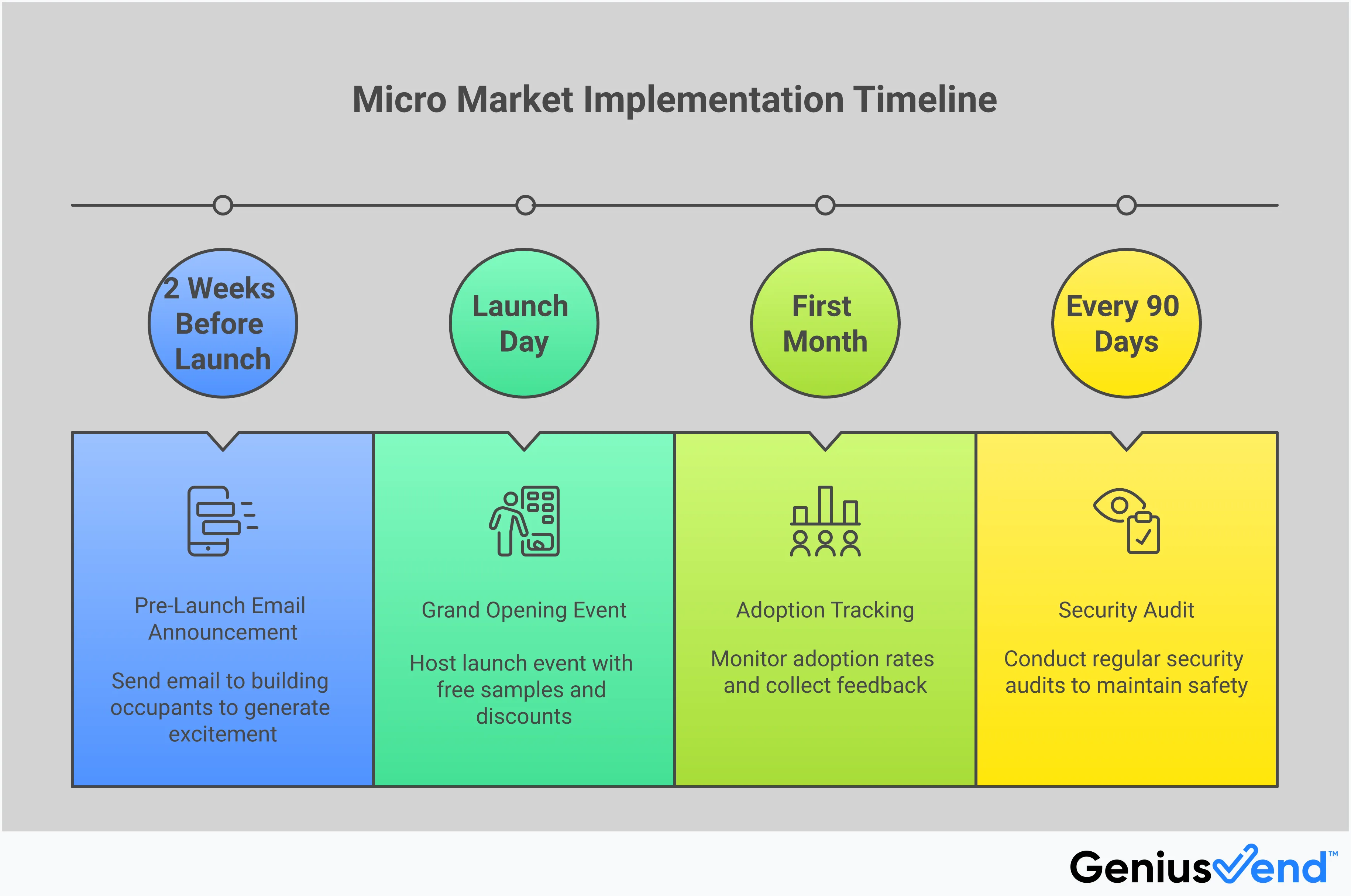
Installing a shiny new micro market is a huge step, but the "if you build it, they will come" approach doesn't always cut it. To make sure your new kiosk is an instant hit, you need to generate some excitement and show people how easy it is to use. A little bit of marketing can go a long way in driving that initial traffic and turning first-time visitors into loyal customers. The goal is to make the micro market feel like an essential, exciting part of the workplace or building from day one, not just another piece of equipment in the corner.
You don’t need a massive budget or a dedicated marketing team to get the word out. A successful launch strategy focuses on three key areas: building buzz online before you open, creating a fun and engaging launch day experience, and using smart on-site visuals to keep customers coming back. By combining digital outreach with in-person events and eye-catching promotions, you can create a seamless marketing plan that gets people talking—and shopping. Let's walk through how you can tackle each of these steps to ensure your micro market starts strong and stays profitable.
Spread the Word with Social Media and Email
Your marketing should start before your micro market even opens. Using digital channels like email and social media is a fantastic way to build anticipation. If your kiosk is in an office, work with the company to send out an email blast announcing the new amenity. You can highlight the variety of fresh food, the convenience of the "Tap, Grab & Go" system, and the official launch date.
For locations with a public social media presence, share engaging content to attract attention. Post high-quality photos of the products you'll be stocking or a short video showing how simple the checkout process is. Announcing a special launch-day promotion online is another great way to ensure people show up ready to shop.
Plan a Launch Event
Hosting a launch event is the perfect way to create a buzz and get people comfortable with your new micro market. Think of it as a grand opening party. The goal is to make the first interaction fun, easy, and memorable. You can organize a simple event by offering free samples of your most popular snacks and drinks, which encourages everyone to explore the offerings.
Consider giving a special discount to everyone who makes a purchase on the first day or running a giveaway for the first 50 customers. When people see how quick and seamless the experience is, they’re more likely to come back. A positive first impression helps break down any hesitation and gets people talking, which is the best marketing you can ask for.
Use On-Site Signs and Promos
Once your micro market is open, use effective signage to draw people in and guide their purchasing decisions. Clear, eye-catching signs can highlight new products, best-sellers, and special offers, encouraging those impulse buys. Place a simple, easy-to-read sign near the entrance that explains the three simple steps: Tap, Grab, and Go. This removes any uncertainty for first-time users.
You can also use smaller signs, like shelf talkers, to point out healthy options, staff favorites, or promotional bundles. These visual merchandising cues help create a more dynamic shopping experience and keep your product selection feeling fresh and exciting. Regularly updating your promos gives customers a reason to check in often to see what’s new.
Choosing the Perfect Kiosk for Your Space
Finding the right micro market kiosk is about more than just picking a machine; it’s about creating a retail experience that fits perfectly into your environment. The best setup feels like it was designed specifically for your location and your customers. A thoughtful approach to placement, products, and setup will make all the difference in creating a convenient and profitable amenity that people love to use.
Analyze Your Space and Customers
Before you do anything else, take a good look around. Where will the kiosk live? Measure the physical footprint you have available, but also consider the flow of traffic. You’ll want to place it in a high-visibility area where people naturally gather or pass by, like a breakroom, lobby, or main hallway. Think about who will be using it most. Are they office workers grabbing a quick lunch, students needing a late-night snack, or factory employees on a short break? Understanding your customer traffic patterns is the first step to creating a market they’ll actually use and appreciate.
Curate Your Product Selection
Once you know your audience, you can stock your market with items they actually want to buy. A gym location will do well with protein drinks and healthy snacks, while an office setting might see more sales from gourmet coffee, sandwiches, and afternoon treats. Don't be afraid to start with a broad selection and then use sales data to refine your offerings. Pay attention to what sells out quickly and what sits on the shelf. A well-curated product mix not only keeps customers happy but also helps you focus on high-margin products that make your business more profitable.
Plan for Easy Integration
Your new micro market should make your life easier, not add technical headaches. Before committing, think about the practical side of installation. Does the kiosk require a dedicated internet line, or can it run on Wi-Fi or a cellular connection? What are the power requirements? The best systems are designed for a simple setup. Look for a provider that offers a user-friendly experience from the start, with an intuitive operator app and a payment system that’s simple for customers. A smooth integration process ensures you can get your market up and running quickly and without any major disruptions.
Related Articles
- Automated Vending Machines: The 2025 Guide
- Vending Machine Prices: How Much Do They Cost?
- Grab and Go Vending Machine: The Ultimate Guide
- Vending Machine Best Buy: The Ultimate 2025 Guide
- Vending Machine with Touch Screen: Buyer's Guide
Frequently Asked Questions
How is a micro market really different from a high-tech vending machine? Think of it as the difference between shopping in a store versus ordering from a catalog. A vending machine only lets you buy one pre-selected item at a time. A micro market creates an open, self-service shopping experience where people can browse, pick up multiple items, read nutritional labels, and then pay for everything at once at a self-checkout kiosk. It allows for a much wider variety of products, including fresh salads, sandwiches, and other items that wouldn't fit in a traditional machine.
I'm worried about theft in an unstaffed market. How do you keep it secure? This is a common concern, but modern micro markets are designed with security in mind from the ground up. Most systems include high-definition cameras that monitor the space to deter theft. On the technology side, secure payment processing is standard to protect customer data. Some advanced systems even use AI to flag unusual activity. It’s about creating a reliable and trustworthy environment that makes the honor system work smoothly.
How much hands-on work is required to run one of these? While it’s not completely hands-off, a micro market is designed to be incredibly efficient. The smart technology does most of the heavy lifting for you. Instead of guessing what needs to be restocked, the system’s software tracks sales in real time and tells you exactly what to bring on your next visit. You can monitor all of your sales and inventory levels remotely from your phone, which means fewer wasted trips and less time spent on-site.
How do I know what products people will actually want to buy? You don't have to guess. Your micro market's sales data is your secret weapon for keeping customers happy and sales high. The system automatically tracks every single purchase, giving you a clear picture of your best-sellers and which items are collecting dust. You can use this information to fine-tune your product selection over time, ensuring your market is always stocked with the things your specific customers love.
What if my location doesn't have a lot of space for a full setup with shelves and a kiosk? You don't necessarily need a large, dedicated space to offer a great experience. The technology is flexible, and there are compact, all-in-one solutions available. For smaller locations, an AI-powered smart cooler can provide that same "Tap, Grab & Go" convenience without needing separate shelving or a payment station. Customers use their card to open the door, take what they want, and the smart cooler handles the rest.