

Pizza Vending Machine 101: The Ultimate Guide
The idea of getting a fresh, hot pizza from a machine might sound like science fiction, but the technology is very real and surprisingly sophisticated. These aren't just glorified microwaves. A modern pizza vending machine uses advanced robotics, smart convection ovens, and remote management software to deliver a consistently great product. For entrepreneurs, this technology opens up a new way to enter the food service market with lower labor costs and greater efficiency. We'll explore how these machines work, from the internal mechanics to the software that lets you run your business from your phone, giving you a clear picture of this innovative industry.
Key Takeaways
- Decide on your pizza concept first: Before you look at hardware, figure out if you want a machine that bakes pizzas on the spot or a smart cooler that offers pre-packaged options. This choice defines your entire business model, from product sourcing to customer experience.
- Plan for more than just the machine cost: The initial investment goes far beyond the price of the machine itself and includes setup, permits, and your first round of inventory. Your long-term profitability will depend on managing ongoing expenses like location fees and ingredients.
- Location and daily management are everything: A pizza vending machine isn't a passive investment. Your success relies on securing a high-traffic location with a hungry audience and committing to the daily tasks of restocking, cleaning, and marketing to keep sales strong.
What is a Pizza Vending Machine?
Imagine offering your customers a hot, freshly baked pizza in about three minutes, any time of day. That's exactly what a pizza vending machine does. Forget the old-school snack machines; we're talking about a fully automated pizzeria packed into a single unit. These machines use advanced robotics to take a pre-prepared, refrigerated pizza, bake it to perfection in a high-tech oven, box it up, and serve it hot. It’s a revolutionary concept in automated retail, giving entrepreneurs a unique way to enter the food service industry without the overhead of a traditional restaurant.
For businesses, it's an incredible amenity to offer employees or guests, providing a satisfying meal option well beyond chips and candy bars. This isn't just a novelty; it's a sophisticated system designed for quality, consistency, and convenience. Think of it as a compact, efficient, and tireless employee who can serve up perfect pizzas 24/7. Whether you're looking to expand your current vending route with a high-value product or add a standout feature to your location, understanding how these machines operate is the first step. They combine refrigeration, robotics, and advanced cooking technology to deliver a product that rivals what you’d get from a traditional pizza shop, all without the need for on-site staff.
How Do They Actually Work?
The process is surprisingly simple and streamlined, both for you and the customer. It all starts with a user-friendly touchscreen. A customer walks up, browses the menu of options—like pepperoni or classic cheese—and pays with a card or phone. Once the order is placed, the machine’s internal robotic arm gets to work. It carefully retrieves the selected pizza from a refrigerated compartment, which keeps the pies fresh at around 37°F. From there, the pizza is moved into the oven, baked in just a few minutes, and then neatly placed in a box before being dispensed through a slot. It’s a seamless, hands-off experience that delivers a hot meal in less time than it takes to brew a pot of coffee.
The Tech Behind the Perfect Slice
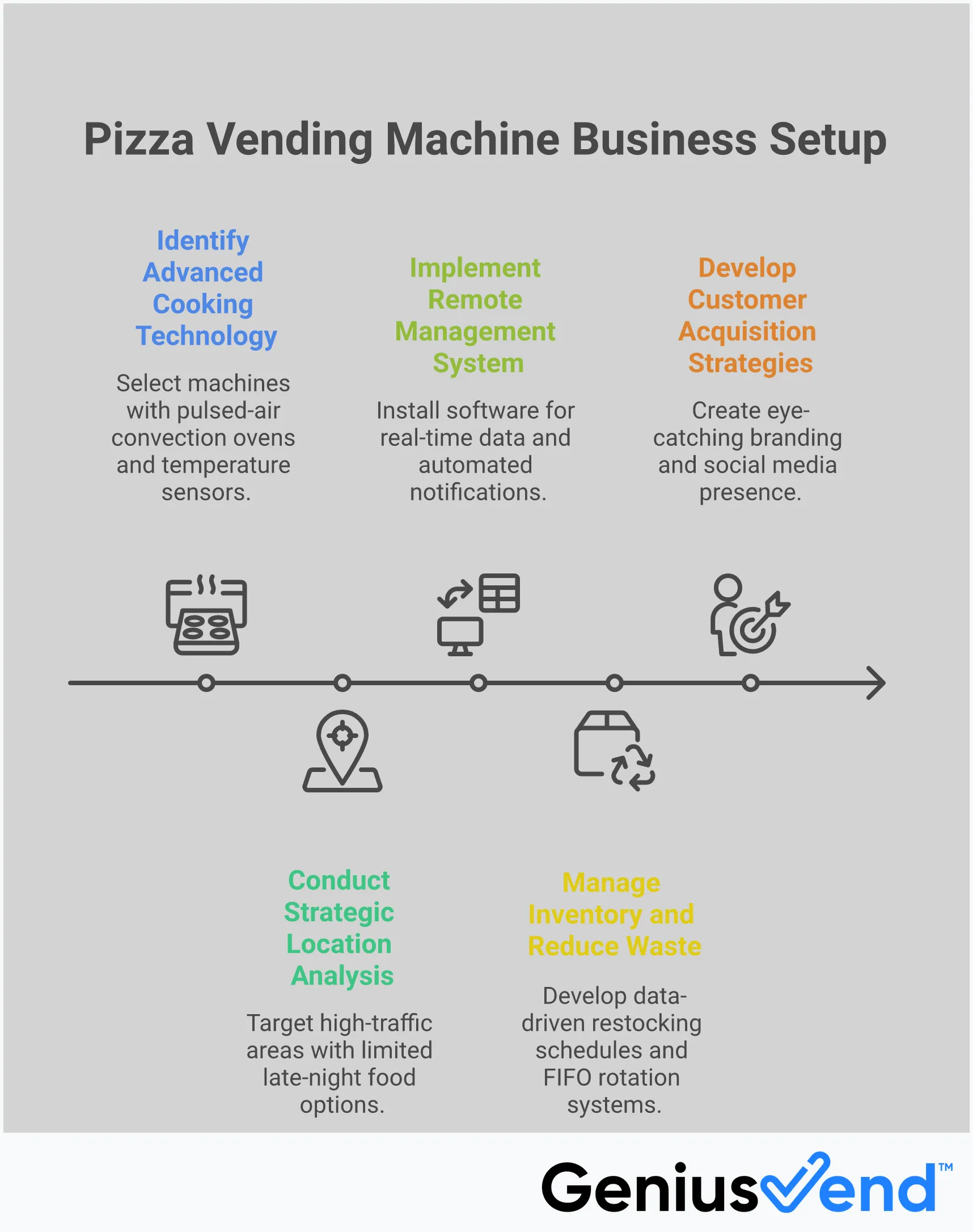
The magic isn't just in the robotics; it's in the cooking technology. Most high-quality pizza vending machines use a special pulsed-air convection oven that blasts the pizza with hot, circulated air for a fast and even bake. This isn't your standard microwave. The system is smart enough to automatically adjust the cooking time, power, and temperature for each specific type of pizza, ensuring a crispy crust and perfectly melted cheese every time. Best of all, hygiene is built right into the design. The pizzas are baked inside their boxes, so they never touch any internal surfaces of the machine. These units are designed to meet strict sanitary food vending standards, giving you and your customers complete peace of mind.
Meet the Top Pizza Vending Machine Brands
When you start looking into pizza vending, you'll quickly find a few key players leading the charge. Each brand brings something different to the table, from AI-powered smart coolers to machines that bake a fresh pizza right before your eyes. Understanding these differences is the first step in figuring out which model makes the most sense for your business goals and your future customers.
Let's break down three of the top brands in the pizza vending space so you can see how their technology and business models compare.
Genius Vend Smart Vending Solutions
Genius Vend offers a fresh take on vending with its line of AI-powered smart coolers and freezers. While not a pizza-baking machine, these units are perfect for stocking high-quality frozen or refrigerated pizzas from local pizzerias or popular brands. The "Tap, Grab & Go" system creates a frictionless experience for customers, and the smart technology gives you powerful remote management tools. What makes this a standout option is its versatility. You aren't locked into just one product; you can offer pizzas alongside salads, drinks, and other snacks, all from the same machine. These AI-powered vending solutions are designed to transform any space with customizable wraps and a modern, user-friendly interface.
PizzaForno
As North America's leading automated pizza chain, PizzaForno has built a strong reputation for its 24/7 pizza vending machines. These machines serve up hot, baked-to-order pizzas in just a few minutes, making them a popular choice for high-traffic areas. Customers can walk up any time of day or night, place their order, and walk away with a hot meal. PizzaForno focuses on using quality ingredients to deliver a consistently delicious product without the need for a full kitchen staff. This model is ideal for entrepreneurs looking to tap into the convenience food market by offering a reliable and accessible hot food option around the clock.
Let's Pizza
Let's Pizza is famous for one incredible feature: it's the world's first machine that bakes fresh pizza from scratch. This isn't just a reheating process. The machine actually mixes flour and water to create dough, kneads it, adds sauce and toppings, and then bakes it in a high-heat oven—all in under three minutes. Customers get to watch the magic happen, making it as much of an experience as it is a meal. This unique, from-scratch approach is a major selling point that sets Let's Pizza apart from other machines that use pre-made or frozen pies. It’s a true feat of engineering for anyone wanting to offer the freshest possible product.
How Much Does a Pizza Vending Machine Cost?
Let's talk numbers. Investing in a pizza vending machine is a significant financial step, and it’s important to have a clear picture of all the costs involved before you jump in. The price isn't just about the machine itself; you also have to factor in setup, inventory, and the daily expenses of running the business. Thinking through these costs upfront will help you create a solid business plan and set yourself up for success.
The total investment can be broken down into two main categories: the initial, one-time costs to get your machine up and running, and the ongoing operational costs required to keep it stocked, clean, and profitable. Understanding both is key to accurately projecting your potential return and making sure you have enough capital to not only launch but also sustain your new venture. We’ll walk through each of these cost centers so you know exactly what to expect.
Breaking Down Your Initial Investment
The biggest line item on your startup budget will be the machine itself. A high-tech pizza vending machine is a complex piece of equipment, and its price reflects that. For example, some operators report that a machine from a company like PizzaForno can cost around $50,000. However, the machine is just the beginning. The total cost to get your business off the ground could be closer to $120,000 when you include expenses like shipping, installation, site preparation, initial inventory, and any licensing or permit fees. Think of it like opening a mini-restaurant—you need more than just the oven to start serving customers.
Understanding Ongoing Operational Costs
Once your machine is in place, you’ll have recurring expenses to manage. The most significant of these is your cost of goods sold—the ingredients for the pizzas. This can account for 30-50% of your selling price. You also need to plan for daily restocking. Many operators find they have to visit their machines every day to refill inventory and remove any unsold pizzas to maintain freshness, which can lead to food waste. Beyond inventory, you’ll need to budget for location fees or rent, electricity, payment processing fees, and routine maintenance to keep the internal components clean and functioning perfectly.
How to Finance Your Vending Machine
With a high initial investment, most entrepreneurs will need to secure financing. Traditional options like small business loans or equipment financing from a bank are great places to start. Some manufacturers also offer their own financing programs or leasing options to make the purchase more accessible. When you approach lenders, it helps to have a comprehensive business plan that outlines your projected revenue and costs. Highlighting features like remote monitoring systems can also strengthen your case, as they show you can efficiently manage your machine and protect your investment through predictive maintenance.
What Kind of Profit Can You Expect?
Alright, let's get to the big question: how much money can you actually make with a pizza vending machine? The truth is, your profit potential can vary quite a bit. It’s not as simple as just counting the cash at the end of the day. Your success hinges on a mix of smart planning, strategic location choices, and efficient operations. Think of it less like a "set it and forget it" machine and more like a mini-pizzeria that you can manage from your phone. To get a clear picture of what you could earn, you need to break down your potential revenue, understand your initial investment, and keep a close eye on the key factors that will shape your bottom line.
Projecting Your Revenue and Daily Sales
To estimate your revenue, you need to start with daily sales. A well-placed machine in a high-traffic area can perform impressively. For example, if your machine sells an average of 20 pizzas per day at $12 each, you’re looking at $240 in daily revenue. Over a 30-day month, that adds up to about $7,200. Of course, this is just an example. Your sales will depend on your location, pricing, and how well you market your machine. The good news is that modern smart vending machines give you real-time sales data, so you can stop guessing and start making decisions based on what’s actually selling.
Calculating Your Return on Investment
A pizza vending machine is a significant upfront investment. The machine itself can be a major expense; some brands cost around $50,000. When you factor in installation, initial inventory, and securing a location, your total startup costs could be much higher. To calculate your return on investment (ROI), you’ll need to subtract your ongoing costs (like ingredients and location fees) from your revenue to find your net profit. Then, you can see how many months of profit it will take to pay back your initial investment. Understanding these numbers is the first step to building a solid business financial plan.
Key Factors That Affect Profitability
Your revenue is only one part of the equation. To find your actual profit, you have to subtract your costs. First up is the cost of the pizzas, which can be 30% to 50% of your sale price. Then there’s the fee for your location—prime spots cost more, but they also bring more customers. Don’t forget other operational costs like electricity, credit card processing fees, insurance, and maintenance. Success in the vending world often comes from scaling. While one machine can be profitable, many operators find that building a route with multiple machines is the best way to generate significant income by spreading out costs and multiplying revenue streams.
Must-Have Features in a Pizza Vending Machine
When you're looking to invest in a pizza vending machine, it's easy to get caught up in the excitement. But before you make a purchase, it's important to understand that not all machines are created equal. The difference between a profitable venture and a frustrating headache often comes down to the features. A top-tier machine does more than just dispense pizza; it delivers a consistent, high-quality product, offers a seamless customer experience, and makes your life as an operator much easier.
Think of it this way: your machine is your storefront, your chef, and your cashier all rolled into one. You need it to perform each of those roles flawlessly, 24/7. From the cooking technology inside to the payment options on the screen, every detail matters. Let's walk through the non-negotiable features you should look for to ensure your pizza vending machine is set up for success from day one.
Cooking Technology and Quality Control
The single most important factor for repeat business is the quality of your pizza. A great pizza vending machine uses advanced cooking technology to deliver a delicious, perfectly cooked pie every single time. Look for machines with smart ovens, like those using pulsed-air convection, that automatically adjust the cooking time and temperature for different pizza types. This precision ensures consistency, whether a customer orders a classic pepperoni or a veggie supreme.
Beyond the cooking process, robust quality control is essential. The best machines have internal sensors that constantly monitor temperatures to keep pizzas stored safely. They should also feature an automated inventory system, like a First-In, First-Out (FIFO) tracker, that pulls pizzas from sale as they approach their "best before" date. This protects your customers and your brand's reputation for freshness.
Simple Interfaces and Payment Options
A confusing ordering process can send potential customers walking away. Your machine's interface should be incredibly simple and intuitive. A large, responsive touchscreen is the gold standard, allowing customers to easily browse the menu and make their selection in just a few taps. The goal is to make buying a pizza as easy as using a smartphone.
Equally important is offering a variety of modern payment methods. In a world where fewer people carry cash, your machine must accept credit and debit cards, as well as mobile payments like Apple Pay and Google Pay. Supporting NFC (tap-to-pay) technology makes the transaction process quick and frictionless, which is exactly what a customer on the go is looking for.
The Ability to Manage it Remotely
As a business owner, you can't be everywhere at once. That's why remote management capabilities are a game-changer for vending operators. The ability to monitor your machine from your phone or computer saves you countless hours and unnecessary trips. Look for a machine that comes with a dedicated operator app or dashboard.
With the right software, you can get real-time updates on sales data, check inventory levels, and receive instant alerts for any maintenance issues or errors. This allows you to run your business efficiently, knowing exactly when to restock supplies or if a machine needs attention. It’s the key to scaling your operation from one machine to a whole fleet.
Essential Safety and Hygiene Features
When it comes to food, safety and hygiene are non-negotiable. Customers need to trust that the pizza they're buying is prepared in a clean and safe environment. A well-designed machine will have features that minimize food contact. For example, many top models bake the pizza right in its box, so it never touches the inside of the machine.
Make sure any machine you consider is certified by relevant food safety authorities. Beyond the machine's built-in features, you'll also need a plan for regular maintenance and cleaning. Consistent checks of internal components and a spotless exterior show customers you care about quality and help ensure your machine operates smoothly for years to come.
Where to Place Your Machine for the Best Results
Location, location, location. It’s a classic real estate mantra for a reason, and it’s just as true for your pizza vending machine. The right spot can make the difference between a handful of sales and a line of hungry customers. Choosing where to place your machine is one of the most critical decisions you'll make. It’s not just about finding a space; it’s about finding the right audience at the right time. Think about where people are when they need a quick, hot, and satisfying meal but have limited options. That’s your sweet spot. Let's break down what makes a location a winner.
Why High-Traffic Locations Are Key
Your machine needs eyeballs to make sales, which makes high-traffic areas your best bet. But it’s not just about the number of people passing by—it’s about their needs. The real magic happens when you find a busy spot with few other food choices, especially late at night. Think about areas where restaurants and cafes close down early, leaving people searching for a bite. By placing your machine there, you’re not just another option; you’re the only option. This strategy helps you capture a dedicated audience and turns your pizza vending machine into a go-to destination when hunger strikes after hours.
Tapping into Campuses and Transit Hubs
Some of the most profitable locations are places where people are constantly coming and going. Think about the built-in communities at universities, the steady flow of travelers at airports, and the crowds at stadiums or hospitals. These are all prime examples of busy spots that guarantee a diverse and consistent stream of potential customers. A college student pulling an all-nighter, a family waiting for a flight, or an employee on a late shift at a hospital all share a common need: a convenient and accessible meal. Placing your machine in these transit and community hubs puts you directly in the path of people who will appreciate a hot pizza on demand.
Serving Late-Night and On-the-Go Crowds
One of the biggest advantages of a pizza vending machine is its round-the-clock availability. You can serve customers long after traditional pizzerias have closed for the night. This 24/7 service is a massive draw for night owls, shift workers, and anyone with an unconventional schedule. Your machine can deliver hot pizzas in just a few minutes, making it the perfect solution for people who need a quick meal without the wait. By catering to these on-the-go and late-night cravings, you tap into a market that is often underserved by typical food establishments, giving you a significant competitive edge.
Weighing Location Costs and Logistics
Finding the perfect spot involves balancing potential profit with practical costs. The best, highest-traffic locations often come with a higher price tag for placement fees or rent. It’s tempting to go for the cheapest option, but a bad spot might not generate enough sales to be worthwhile. You have to pay to put your machine in a good location, and that's an investment in your success. Do your homework: research foot traffic, local competition, and potential security issues like vandalism. Finding that sweet spot between cost and opportunity is key to building a sustainable and profitable vending business.
Handling the Day-to-Day Operations
Running a pizza vending machine isn't a "set it and forget it" business. Like any food service, it requires consistent attention to keep customers happy and sales steady. The good news is that with a smart system and a solid routine, managing daily tasks can be incredibly efficient. From keeping your machine stocked with delicious pizzas to spreading the word, here’s what you need to know to handle the day-to-day operations like a pro.
Managing Inventory and Daily Restocking
Your pizza vending machine is only as good as the pizza inside. Daily restocking is crucial to ensure freshness and keep popular options available. This isn't just about refilling slots; it's your chance for quick routine checks. A quick wipe-down of the exterior and customer-facing surfaces keeps the machine looking clean and inviting. Modern machines with remote inventory tracking are a game-changer, giving you real-time sales data so you know exactly what to bring. This smart approach saves time and ensures you’re always stocked with what your customers want most.
Planning for Maintenance and Repairs
To avoid unexpected breakdowns and lost sales, proactive maintenance is essential. Think of it as a regular health check-up for your machine. Simple, routine tasks like cleaning internal components and inspecting moving parts can prevent small issues from becoming major headaches. The frequency depends on your machine's usage, but scheduling regular checks is a must. Creating a simple preventative maintenance checklist based on your machine’s manual will help you stay organized and protect your investment, ensuring you’re always serving up perfect pizzas without a hitch.
How to Minimize Food Waste
In the food business, waste directly impacts your bottom line. With a refrigerated shelf life of about three days for fresh pizza, you need a smart inventory strategy. The best way to minimize waste is by using sales data to accurately forecast demand. This is where a smart vending machine gives you an edge—it tracks what sells and when, helping you stock more efficiently. For any pizzas nearing their date but still perfectly good, consider partnering with a local food rescue organization. It’s a great way to reduce waste and support your community.
Simple Marketing to Attract Customers
Your machine can’t sell pizza if people don’t know it’s there. Start with the basics: make sure your machine is well-lit, clean, and features clear, appealing branding. Use social media platforms like Instagram to post mouth-watering photos and videos of your pizza in action. You can run limited-time offers or highlight the convenience of grabbing a fresh pizza anytime. Consider launching a brand ambassador program with local foodies to generate authentic buzz. These simple, consistent marketing efforts will help you build a loyal customer base.
Related Articles
- The Essential Mini Vending Machine Guide
- The Ultimate Guide to Freezer Vending Machines
- Where Can I Buy a Vending Machine? A 2025 Guide
- How to Start a Vending Machine Business
- Vending Business for Sale: What You Need to Know
Frequently Asked Questions
What's the difference between a machine that bakes pizza and a smart cooler that vends it? Think of it as two different business models. A machine that bakes pizza on-demand is an all-in-one solution that serves a hot, ready-to-eat meal, which is fantastic for immediate consumption. A smart cooler or freezer offers more flexibility. It allows you to stock pre-packaged refrigerated or frozen pizzas from popular brands or even partner with local pizzerias. This gives you more control over your product lineup and lets you offer a variety of options that customers can take home to bake themselves.
How much time will I actually spend managing a machine each week? The time commitment is more manageable than you might think, especially with remote management tools. You won't be tied to the machine all day. Most of your time will be spent on restocking, which could be a daily task depending on your sales volume. A daily visit might take about an hour for refilling inventory and light cleaning. The real time-saver is the technology that sends you alerts and sales data, so you only go to the machine when you actually need to.
Am I locked into selling a specific brand of pizza? This really depends on the company you work with. Some pizza vending machine brands operate like a franchise, meaning you are required to use their specific pizzas and ingredients to ensure brand consistency. Other solutions, particularly smart coolers, give you complete freedom. You can source your own products, which allows you to create a unique menu, feature local favorites, and adjust your offerings based on what sells best in your specific location.
Are these machines actually safe and hygienic? Absolutely. Customer safety is a top priority in their design. These machines are built with sophisticated refrigeration systems that are constantly monitored to maintain a safe temperature for the food. Many models that bake pizzas do so directly in the box, so the food never touches any internal surfaces. As an operator, you'll still be responsible for a regular cleaning schedule, but the technology provides a solid foundation for serving a safe and high-quality product.
Besides the machine, what are the biggest startup costs I should plan for? The machine itself is the main investment, but you should definitely budget for a few other key expenses to get started. You'll need to account for shipping and professional installation, as these are not small pieces of equipment. You may also have site preparation costs, like ensuring you have the correct electrical setup. Finally, you'll need to purchase your initial inventory of pizzas to fully stock the machine before your first customer ever walks up.
