

The vending industry is changing fast. Gone are the days of coin-only machines filled with the same old snacks. Today, technology is transforming automated retail with cashless payments, real-time data, and AI-powered coolers that create a seamless customer experience. When you’re looking for a vending business for sale, it’s crucial to think about its future potential, not just its past performance. You’re not just buying a route; you’re acquiring a platform for growth. This guide will show you how to evaluate an existing business through a modern lens, helping you spot opportunities to upgrade technology, optimize inventory, and build a future-proof operation that stands out from the competition.
Key Takeaways
- Investigate Before You Invest: Protect your investment by thoroughly reviewing financial records, location contracts, and the physical condition of every machine to confirm the business's true value and avoid costly surprises.
- Location Determines Your Profit: A vending machine is only as valuable as its placement. Personally visit each spot to verify consistent foot traffic and ensure you're buying a route with a reliable, built-in customer base.
- Use Smart Tech to Work Smarter: The best vending businesses run on data. Modern machines with real-time inventory tracking tell you exactly what to stock and when, helping you reduce waste, maximize sales, and give customers a better experience.
What Kinds of Vending Businesses Can You Buy?
When you start looking for a vending business for sale, you’ll quickly realize it’s not a one-size-fits-all industry. The classic image of a machine filled with chips and soda is just the beginning. The type of business you choose to buy will shape everything from your daily operations and customer base to your long-term profitability. Think about the kinds of locations you want to serve and the customers you want to attract. Are you aiming for a high-traffic office building, a health-conscious gym, or a busy university campus?
Each type of vending route comes with its own set of opportunities and challenges. A traditional snack route might offer steady, predictable income, while a niche market like healthy foods could provide higher margins. Understanding these differences is the first step toward making a smart investment. Let’s walk through the most common types of vending businesses you’ll find on the market, so you can decide which path is the right one for you.
Classic Snack and Drink Routes
This is the bread and butter of the vending world. A classic route includes machines stocked with well-known brands of chips, candy, pastries, and sodas. These businesses are popular because they’re built on convenience and familiarity—people know and love these products. You’ll often find these machines in break rooms, waiting areas, and schools where customers are looking for a quick, comforting treat. While they have to compete with many other options, their consistent demand makes them a reliable choice, especially for first-time buyers who want a straightforward business model with a proven track record.
Healthy and Niche Food Vending
As more people focus on wellness, the demand for nutritious on-the-go options has skyrocketed. A healthy vending business caters to this trend, offering products like protein bars, baked chips, yogurt, fruit, and sports drinks. These routes thrive in locations like gyms, hospitals, corporate wellness centers, and universities. While the product sourcing can be more complex than a traditional route, the profit margins are often higher. This is a fantastic option if you want to tap into a growing market and provide options that align with a health-conscious lifestyle.
Coffee and Hot Beverage Stations
Never underestimate the power of a good cup of coffee. Modern coffee vending machines have moved far beyond sludgy, instant brews. Today’s machines can offer everything from lattes and cappuccinos to hot chocolate and tea, often with fresh beans and customizable options. These hot beverage stations are a perfect fit for office buildings, car dealerships, and college campuses where people need a caffeine fix without leaving the premises. As technology improves, these machines are becoming more user-friendly and integrated, making them an attractive business for anyone looking to capitalize on our global coffee culture.
Smart, AI-Powered Vending
Welcome to the future of automated retail. Smart vending businesses use machines equipped with advanced technology like AI-powered coolers, cashless payment systems, and real-time inventory tracking. These systems create a seamless "tap, grab, and go" experience for customers and provide operators with invaluable data to optimize stock and pricing. This technological leap transforms a simple machine into a powerful retail tool. Buying a business with smart vending machines positions you at the forefront of the industry, offering a modern solution that appeals to both customers and location managers looking for cutting-edge amenities.
How Much Does It Cost to Buy a Vending Business?
So, you're ready to talk numbers. The truth is, there’s no single price tag for a vending business. The cost can swing dramatically based on the size of the operation, the quality of the machines, and the profitability of the route. Think of it like buying any other business—you’re investing in an existing stream of income, and the price will reflect its health and potential. You could find a small, starter route for the price of a used car, or a large, established operation that requires a six-figure investment. The key is understanding what goes into that final number so you can spot a great deal and walk away from a bad one. Let's break down what you can expect to pay and the factors that influence the price.
Typical Upfront Investment Costs
When you start browsing listings for vending machine businesses for sale, you'll see a huge range of prices. It’s not uncommon to see smaller routes listed for $20,000, while larger, more profitable ones can climb to $100,000, $875,000, or even more. This initial investment typically covers the physical vending machines, the established locations they operate in (including any contracts), and sometimes the existing inventory inside them. You're essentially paying for a turnkey operation with cash flow from day one. This is a faster path to earning income compared to starting from scratch, but it requires a larger upfront capital investment.
What Factors Drive the Price?
The asking price for a vending route isn't just a random number. It’s usually calculated based on a few key factors that determine its value. The most important is the business's financial health. You’ll want to carefully review its financial records to see clear evidence of profitability and consistent revenue. A business with strong, verifiable income is worth more. The assets themselves—the vending machines—also play a huge role. A route with modern, reliable machines with credit card readers is more valuable than one with old, cash-only machines that need constant repairs. Finally, the quality of the location contracts is critical. Sellers often use a combination of methods for valuing their vending machine business, looking at assets, income, and market comparisons.
Budgeting for Hidden and Ongoing Expenses
The purchase price is just your entry ticket. To run the business successfully, you need to budget for the costs that come after the sale. These ongoing operational expenses are what determine your actual take-home profit. First and foremost is the cost of inventory. You'll constantly be buying snacks and drinks to restock your machines. A common rookie mistake is assuming you can stock the same products everywhere; tailoring your inventory to each location is key to maximizing sales. You also need to account for maintenance and potential repairs, as machines can and do break down. Other costs include fuel for driving your route, any commissions or rent paid to location owners, and transaction fees for cashless payments. Thinking through these expenses beforehand will give you a much clearer picture of the business's true profitability.
What to Look For in a Vending Business for Sale
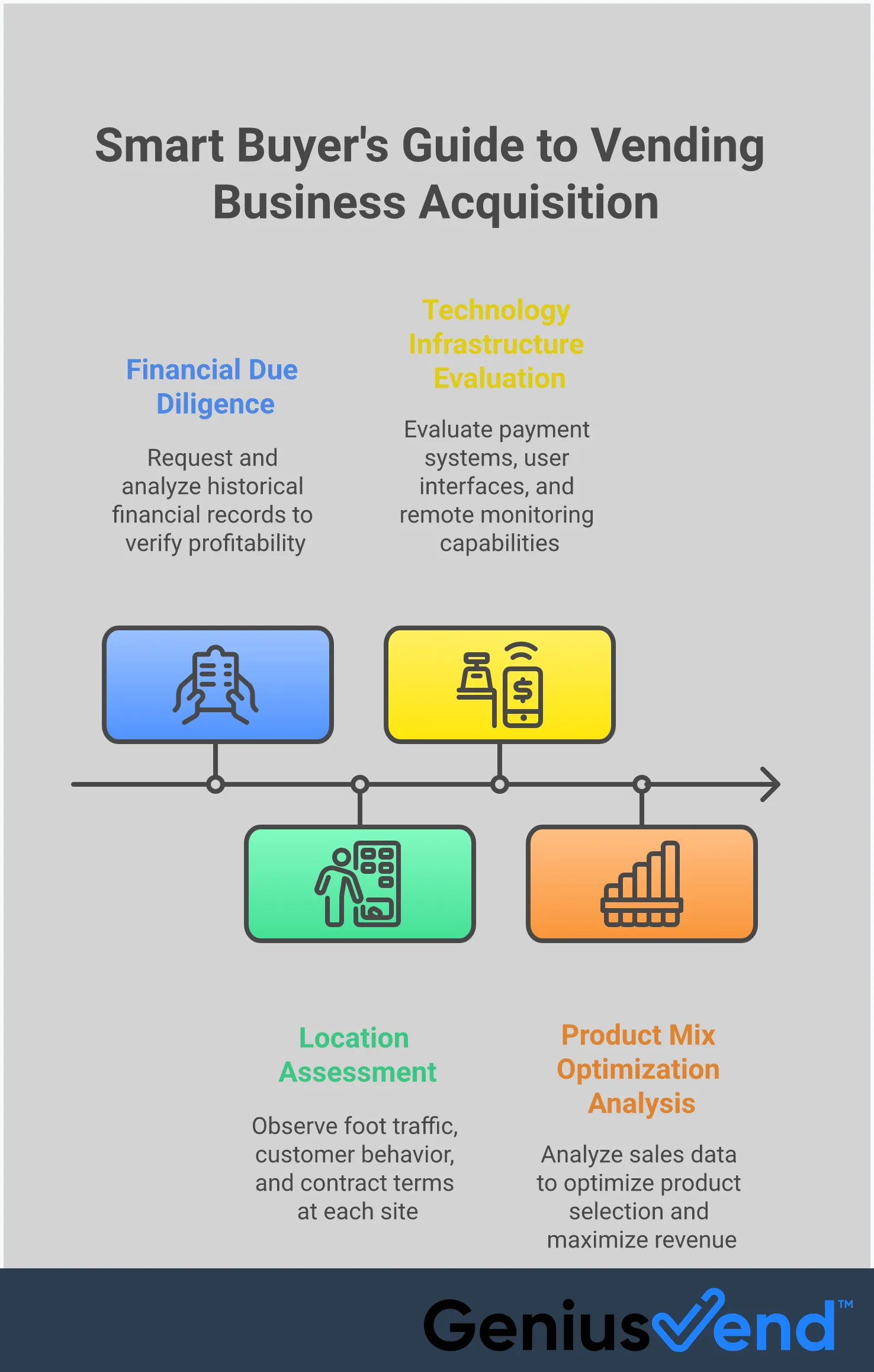
When you're ready to buy an existing vending business, you're not just buying machines—you're buying a portfolio of locations, contracts, and a customer base. Doing your homework upfront is the single best way to ensure you’re making a smart investment. Let’s walk through the four key areas you need to investigate before you sign on the dotted line. This isn't just about kicking the tires; it's about making sure the engine runs smoothly and has plenty of road ahead.
Analyzing Location Quality and Foot Traffic
A vending machine is only as good as its location. A route with machines in quiet, low-traffic areas won't generate much income, no matter how great the products are. You need to personally visit each location, preferably at different times of the day, to see the foot traffic for yourself. Is it a busy office building, a school, or a quiet community center? The number one priority is finding a spot with a steady stream of people who are likely to buy what you’re selling. A great machine in a bad spot is a losing game, so make location analysis your first step.
Checking Machine Condition and Tech
The physical assets of the business are the machines themselves, and their condition is critical. Ask the current owner for detailed maintenance and repair records. How old are the machines? Do they have modern payment systems like credit card readers or mobile tap-to-pay? Older, unreliable machines can quickly become a drain on your time and money. This is also a great opportunity to assess if you could improve profits by upgrading to newer, AI-powered smart coolers that offer a better customer experience and reduce maintenance headaches.
Reviewing Existing Contracts and Agreements
The contracts a vending business has with its locations are the foundation of its revenue. You need to read every single agreement to understand the terms you’ll be inheriting. How long is the contract valid? Does the location owner receive a commission on sales, and if so, how much? Are there any clauses that could cause problems down the road? A thorough vending route due diligence process will help you uncover any potential red flags in the paperwork before they become your problem. Don't skim this part; the details here can make or break your business.
Verifying Revenue and Financial Health
Finally, you need to verify that the business is as profitable as the seller claims. Don't just take their word for it—ask for at least two years of financial records, including profit and loss statements and detailed sales reports from each machine. Look for consistent revenue, healthy profit margins, and a clear picture of operational expenses like inventory costs and fuel. This financial deep dive will help you create a realistic vending route valuation and confirm that the asking price is fair for the business’s actual performance.
How to Vet a Vending Business's Financials
Buying a vending business is a big step, and the numbers need to tell a convincing story. Before you get too excited about a potential route, it’s time to put on your analyst hat and take a close look at the financials. The seller’s claims about profitability should be backed by clear, verifiable records. This process isn’t about distrust; it’s about making a smart, informed investment in your future. A healthy set of books is the best indicator of a healthy business.
Digging into Revenue History and Profit Margins
First things first, ask for at least two to three years of financial statements, including the profit and loss (P&L) statement. This shows you the money coming in and going out. Look closely at the gross revenue (total sales) and the net profit (what’s left after all expenses are paid). The difference is your profit margin, and you want to see a consistent, healthy one. Be sure to get a detailed breakdown of operational expenses—inventory, fuel, maintenance, and any location commissions. A clear understanding of these financials is the foundation of a good vending route valuation.
Confirming Sales Data and Maintenance Records
A summary P&L is a great start, but you need to verify the numbers. Ask for raw sales data, ideally pulled directly from each machine’s management software for an unfiltered look at product performance. While you’re at it, request detailed maintenance records for every machine. A well-maintained machine is a reliable asset; one with a history of frequent breakdowns is a money pit. These records reveal how the previous owner cared for their equipment and what future repair costs you might expect. This step is a critical part of your overall vending route due diligence and protects you from surprises.
Understanding Seasonal and Market Trends
A vending business rarely has perfectly flat sales all year. A route with machines in schools will likely see a dip in the summer, while one in an office park might slow down during major holidays. Review the month-over-month sales data to identify these seasonal trends. This helps you forecast cash flow and plan your inventory. It’s also smart to look at the bigger picture. Is the neighborhood around a key location growing? Is a major company downsizing? Understanding these market dynamics helps you assess the route’s long-term stability and potential for growth.
Where to Find Vending Businesses for Sale
Once you've decided to buy a vending business, the next question is: where do you find one? It's not always as simple as searching online, though that's a great place to start. The best opportunities are often found through a mix of online searching, direct outreach, and networking. Knowing where to look can save you time and connect you with serious sellers. Let's explore the most common places to find established vending routes and businesses up for grabs.
Online Marketplaces and Brokers
Your first stop will likely be online. Websites that list businesses for sale are a great resource for finding established vending routes. Platforms like BizBuySell or specialized sites such as Franchise Resales list existing businesses, including vending franchises, that are ready for a new owner. These listings provide initial details on revenue, machines, and locations. You can also work with a business broker who specializes in small business sales. They connect you with pre-vetted opportunities and help guide you through the negotiation and purchasing process, acting as a helpful intermediary.
Direct from Current Owners and Franchises
Sometimes the best deals aren't publicly listed. Reaching out directly to current vending machine owners can uncover opportunities before they hit the market. You can find these operators by checking the service stickers on machines in your area or connecting through local business groups. This approach gives you a direct line to the seller, allowing you to ask detailed questions about their operations. You can learn what products sell best and avoid common rookie mistakes. An owner looking to retire might be happy to sell to someone who shows genuine interest in their business.
Industry Networks and Trade Groups
Getting involved in the vending community is a powerful way to find businesses for sale. Join online forums, follow industry publications, and attend trade shows. These are the places where operators talk shop, share advice, and often mention they're looking to sell a route. You'll also stay on top of important technology innovations shaping the industry—like the shift to smart, AI-powered machines. Building relationships within these networks puts you in a prime position to hear about opportunities from trusted sources, giving you an edge over other buyers.
Common Mistakes to Avoid When Buying
Buying an existing vending route can feel like a fast track to success, and in many ways, it is. You get established locations, working machines, and immediate cash flow. But it's easy to get caught up in the excitement and overlook critical details. A few common missteps can turn a promising investment into a major headache. Knowing what to watch out for is the first step toward making a smart purchase that sets you up for long-term profit and growth. Let's walk through the biggest mistakes so you can confidently avoid them.
Skipping Your Homework (Due Diligence)
It’s tempting to take the seller’s word for everything and rush to close the deal, but that’s a huge risk. This is where due diligence comes in—it’s simply the process of doing your homework to verify that the business is what it appears to be. Neglecting this step means you won’t understand the true value or potential of the vending route you’re buying. You need to dig into the details: review financial statements, examine location contracts, and ask for maintenance records for every machine. A thorough due diligence checklist is your best friend during this process. It’s the only way to uncover potential problems before you invest your hard-earned money.
Overestimating How Much You'll Make
It’s natural to be optimistic about a new business, but letting that optimism cloud your judgment can be costly. A common mistake is projecting inaccurately high profits based on the seller's best-case scenarios instead of their actual history. While a vending business can be very profitable, you need realistic expectations. Scrutinize the financial records and create your own conservative sales forecast based on verified data. Consider factors like seasonality and the specific performance of each location. This grounds your decision in reality and helps you avoid disappointment down the road when the numbers don't match the initial hype. A solid, data-backed plan is always better than a hopeful guess.
Picking Poor Locations Without Research
A vending machine is only as good as its location. The success of your business depends almost entirely on foot traffic and customer demand, so you can't afford to get this wrong. Don't just rely on the list of locations the seller gives you. You need to visit every single spot yourself, preferably at different times of the day and on different days of the week. Is the business busy? Are people actually using the machines? A location that looks great on paper might be a dud in reality. Understanding what makes a profitable vending location is critical. Taking the time to personally vet each site ensures your machines are placed where they can generate consistent sales.
Ignoring the Age and Condition of Machines
The machines are the core assets of the business, and their condition directly impacts your bottom line. When you're buying a route with used equipment, you absolutely must investigate its history. Ask for detailed maintenance and repair records to understand how well the machines have been cared for. Confirm their age and find out if they’ve been upgraded to accept modern payments like credit cards or mobile tap-to-pay. An old, unreliable machine is a recipe for lost sales and expensive service calls. Inspecting each one personally is non-negotiable. Remember, the cost of upgrading your vending machines to modern, reliable smart coolers can be a significant expense you'll want to factor into the purchase price.
The Pros and Cons of Owning a Vending Business
Buying a vending business can feel like you’ve found the key to passive income. And while it can be an incredible, flexible business model, it’s not just about collecting cash once a week. Like any venture, it has its amazing highs and its challenging lows. Understanding both sides of the coin is the first step to making a smart purchase and setting yourself up for success.
A vending business offers a unique kind of freedom, but it also demands attention to detail and a solid strategy. Let’s get real about what you can expect—the good, the bad, and the things you need to be prepared for. By weighing these points carefully, you can decide if this is the right path for you and your financial goals.
The Upside: Passive Income and Scalability
The biggest draw of a vending business is the potential for a steady additional revenue stream without being tied to a desk. Once a machine is placed and stocked, it works for you 24/7. This model is also incredibly scalable. You can start with one or two machines and gradually build a profitable route as your time and budget allow.
Modern technology has made this even more achievable. Smart vending machines offer benefits like real-time inventory tracking, which means you know exactly what’s selling and when to restock without wasting a trip. This data-driven approach helps you optimize your product selection and pricing, leading to increased sales and happier customers who can always find what they want.
The Challenges: Maintenance and Competition
While the income can be passive, the business itself isn’t. One of the most critical operational tasks is performing regular maintenance to keep your machines in perfect working order. A broken machine isn’t making you money, and ignoring customer feedback about issues can quickly damage your reputation. You’ll need a plan for cleaning, servicing, and handling the occasional repair.
Competition and location are also huge factors. If you want to make money, the number one priority is placing your machines where people will actually use them. A high-traffic location can be the difference between success and failure. You’ll need to do your research to secure spots that give you a steady flow of customers and an edge over other vending operators in the area.
How to Finance Your Vending Business
Finding the money to buy a vending business can feel like the biggest hurdle, but you have more options than you might think. Securing funding is all about finding the right fit for your financial situation and business goals. Whether you’re buying a single machine or an entire route, there’s a path to get the capital you need. Let’s walk through some of the most common ways to finance your new venture, from traditional bank loans to financing designed specifically for equipment.
Exploring Bank Loans and SBA Options
Traditional bank loans and Small Business Administration (SBA) loans are often the first stop for aspiring business owners. The SBA doesn't lend money directly but guarantees a portion of the loan, which makes lenders more willing to offer favorable terms. These SBA loan programs can come with lower interest rates and longer repayment periods, making them an attractive choice. However, the application process can be rigorous. Lenders typically want to see a strong credit score, a solid business plan, and sometimes a couple of years of business history. If you’re just starting out, this can be a tough route, but it’s worth exploring if you meet the criteria.
Using Equipment Financing and Other Methods
If a traditional loan isn't the right fit, don't worry. Equipment financing is a fantastic alternative designed specifically for purchasing assets like vending machines. With this type of loan, the machine itself acts as collateral. This often makes it easier to qualify for, especially for new entrepreneurs without a long business history. Beyond equipment loans, you can also look into personal loans, using your savings, or even a merchant cash advance. Each of these vending business financing methods has its own set of pros and cons, so take the time to weigh which one aligns best with your financial health and long-term vision.
You Bought the Business—Now What?
Congratulations! You’ve officially purchased a vending business. The keys are in your hand, and you’re ready to start earning. Before you stock your first machine, there are a few crucial administrative steps to take care of. Getting your legal and operational foundations right from the start will set you up for a smooth, profitable journey. Think of this as the final part of the setup phase—the one that turns your new asset into a fully functioning, money-making operation. Let's walk through exactly what you need to do next to get everything running perfectly.
Getting Your Licenses, Permits, and Insurance
First things first, let's handle the paperwork. Every city and state has its own rules, so you'll need to verify which business licenses and permits are required to operate vending machines in your area. This might include a general business license, a seller's permit for sales tax, or even health permits if you're selling food. Taking care of this now helps you operate legally and avoid any surprise fines down the road. Next, secure business insurance. A general liability policy is essential to protect you from accidents or property damage related to your machines. It’s a small investment that provides major peace of mind as you grow your business.
Setting Up Your Supplier and Service Contracts
Now for the fun part: stocking your machines. If you inherited supplier relationships, take time to review them. Are the prices competitive? Is the product selection right for your locations? Don't be afraid to shop around for new wholesale suppliers to find the best deals. A key to success is to track product performance and adjust your offerings based on what sells. Smart machines, like those from Genius Vend, make this incredibly easy by giving you real-time sales data. This allows you to analyze your net profit margins and operational costs effectively, ensuring every product you stock is working hard for your bottom line. This data-driven approach helps you make smarter purchasing decisions and keep your customers happy.
Related Articles
- How to Start a Vending Machine Business
- How to Buy a Vending Machine Business: 7 Steps
- Vending Machine for Sale: A Buyer's Guide for 2025
- How Much to Buy a Vending Machine: The Real Cost
Frequently Asked Questions
Is it better to buy an existing vending route or start a new one from scratch? Buying an existing route gives you the major advantage of immediate cash flow. You're purchasing established locations, working machines, and a customer base that's already buying. Starting from scratch means you have to do the hard work of finding and securing profitable locations, which can be a slow and challenging process. While starting fresh gives you more control over your machine choices and locations from day one, buying an established business is often a faster path to profitability.
How can I be sure the seller's reported income is accurate? Trust, but verify. Never take financial claims at face value. The best way to confirm a business's health is to request detailed sales reports, ideally pulled directly from the machine management software, for at least the last two years. You should also review profit and loss statements and bank deposits. Cross-referencing these documents helps you confirm that the money the seller claims to be making is actually hitting their bank account.
What should I do if the business I'm buying has older machines? Older machines aren't necessarily a deal-breaker, but they should be a major point of negotiation. You need to factor in the potential cost of repairs and future upgrades. Use the age and condition of the equipment to negotiate a lower purchase price. This gives you the capital to either perform necessary maintenance or, even better, invest in modern smart coolers that provide a better customer experience and give you valuable sales data.
How "passive" is a vending business, really? While a vending business offers more flexibility than a typical 9-to-5 job, it's more semi-passive than truly passive. The machines do the selling for you, but the business requires active management. You'll be responsible for sourcing and stocking inventory, servicing the route, performing machine maintenance, and managing the finances. Technology can make the work much more efficient, but it still requires your consistent effort to run smoothly and profitably.
Once I buy a route, can I change the products in the machines? Absolutely, and you should! One of the best ways to improve a route's profitability is to optimize the product selection. The previous owner's choices might not be the best ones. Pay close attention to what sells and what doesn't at each specific location. Using sales data, especially from smart machines, allows you to tailor your inventory to customer preferences, remove slow-moving items, and test new products to maximize your revenue.