

The vending industry isn't what it used to be. Customers today expect more than a clunky machine that might eat their dollar; they want smooth, cashless transactions and interesting product options. This shift means that buying a vending machine is no longer just about coils and keypads. It's about investing in technology that will keep your business competitive for years to come. Smart, AI-powered machines are setting a new standard for both customer experience and operator efficiency. This guide will explore all your options, from traditional sellers to modern innovators, helping you find the best place to buy a vending machine that will not only make you money today but also position your business for long-term success.
Key Takeaways
- Prioritize modern tech for modern profits: Your machine must accept cashless payments to meet customer expectations. Features like remote inventory tracking are just as crucial, saving you time and preventing lost sales from sold-out products.
- Look beyond the sticker price for the best deal: A cheap used machine can cost you more in the long run with repairs and downtime. Investing in a new machine with a warranty and reliable tech protects your business and ensures consistent income.
- Choose your supplier as carefully as your machine: Your supplier is your partner for parts, repairs, and technical support. Vet their reputation and customer service thoroughly before buying to ensure you have a reliable team to call when you need help.
Where to Buy New and Used Vending Machines
Finding the right place to buy your vending machine is just as important as choosing the machine itself. Your supplier can be a long-term partner, offering support, parts, and advice as you grow your business. The good news is you have plenty of options, from cutting-edge manufacturers creating the next generation of smart machines to local sellers with used equipment ready for a new home.
Whether you’re looking for a brand-new, AI-powered machine that offers a seamless customer experience or a reliable refurbished unit to get your route started, knowing where to look is the first step. We’ll walk through the top places to find new and used vending machines, covering everything from specialized online retailers to local marketplaces. Each option has its own set of pros and cons, so think about your business goals, budget, and how much support you’ll need along the way.
Genius Vend: AI-Powered Smart Vending
If you want to build a future-proof vending business, starting with a smart machine is the way to go. At Genius Vend, we specialize in AI-powered smart coolers and freezers that create a simple "Tap, Grab & Go" experience for customers. This modern approach eliminates issues like product jams and payment errors, leading to happier customers and more sales. For operators, our machines offer real-time inventory tracking and remote management right from your phone. This means fewer wasted trips for restocking and more time to focus on growing your business. These smart vending trends are what customers are coming to expect, and our machines are designed to deliver that seamless, modern experience.
eVending.com: A Comprehensive Online Marketplace
For those looking for a wide variety of machine types, eVending.com is a major online retailer that sells new and refurbished machines directly from the factory. They offer a huge selection, including combo snack and drink machines, standalone snack or drink units, and even specialty machines for things like frozen food or coffee. This is a great place to browse if you’re still figuring out what kind of products you want to sell. Because they cater to both new and growing businesses, you can find equipment that fits different budgets and needs, making them a popular one-stop-shop for many operators starting their first route.
Vending.com: An Industry Leader in Machine Sales
Another big name in the industry is Vending.com. They are known for providing strong customer support, which is a huge plus when you're new to the business. They offer financing options to help with the initial investment and provide free lifetime technical support for the machines they sell. One of their standout services is "White Glove Delivery," where they can ship and place the machine directly at your location anywhere in the U.S. This level of service can be incredibly helpful, saving you the headache of coordinating complicated freight shipping and installation on your own.
Local Dealers and Authorized Distributors
Sometimes, the best partner is one you can find in your own community. Buying from a local dealer allows you to see the machines in person before you commit. You can also build a relationship with a supplier who can provide hands-on support and maintenance. A great way to find local sellers is to connect with other vending operators in your area; they often sell their used equipment when they upgrade. Searching for small wholesalers or authorized distributors nearby can also be a great strategy. These local connections often provide peace of mind with warranties or guarantees you might not get from a distant online seller.
Online Marketplaces and Auction Sites
If you’re on a tight budget, you might be tempted to check online marketplaces like Facebook Marketplace, Craigslist, or eBay. You can sometimes find used machines for a few hundred dollars, which seems like a great deal. However, this route comes with significant risks. It’s difficult to verify the machine's condition without seeing it in person, and you’ll likely get no warranty or post-sale support. While you might find a hidden gem, you could also end up with a machine that needs costly repairs. If you explore this option, proceed with caution and try to inspect the machine before you buy.
How to Choose the Right Vending Machine
Picking your first (or next) vending machine is a huge decision. It’s more than just a box that dispenses snacks; it’s the core of your business. The right machine can make a location profitable and keep customers happy, while the wrong one can lead to endless maintenance and missed sales. Think of it as choosing a business partner—you want one that’s reliable, efficient, and a good fit for your goals.
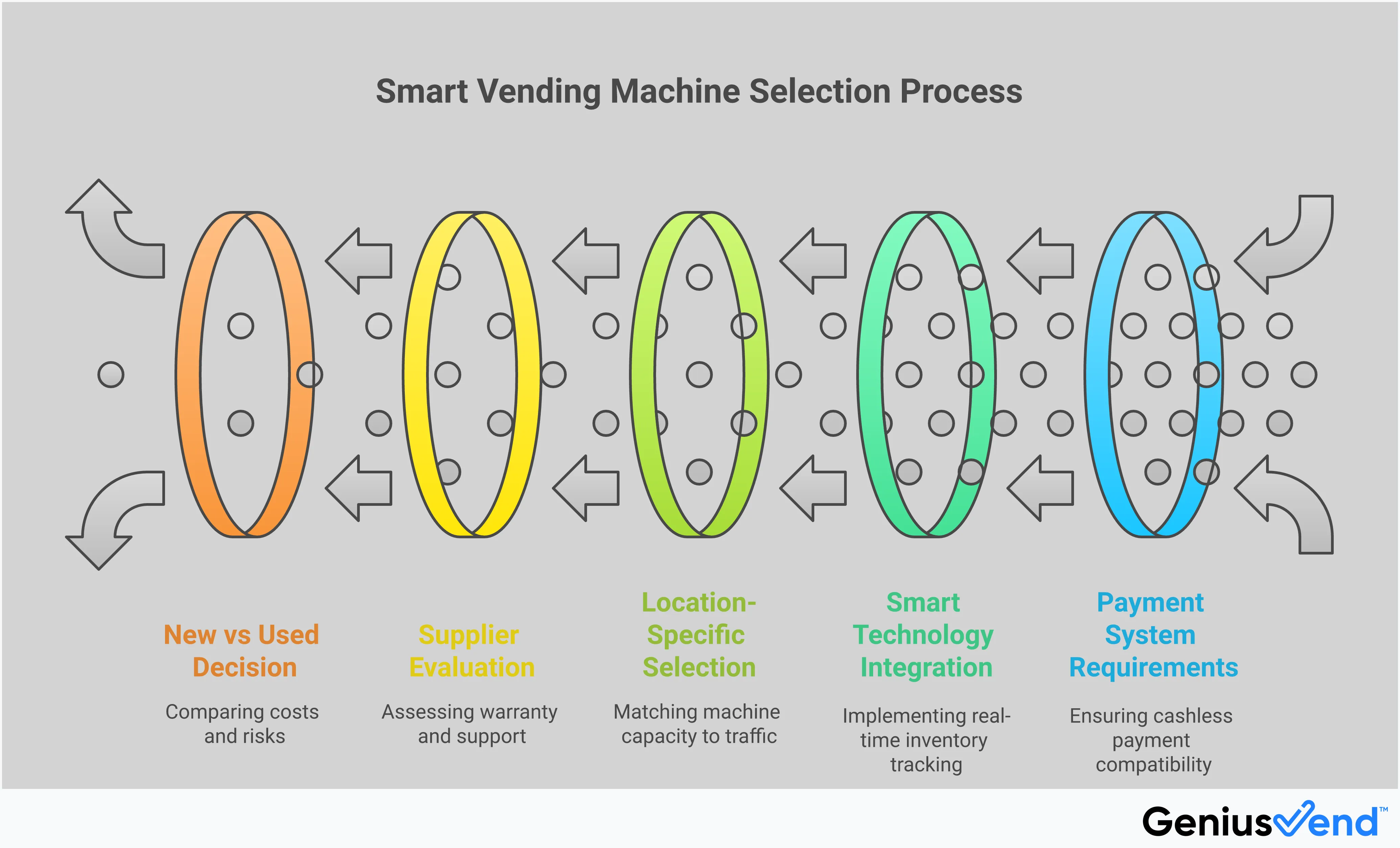
To make the best choice, you need to think through a few key factors. It starts with what you plan to sell and extends to the technology you’ll use to sell it. You’ll also want to consider who your customers are and where they’ll be. Breaking it down into smaller steps makes the process much more manageable. Let’s walk through the five most important things to consider to find the perfect machine for your business.
Pick Your Machine Type: Snack, Drink, or Combo
First things first: what are you going to sell? The most common machines are built for snacks, drinks, or a combination of both. While traditional combo machines split the space between coils for snacks and slots for cans or bottles, modern smart coolers offer much more flexibility. Because they don't rely on specific dispensing mechanisms, you can stock anything from sandwiches and salads to energy drinks and chips in the same machine.
The best choice depends entirely on your location. An office might be the perfect spot for fresh food, coffee, and healthy snacks. A gym, on the other hand, would do better with protein bars, sports drinks, and water. Don't guess—ask the location manager what their employees or customers want.
Consider Payment Options: Cash, Card, and Mobile
These days, fewer people carry cash. A machine that only accepts coins and bills is going to miss out on a lot of sales. To meet customer expectations, you need to offer a variety of payment options. At a minimum, your machine should accept credit and debit cards. Even better, look for one that supports mobile payments like Apple Pay and Google Pay. A quick tap of a phone or card makes the buying process seamless.
Going cashless also adds a layer of security. With no cash stored inside, your machine becomes a less appealing target for theft. Plus, you won't have to spend time counting coins or making trips to the bank. Modern cashless payment systems are a win-win, offering convenience for your customers and peace of mind for you.
Find the Right Size and Capacity
When it comes to vending machines, size is about more than just floor space—it’s about capacity. A machine that’s too small for a high-traffic location will constantly sell out, leading to frustrated customers and lost revenue. A machine that’s too large for a quiet office will tie up your capital in slow-moving inventory.
Before you buy, estimate the foot traffic at your chosen location. A busy factory floor will need a high-capacity machine that can handle hundreds of sales a week. A small office breakroom might only need a compact model. Smart machines give you an edge here, as they offer real-time inventory tracking. You’ll know exactly what’s selling and when to restock, helping you optimize your capacity perfectly.
Decide Between Smart Features and Traditional Tech
Traditional vending machines with coils and keypads still exist, but smart machines are quickly becoming the industry standard. Instead of a clunky interface, smart machines often feature touchscreens, clear glass doors, and an easy "Tap, Grab & Go" payment system. This creates a much better customer experience, encouraging repeat business.
For you, the operator, the benefits are even bigger. Smart vending platforms allow you to manage your entire business from your phone. You can see sales data in real time, track inventory levels, and even change prices remotely. This information helps you make smarter decisions about which products to stock, leading to higher profits and less waste.
Match the Machine to Your Location
Ultimately, the perfect machine is the one that best serves its location. You wouldn't put a machine full of candy in a health clinic, and you wouldn't stock gourmet salads in a high school. Before you even think about buying a machine, you need to secure a location and understand its unique needs.
Talk to the business owner or property manager. Who are the people who will be using the machine every day? What do they want? An office with a young workforce might love kombucha and cold-brew coffee. A blue-collar environment might prefer classic sodas and hearty snacks. Doing this research upfront ensures you invest in a machine and a product lineup that will actually sell.
Should You Buy a New or Used Vending Machine?
One of the first big decisions you'll make as a vending operator is whether to invest in a brand-new machine or save some cash upfront with a used one. It’s a classic debate, and the right answer really depends on your budget, your tolerance for risk, and your long-term business goals. A lower price tag on a used machine can be tempting, especially when you’re just starting out and trying to keep costs down. Many successful operators have gotten their start by finding great deals on pre-owned equipment, proving it's a viable path.
However, that initial savings can sometimes come with hidden costs and headaches down the road. A new machine offers reliability, modern features, and the peace of mind that comes with a manufacturer's warranty. Before you start browsing online marketplaces or calling local sellers, it’s important to weigh the pros and cons of each path carefully. Think about not just the purchase price, but the total cost of ownership over the life of the machine. This includes potential repairs, downtime that leads to lost sales, and the value of your own time spent fixing issues instead of growing your business. This section will walk you through what you need to know to make a smart investment that pays off in the long run.
The Perks of Buying a New Machine
The biggest advantage of buying a new vending machine is the warranty. Most new machines come with manufacturer support, which means if something breaks, they’ll fix it. This can save you a ton of money and stress, especially in your first year of operation when you're still learning the ropes. A warranty protects your investment and prevents a single malfunction from derailing your profits.
Beyond the warranty, new machines give you access to the latest technology. Modern features like cashless payment systems, remote inventory management, and AI-powered checkout are what customers expect and what will set your business apart. Starting with a reliable, high-tech machine means less time spent on repairs and more time focused on growing your route and keeping your customers happy.
The Pros and Cons of Used Machines
The main appeal of a used machine is, of course, the lower initial price. For entrepreneurs on a tight budget, buying used can feel like the only way to get started. Finding a machine from a local seller is often a great strategy, as it allows you to inspect the equipment in person and avoid expensive shipping fees. Many operators have successfully built their businesses on a foundation of carefully selected used machines.
The downside is the risk. Used machines are typically sold "as-is," with no warranty to fall back on if something goes wrong. A broken bill validator or a faulty cooling unit can lead to expensive repairs and lost sales while the machine is out of service. You also run the risk of getting a machine with outdated technology that can’t accept mobile payments, which might frustrate customers and limit your income.
Common Myths About Used Machine Prices
Don't assume that "used" always means you're getting a bargain. One of the most common misconceptions is that any used machine is significantly cheaper than a new one. In reality, some sellers price their used equipment almost as high as a brand-new model, but without any of the benefits like a warranty or modern features. It’s easy to get so focused on avoiding the cost of a new machine that you overpay for a used one.
Before you commit, do your homework. Research the price of a comparable new machine so you have a clear benchmark. A used machine might seem like a good deal, but if it’s only a few hundred dollars less than a new one with a full warranty and the latest tech, you aren't really saving money in the long run.
Red Flags to Look for in Used Machines
If you decide to explore the used market, you need to be a savvy shopper. Treat it like buying a used car—ask a lot of questions and be on the lookout for red flags. Start by asking the seller about the machine's history. How long have they owned it? What were its sales like? What repairs have been done? A seller who is vague or can't provide clear answers might be hiding something.
When you inspect the machine, test everything from the coin mechanism and bill validator to the cooling system. It’s also a good idea to stick with machines from the same manufacturer if you plan to build a route. This makes sourcing parts and learning how to perform basic repairs much simpler. If you’re not comfortable inspecting the machine yourself, consider bringing along someone with more experience.
What Are the Best Vending Machine Brands?
When you start looking for a vending machine, you’ll see a few legacy brand names pop up again and again. While companies like Crane, Royal, and Vendo have been industry staples for decades, the "best" brand today is less about the name on the machine and more about the technology inside it. The vending landscape has changed dramatically, and modern operators need modern solutions.
Instead of focusing solely on brand reputation, it’s more helpful to evaluate manufacturers based on the features that directly impact your business's success. Think about things like payment systems, inventory management, and the customer experience. The most innovative brands are building machines that are easier for you to manage and more appealing for customers to use. A reliable machine is great, but a reliable machine that also gives you sales data, simplifies restocking, and accepts mobile payments is what will set your business apart. As you explore your options, look for a partner who provides not just a machine, but a complete, forward-thinking vending solution.
Meet the Top-Rated Manufacturers
Finding a top-rated manufacturer means looking for a company that blends sturdy construction with modern innovation. While traditional brands are known for their durable hardware, leading-edge companies are redefining what makes a machine great. The most popular machines on the market are those that sell food and drinks, and the best manufacturers are making that experience seamless.
Look for brands that prioritize the operator’s experience. This includes offering robust customer support, intuitive management software, and machines that are simple to service. A top-rated manufacturer doesn't just sell you a box; they provide a full ecosystem designed to help your business thrive. The best brands today are the ones that understand that your success is their success, offering technology that helps you increase your profits and streamline your daily tasks.
Must-Have Smart Technology Features
Smart technology is no longer a luxury in the vending world—it’s a core feature for any serious operator. Smart vending machines use technology like AI and cloud connectivity to offer incredible benefits. Think of it as the difference between a flip phone and a smartphone. Both can make calls, but one opens up a world of possibilities.
The most important smart feature is real-time data. Smart vending machines can tell you exactly what’s selling and when, so you can make data-driven decisions about your product lineup. They also offer personalization and remote inventory tracking, which helps you keep popular items in stock. This technology allows you to manage your entire route from your phone, saving you countless hours and wasted trips. It’s about working more efficiently and giving your customers exactly what they want.
Why Touchscreens and Cashless Payments Matter
The days of digging for exact change are over. Modern customers expect convenient and flexible payment options, and your vending machine should deliver. Offering cashless payments—including credit cards, debit cards, and mobile wallets like Apple Pay—is essential. It makes purchasing easier for customers and significantly reduces the risk of theft and vandalism for you, since there’s less cash stored inside the machine.
Beyond payments, interactive displays and touchscreens create a more engaging and user-friendly experience. A bright, clear touchscreen is more inviting than a panel of clunky buttons. It allows you to display nutritional information, run promotions, and even show advertisements. This kind of modern retail experience is what customers are used to, and it can make your machine the go-to choice in any location.
How to Manage Your Inventory Remotely
One of the biggest game-changers for vending operators is the ability to manage inventory remotely. Instead of driving to each machine just to see what needs to be restocked, smart machines let you check inventory levels from an app on your phone. This is a massive time-saver and allows you to plan your restocking routes with incredible efficiency.
Real-time inventory tracking means you get alerts when a product is running low, so you can restock it before you lose a sale. You’ll never show up to a machine with the wrong products again. This level of oversight helps you optimize your stock, reduce waste from expired products, and ensure your best-sellers are always available. Ultimately, it leads to happier customers and higher sales, all with less guesswork on your part.
How to Finance Your Vending Machine
Buying your first vending machine is a big step, but the price tag shouldn't hold you back. Whether you’re buying a brand-new smart machine or a refurbished traditional one, there are several ways to fund your purchase without draining your savings. From direct financing to savvy shopping, let’s walk through how you can make this investment work for your budget. The key is to find a path that lets you get a high-quality, profitable machine up and running as soon as possible.
Explore Financing and Leasing Options
If you don't have the cash on hand, don't worry—most new entrepreneurs don't. Many manufacturers and major distributors offer in-house financing, sometimes with little to no money down. This is one of the most straightforward ways to get a new, reliable machine with a warranty. While it's smart to be aware of interest rates, don't get too hung up on small differences. Your main focus should be on getting a machine that will be profitable. A slightly higher payment on a machine in a great location will always beat a low payment on one that nobody uses. You can also look into equipment financing options from third-party lenders, which are designed specifically for business purchases like this.
Find Discounts and Ways to Save
If you’re on a tighter budget, buying used can be a great way to get started. Check local online marketplaces like Facebook Marketplace and Craigslist, where you can sometimes find machines for as low as $500. These deals often require quick action and the ability to transport the machine yourself. When buying from any seller, ask about their return policy. Some dealers offer a short window, like 14 days, to return a machine if it doesn't meet your expectations. This can be a lifesaver, protecting you from getting stuck with a lemon. Always be on the lookout for seasonal sales or bundle deals from larger distributors, especially if you plan on buying multiple machines.
Plan Your Budget for the Full Investment
A new, high-quality vending machine typically costs between $4,500 and $6,500, while a used one might run from $3,000 to $4,000. If a used machine isn't significantly cheaper than a new one, I always recommend going new. The peace of mind that comes with a warranty, modern payment systems, and reliable performance is worth the extra investment. Remember, the sticker price is just one part of your initial cost. Your business budget should also account for your first batch of inventory, any location finder's fees, sales tax, and a small emergency fund for unexpected repairs. Planning for these expenses from the start will set you up for a much smoother launch.
Avoid These First-Time Buyer Mistakes
Buying your first vending machine is an exciting step, but it's easy to make a few missteps along the way. I've seen many new operators get tripped up by the same common issues. Let's walk through the biggest mistakes so you can avoid them and start your business on the right foot, ensuring your first investment is a smart one.
Skipping the Inspection on a Used Machine
Buying a used machine from a local seller can be a great way to get started, but it comes with a major catch: you have to be your own quality control. Skipping a thorough, in-person inspection is one of the biggest gambles you can take. A machine might look fine in photos, but you need to see it run. Test the cooling unit, make sure the bill validator and coin mechanism accept money, and check for any signs of rust or damage. A few minutes of inspection can save you from a machine that breaks down right after you find a great location.
Choosing Used Just to Save a Few Dollars
It’s tempting to go for the cheapest machine you can find, but that initial savings can disappear fast. I’ve heard horror stories from operators who bought a used machine for a steal, only to have it break down within months. Suddenly, that "deal" requires hundreds, or even thousands, in repairs, not to mention the lost sales from downtime. Think about the total cost of ownership, not just the sticker price. A reliable new machine might cost more upfront, but it comes with a warranty, modern tech, and peace of mind, which are often worth the initial investment.
Ignoring Modern Payment and Safety Features
In a world where most of us barely carry cash, a vending machine that only takes coins and bills is a relic. You absolutely need a credit card reader. Most sales today are cashless, so without one, you're leaving a lot of money on the table. Modern customers expect to tap their card or phone and go. That’s why features like mobile payments and a simple, frictionless checkout experience are so important. A machine that offers a seamless cashless payment system isn't just a convenience—it's a necessity for maximizing your profits.
Buying Online Without a Local Support Plan
Finding a machine online can open up your options, but it also introduces new risks, especially if the seller is hundreds of miles away. What happens if it arrives damaged from shipping? Who do you call for help if it stops working a week later? Getting support from a distant, independent seller can be a nightmare. Before you click 'buy,' have a clear support plan. Either purchase from a company with a strong national service network or have the number of a trusted, local repair technician ready to go. Without that safety net, you could be stuck with a very large, very expensive paperweight.
Key Questions to Ask Before You Buy
Buying a vending machine is a big investment, so you want to get it right. Going beyond the price tag and features to understand the long-term support and logistics will save you a ton of headaches down the road. Before you finalize any purchase, make sure you get clear answers to these critical questions. Think of this as your pre-flight checklist to ensure a smooth and profitable journey into vending.
What Are the Warranty and Service Details?
A vending machine is a piece of commercial equipment that runs 24/7, so things will eventually need fixing. This is where a good warranty becomes your best friend. Ask specifically what the warranty covers and for how long. Many new machines come with a multi-year parts warranty, which means the manufacturer will cover the cost of replacement components if something breaks. This can save you hundreds, if not thousands, of dollars in unexpected repair costs. A strong warranty is also a sign that the company is confident in its product's quality and durability.
What Does Installation and Training Involve?
Getting the machine delivered is just the beginning. You need to know how to operate it, stock it, and troubleshoot minor issues. Ask potential suppliers what their installation and training process looks like. Do they offer on-site setup, or will you be following a manual? A great supplier provides comprehensive support, including clear instructions and access to a customer service team. Some companies even offer lifetime technical assistance, which is invaluable as you grow your vending business. You want a partner who is invested in your success, not just in making a sale.
How Available Are Parts and Maintenance?
Every hour your machine is out of service is an hour you're losing money. That's why the availability of parts and maintenance is so important. Before you buy, ask how you can get replacement parts when you need them. Are they readily available, or will you be waiting weeks for a shipment? This is a key reason why many experienced operators stick to one manufacturer for their entire route—it simplifies repairs and part-sourcing. Easy access to parts is a critical piece of the puzzle for keeping your machines running and your profits flowing.
Who Handles Repairs and Tech Support?
When your machine’s card reader suddenly stops working, who do you call? Knowing the answer to this question before you buy is essential. Ask if the supplier provides in-house technical support. Reputable companies offer free lifetime support via phone, video calls, or email, connecting you with experts who can walk you through troubleshooting steps. For smart machines, find out if they offer remote diagnostics to identify problems without a site visit. Having a reliable support system in your corner gives you the confidence to handle any issue that comes your way.
How to Pick the Right Supplier
Finding the right vending machine is only half the battle; choosing the right supplier is just as important. Think of this as a long-term business partnership, not a one-time purchase. A great supplier won’t just sell you a machine—they’ll provide the support and resources you need to help your vending business succeed. The quality of their service, the reliability of their equipment, and their industry reputation all play a huge role in your potential for profit. Before you commit, it’s smart to vet potential suppliers carefully. A little research upfront can save you from major headaches and expenses down the road, ensuring you have a partner you can count on when you need them most.
Compare Price vs. Total Value
It’s easy to get fixated on the initial price tag, but the cheapest machine is rarely the best deal. Instead, focus on the total value you’re getting for your investment. A machine that costs a bit more upfront but comes with a comprehensive warranty, lifetime tech support, and readily available parts will likely save you money in the long run. Consider the hidden costs of a cheaper machine: frequent breakdowns mean lost sales and expensive repair bills. A quality supplier provides a reliable asset, not a liability. When you calculate the total cost of ownership, you’ll often find that investing in a dependable machine from a reputable source offers a much better return.
Evaluate Their Customer Service and Support
Imagine your machine’s card reader stops working on a busy Friday. How quickly can you get help? This is where a supplier’s customer service truly shows its worth. Before buying, find out exactly what their support system looks like. Do they offer phone, email, or chat support? What are their hours? A supplier with a dedicated and accessible support team is invaluable, especially when you’re just starting out. Ask if they provide any training or setup assistance to get you up and running smoothly. Strong customer support isn’t just a bonus; it’s a critical part of your business’s support system.
Understand Their Service and Reliability
Your vending machine only makes money when it’s working. That’s why equipment reliability is non-negotiable. Look for suppliers who stand behind their products with a solid warranty. A multi-year parts warranty is a good sign that the manufacturer is confident in their machine’s quality. Ask about their process for handling repairs and how quickly you can get replacement parts. A supplier who makes you wait weeks for a critical component can seriously impact your income. Choosing a supplier known for durable, low-maintenance machines ensures more uptime, happier customers, and a healthier bottom line for your business.
Check Reviews and Industry Reputation
You wouldn’t hire an employee without checking their references, so don’t buy a machine without researching the supplier’s reputation. Look beyond the testimonials on their website. Search for genuine customer feedback on independent platforms and in online vending communities. Forums like Reddit’s r/vending subreddit can be a great place to find honest opinions from other operators. A supplier with a long-standing positive reputation is likely doing things right, from selling quality equipment to providing dependable service. Consistent positive reviews are a strong indicator that you’re choosing a partner you can trust to help grow your business.
Related Articles
- Where Can I Buy a Vending Machine? A 2025 Guide
- How & Where to Buy a Vending Machine in 2025
- "Vending Machines For Sale Near Me" - Should I Buy New or Used?
- Vending Machines for Sale: A Buyer's Guide
- How to Buy a Vending Machine: A 7-Step Guide
Frequently Asked Questions
Do I need to find a location before I buy a vending machine? Yes, absolutely. Securing a profitable location is the most important part of the business, and the location’s needs should determine the machine you buy. You wouldn't want to purchase a large snack and drink machine only to find the perfect spot is a health-conscious gym that wants fresh salads and protein shakes. Always secure your location first, talk to the manager about what their people want, and then invest in a machine that perfectly meets those needs.
What's the single most important feature my first machine should have? Hands down, it’s a reliable cashless payment system. More people pay with cards and phones than with cash, and you’ll miss out on a huge number of sales without one. A machine that accepts credit cards and mobile payments like Apple Pay provides a smooth, convenient experience for customers. It also means you don't have to worry about collecting and counting cash, which saves you time and makes your machine less of a target for theft.
I found a really cheap used machine online. Should I buy it? While a low price is tempting, you have to be extremely careful. A cheap machine often comes with hidden costs, like needing immediate repairs or having outdated technology that customers won't use. If it's only a few hundred dollars less than a new model, you're almost always better off buying new to get a warranty and modern features. If you do consider a cheap used machine, make sure you can inspect it in person and test every single function before any money changes hands.
How much should I budget for my first machine, including startup costs? The machine itself is just one piece of the puzzle. While a new, high-quality machine can range from $4,500 to $6,500, you should also plan for other initial expenses. You'll need to budget for your first round of inventory to stock the machine, sales tax on the purchase, and potentially a location finder's fee. It's also wise to set aside a small emergency fund for any unexpected issues. Planning for the total investment will give you a much clearer financial picture from the start.
What’s the real difference between a smart cooler and a traditional combo machine? A traditional combo machine uses coils and slots to dispense specific products, which limits what you can sell and can lead to frustrating product jams. A smart cooler, on the other hand, uses an open-shelf system with AI-powered sensors. Customers simply tap their card, open the door, grab whatever they want, and walk away. This gives you the flexibility to sell items of any shape or size—from sandwiches and salads to drinks and snacks—all in one machine, creating a much better experience for everyone.