

The appeal of a vending business is clear: it offers a flexible way to generate consistent, passive income. But turning that potential into actual profit starts with a solid foundation. A successful route isn’t built on luck; it’s built on a smart and thorough strategy from day one. That's where this guide comes in. We’re going to cover the essential elements of a profitable vending machine setup, showing you how to make the right choices at every stage. We’ll discuss how to find prime locations, why modern AI-powered machines are a game-changer, and how to stock your machine for maximum sales. This is your blueprint for building a sustainable and scalable business.
Key Takeaways
- Use smart technology to make data-driven decisions: An AI-powered machine gives you real-time sales and inventory data, allowing you to stock what customers love and manage your business efficiently from your phone.
- Find the right home for your machine: Your profitability depends on placing your machine in a high-traffic area with a captive audience. Secure these prime spots with a professional pitch and always get a signed location agreement.
- Treat your machine like your storefront: A clean, reliable, and well-stocked machine with flawless cashless payment options is your best marketing tool. It builds customer trust and encourages people to come back again and again.
Getting Started: Your Vending Machine Setup Guide
So, you’re ready to get your vending business off the ground. It’s an exciting move! Setting up your first machine might seem like a huge task, but it’s completely manageable when you break it down into a few key steps. From finding the perfect spot to stocking it with goodies, this guide will walk you through the entire process. Think of it as your friendly checklist to getting started on the right foot. With a little planning, you’ll have your machine up, running, and ready to serve customers in no time.
The Setup Process from Start to Finish
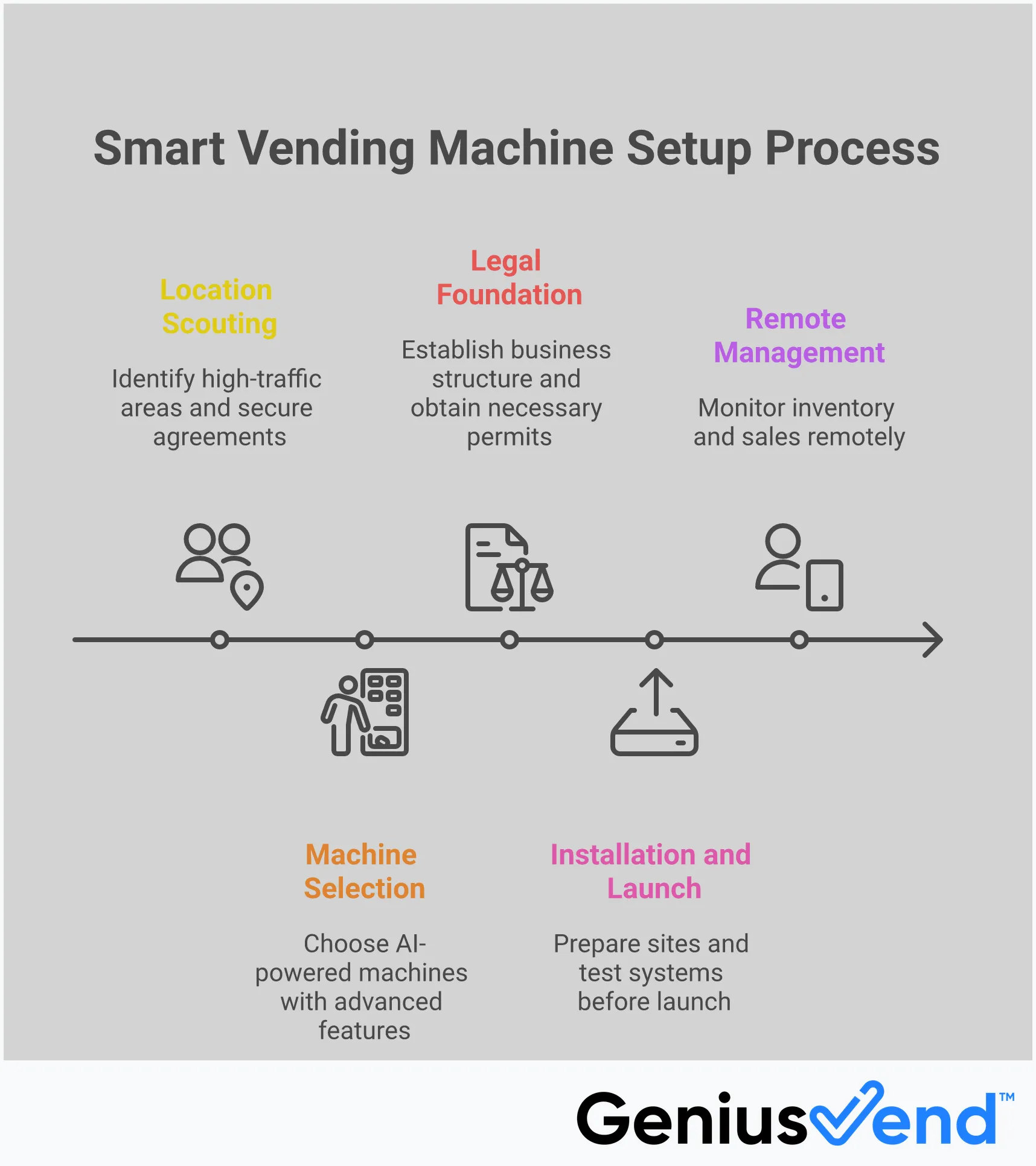
Let's walk through what it takes to get your first machine humming. The process is pretty straightforward. First, you’ll need to find a great, high-traffic spot—think office break rooms, apartment building lobbies, or factories. Once you have a location locked down, you can get your machine. Next comes the fun part: stocking it with snacks and drinks people love. You can often find great deals on products by buying in bulk from wholesalers. Make sure your machine is ready to accept all kinds of payments, including cards and mobile tap-to-pay, to make buying super easy for customers. Finally, you'll install it, making sure it's on a level surface with a little breathing room for ventilation.
How Long Does Setup Take?
You might be surprised at how quickly you can get everything in place. Once you have a location confirmed, you can usually have the machine delivered and set up within a couple of weeks. The biggest thing to plan for is the actual move. Vending machines are heavy—we’re talking around 700 pounds—so you’ll definitely need a dolly and a friend or two to help get it into position safely. While the physical setup doesn't take long, the success of your launch really comes down to careful planning and execution. Taking the time to get everything right from the start will save you a lot of headaches later and set you on the path to a profitable business.
How to Choose the Right Vending Machine
Picking the right vending machine is one of the most important decisions you'll make for your business. It's not just a box that dispenses snacks; it's the foundation of your customer experience and your primary tool for generating revenue. The machine you choose will determine what you can sell, where you can place it, and how much time you'll spend managing it. From classic coil machines to AI-powered smart coolers, the options can feel overwhelming. But by focusing on a few key areas—technology, size, and product compatibility—you can select a machine that fits your business goals and sets you up for long-term success. Let's walk through what you need to consider to make a smart choice.
Traditional vs. Smart Vending: What's the Difference?
The biggest choice you'll face is between a traditional machine and a smart one. Traditional machines are the ones you probably grew up with—coils push a product forward until it drops. They’re simple, but they limit you to pre-packaged, shelf-stable items. Smart machines, on the other hand, operate more like a self-checkout store. Customers tap a card, open the door, grab what they want, and are automatically charged for the items they take. This "Tap, Grab & Go" model allows you to sell a much wider variety of products, from fresh salads and burritos to items like laundry pods. This flexibility can help you scale a vending machine business and potentially double your revenue compared to an old-style machine.
The Benefits of AI-Powered Vending
AI-powered vending goes beyond just offering more products. These machines are connected to the internet, giving you a real-time look at your business from anywhere. You can see what’s selling, track inventory levels, and get alerts if something goes wrong, all from an app on your phone. This data is incredibly powerful. Instead of guessing what customers want, you can make informed decisions based on actual sales trends. Smart technology also allows you to adapt to changing customer preferences quickly, keeping your offerings fresh and your business profitable. It’s about working smarter, not harder, by letting technology handle the heavy lifting of day-to-day management.
Choosing the Right Size and Capacity
Once you've decided on the type of technology, it's time to think about size. The right machine needs to fit comfortably in its location without overwhelming the space. A slim, compact cooler might be perfect for a small office break room, while a larger, high-capacity unit is better suited for a busy apartment building lobby or a university common area. Remember that the machine's appearance matters, too. Customers are more likely to trust and buy from a machine that looks modern, clean, and well-maintained. The right size and a sleek design can go a long way in building a positive reputation for your vending machine business.
Matching Your Machine to Your Products
The products you want to sell should directly influence the machine you buy. If your goal is to offer fresh food options like sandwiches, yogurt parfaits, or healthy meals, you'll need a refrigerated smart cooler. If you're thinking about frozen treats or take-home dinners, a smart freezer is the way to go. Traditional machines will limit you to chips, candy, and sodas. By starting with your product vision, you can choose a machine that supports it. As your business grows, you can use sales data to refine your product mix, ensuring you’re always stocking what your customers are most excited to buy.
How to Find the Most Profitable Location
You’ve heard the saying: "Location, location, location." In the vending business, it’s the absolute truth. The right spot can be the difference between a machine that barely breaks even and one that becomes a serious cash cow. Finding that perfect home for your machine isn't about luck; it's about a smart strategy. You're looking for places with a steady flow of people who will appreciate a quick, convenient option for snacks, drinks, or even fresh meals.
Think of your vending machine as a tiny, automated retail store. You wouldn't open a boutique on a deserted street, right? The same logic applies here. The goal is to find high-traffic areas where your machine is not just seen but becomes a part of the daily routine. And remember, the appearance of your machine matters. Customers are naturally more drawn to modern and attractive vending machines because they look clean, reliable, and easy to use. A sleek, AI-powered machine signals quality and convenience, making people more likely to tap and grab.
What Makes a Great Location?
A great location has three key ingredients: high foot traffic, a captive audience, and good visibility. Foot traffic is the most obvious—the more people who walk by, the more potential customers you have. Think office buildings, apartment complexes, hospitals, or college campuses. A captive audience is even better. These are places where people are present for long periods with limited food options, like a factory floor, a large office without a cafeteria, or a hotel lobby late at night. Finally, make sure your machine is easy to see and access. Tucking it away in a dark corner is a recipe for low sales.
Tips for Placing in Break Rooms and Lobbies
Break rooms and lobbies are prime real estate for smart vending machines. You’re providing a valuable amenity for employees or guests right where they work and wait. When you approach a business, frame it as a partnership. You could offer to place your machine at no cost to them, simply providing a convenient service for their team. In return, they can help promote your business to their staff or customers. Some operators even offer a small percentage of the sales back to the location owner as an extra incentive, turning their empty corner into a source of passive income.
How to Talk to Property Managers
Getting your foot in the door often means talking to a property or facility manager. These are busy people, so your pitch needs to be clear, concise, and focused on the benefits for them. Building a good relationship with property managers is crucial for finding great spots for your machines. Before you call or email, do your homework. Understand their property and who their tenants are. Explain how your modern, reliable machine is a zero-hassle, zero-cost amenity that will keep their tenants happy. Have photos of your machine and a list of potential products ready to go. Be professional, friendly, and persistent.
Matching Your Machine to the Environment
Not every location needs the same thing. A gym might do incredibly well with a smart cooler stocked with protein drinks and healthy snacks. An office building, on the other hand, could be the perfect spot for a smart freezer with ready-to-heat meals for busy professionals. This is where the "smart" part of your machine really shines. Use the operator's app to analyze sales data and see what's selling. Pay attention to customer preferences and don't be afraid to swap out unpopular items. Making informed decisions based on real data is how you fine-tune your offerings and maximize profit at every single location.
Getting Legal: Permits and Licenses You'll Need
Alright, let's talk about the not-so-glamorous but super important part of starting your vending business: the paperwork. Taking care of the legal details upfront is one of the smartest things you can do. It sets a solid foundation for your business, protects you from potential headaches, and shows location owners that you’re a serious professional. Think of it as building the frame of a house—you need it to be strong before you can get to the fun decorating part. It’s the difference between a hobby and a real, sustainable business that can grow with you.
Navigating permits and licenses might seem intimidating, but it’s really just a series of straightforward steps. You’ll need to officially register your business, check for any local health permits, get written permission for your locations, and secure insurance. Each step is a layer of protection for you and your investment. Getting these things in order gives you the peace of mind to focus on what really matters: growing your routes and keeping your customers happy. We’ll walk through exactly what you need to do for each one, so you can handle it with confidence and get back to the exciting parts of your new venture.
Registering Your Vending Business
First things first, you need to make your business official. Even if you're starting with just one machine, it's a great idea to register your business as a legal entity. Many vending operators choose to form a Limited Liability Company (LLC). The main reason for this is simple: an LLC creates a legal separation between your business and your personal life. This means if your business ever faces a lawsuit, your personal assets—like your home or car—are protected. It’s a crucial step in safeguarding your financial future while you build your vending empire.
Securing Health Department Permits
If you plan to sell any food or drinks, you'll likely need to get acquainted with your local health department. Most areas require a permit to ensure the products you sell are stored and handled safely. The specific rules can vary quite a bit from one city or county to the next, so your first move should be to check the website of your local health department. They’ll have all the information on applications, fees, and any inspections you might need. This isn't just about following rules; it's about showing your customers you're committed to quality and safety.
Getting Permission for Your Location
This might sound obvious, but you can’t just place a vending machine wherever you see an empty spot. You absolutely need to get explicit, written permission from the property owner or manager before installing your machine. A verbal "yes" isn't enough—you should always have a signed location agreement. This contract outlines the terms of your arrangement, including any commission you might pay the location, and protects both you and the property owner. Having a formal agreement in place is a hallmark of a professional operator and helps you build strong relationships with your location partners.
Why You Need Vending Machine Insurance
Your vending machine is a valuable asset, and you need to protect it. Vending machine insurance is your safety net against unexpected events like theft, vandalism, or equipment failure. For a relatively small monthly cost, often between $20 and $30, you can get coverage that protects your machine and the products inside. Without insurance, you’d be on the hook for the full cost of replacing a damaged machine or stolen inventory. It’s a small price to pay for the security of knowing your investment is safe, allowing you to operate your business with confidence.
The Installation Guide: Setting Up Your Machine
You’ve picked your machine and secured a great location—now it’s time for the final piece of the puzzle: installation. Getting your vending machine set up correctly is one of the most important steps in launching your business. A proper installation ensures your machine runs smoothly from day one, preventing technical headaches and lost sales down the road. While moving a large piece of equipment might seem intimidating, it’s a straightforward process when you break it down into a few key steps.
Think of it as a simple checklist. First, you’ll need to prepare the physical space where the machine will live. Then comes the move itself, which requires the right tools and a little help. Once it’s in place, you’ll get it powered up and connected. Finally, you’ll test the payment systems to make sure you’re ready to start making money. Following these steps will help you get your machine up and running efficiently, so you can focus on keeping it stocked with products your customers love. Let’s walk through exactly what you need to do.
Prepping Your Site for Installation
Before your machine arrives, take a few minutes to prepare its new home. The right spot can make a huge difference in performance and longevity. First, confirm the surface is firm and level. An uneven floor can cause the machine to rock or vibrate, which can damage internal components over time. Next, check your spacing. You’ll want to leave about four to six inches of clearance on the sides and two to four inches at the back. This isn’t just for looks—it’s essential for proper ventilation to keep the cooling system from overheating. A well-ventilated machine is a happy, reliable machine. This simple prep work is a key part of a solid business plan.
Getting Your Machine On-Site
Let’s be direct: vending machines are heavy. Weighing in at around 700 pounds, this is not a one-person job. Trying to move it yourself is a recipe for injury or a damaged machine. Always bring at least one other person to help you. To move the machine safely and efficiently, you’ll need the right equipment. A sturdy dolly or a pallet jack is your best friend here. These tools are designed to handle the weight and will help you guide the machine into place without scratching floors or straining your back. Take your time, communicate with your helper, and you’ll have it positioned perfectly without breaking a sweat.
Plugging In: Power and Connectivity
This is the exciting part—bringing your machine to life. Once it’s in position, find the nearest standard electrical outlet and plug it in. As soon as you turn it on, you should see the interior lights come on and hear the cooling unit start up. For a smart machine like a Genius Vend, the screen will also boot up. This is also when you’ll connect it to the internet via Wi-Fi or a cellular connection. This connectivity is what powers the “genius” features, allowing you to remotely manage everything from inventory to sales data right from your phone.
Setting Up and Testing Payment Systems
Your machine is on and connected, but you’re not done just yet. The final, crucial step is to test the payment systems. Most customers don’t carry cash anymore, so a fully functional credit card reader is essential for maximizing your sales. Run a test transaction with a credit card, a debit card, and a mobile payment option like Apple Pay to confirm everything is processed correctly. If your machine accepts cash, test the coin mechanism and bill validator, too. Ensuring every payment method works flawlessly before you leave the site gives you peace of mind and guarantees a smooth “Tap, Grab & Go” experience for your first customer.
Common Setup Mistakes (And How to Avoid Them)
Setting up your first vending machine is exciting, but it’s easy to get tripped up by a few common hurdles. Think of this as your friendly guide to sidestepping those early-stage stumbles. Getting these key details right from the beginning will save you a ton of headaches, time, and money down the road. It’s all about building a solid foundation for your business to grow.
The biggest mistakes usually happen in one of four areas: picking the wrong spot, using outdated payment methods, choosing a low-quality machine, and neglecting a maintenance schedule. The good news is that all of these are completely avoidable with a little bit of planning. Let’s walk through each one so you can start your vending journey on the right foot and keep your customers happy from day one. A little foresight now will pay off big time as you build your vending route.
Choosing the Wrong Location
You could have the best machine stocked with the most popular products, but if it’s in the wrong place, it won’t make a dime. Location is truly the key to success in this business. A common mistake is placing a machine somewhere with low foot traffic or where the people passing by aren’t your target customers. Don’t just guess or take the first spot that says yes. Do a little homework first. Watch the flow of people, consider the daily population of the building, and think about why someone would need a snack or drink right there, right then. A great vending machine location has consistent traffic and a captive audience, like an office break room or a busy apartment building lobby.
Skipping Cashless Payments
In a world where most people pay with a tap of their card or phone, a cash-only machine feels like a relic. Forgetting to offer cashless payment options is one of the fastest ways to lose a sale. Customers expect convenience, and fumbling for coins is anything but. Modern machines should accept credit cards, debit cards, and mobile payments like Apple Pay and Google Pay. This not only makes it easier for people to buy from you but also increases the average transaction amount. Plus, it simplifies your accounting and reduces the security risks associated with handling large amounts of cash. Making the customer experience seamless is a non-negotiable for a profitable vending business.
Buying Unreliable Machines
It’s tempting to save money upfront by purchasing a used or cheap machine, but this is almost always a mistake. An unreliable machine that frequently breaks down or malfunctions will cost you far more in the long run. Every time your machine is out of order, you’re losing sales. Even worse, a machine that takes someone’s money without dispensing a product damages your reputation and discourages future customers. Investing in a high-quality, dependable machine is an investment in your business’s success. Reliable machines provide a smooth transaction, build customer trust, and ensure you have consistent uptime to maximize your profits.
Forgetting a Maintenance Plan
Once your machine is installed, the work isn’t over. A huge mistake is the "set it and forget it" mindset. Without a regular maintenance plan, your machine can quickly become dirty, malfunction, or run out of popular items. This creates a poor experience for customers and can lead to your machine being removed from the location. Your plan should include a schedule for cleaning the machine inside and out, checking that all components are working correctly, and using sales data to restock efficiently. Smart machines like those from Genius Vend make this easier by allowing you to remotely manage inventory and machine health from an app, so you always know exactly what your machine needs before you even get there.
How to Stock and Price Your Machine for Success
You’ve picked the perfect machine and secured a great location—now comes the fun part. Stocking your machine with the right products and pricing them correctly is where your strategy really comes to life. This isn't just about filling shelves; it's about creating a curated selection that meets the specific needs of your customers, turning a simple vending machine into a reliable and profitable resource. A machine full of unwanted items is just a big, expensive box. But a machine stocked with in-demand snacks and drinks becomes an essential part of the location's daily routine.
Think of your machine as a tiny, automated retail store. Your success depends on understanding your customers, managing your inventory, and making the buying process as simple as possible. With a smart vending machine, you have a huge advantage over traditional operators. The data you collect will give you clear insights into what’s selling and what’s not, allowing you to fine-tune your approach and maximize your profits without any guesswork. Instead of tracking sales with pen and paper, you can see everything on your phone. Let’s walk through how to get it right from day one.
Choosing Products People Actually Want
The single biggest mistake new operators make is stocking a machine with what they like, instead of what their customers want. To avoid this, you need to do a little research. If your machine is in an office break room, talk to the office manager or HR department. They often have a good sense of what the team enjoys. You can even ask them to send out a quick, informal poll. Consider the environment. A gym location will likely see higher sales for protein bars and healthy drinks, while a university library might be perfect for coffee and energy drinks. Start with a balanced mix of popular brands, then use your operator’s app to see what’s really selling.
Setting the Right Prices
Pricing is a balancing act. You need to cover your costs and make a profit, but you don't want to set prices so high that customers walk away. Start by calculating your cost per item, and remember to factor in more than just the wholesale price. Your pricing should also account for your time, fuel, and any commission you pay to the location owner. Next, do some light competitive analysis. What are similar items selling for at a nearby convenience store? Customers expect to pay a small premium for convenience, so don't be afraid to price slightly higher. With a smart machine, you can easily test different price points and see what works best for your bottom line.
Keeping Your Inventory Fresh
An empty or poorly stocked machine is a major turn-off for customers. Nothing is more frustrating than seeing your favorite snack is sold out. This is where remote inventory tracking becomes a game-changer. Instead of driving to a location just to see what you need, your operator’s app will tell you exactly what’s running low, allowing you to plan your restocking trips efficiently. Beyond just keeping things in stock, you should also keep your product selection interesting. A well-managed inventory means swapping out slow-moving items for something new. Introducing seasonal items or a trending snack can capture customer interest and drive repeat business.
Accepting All Forms of Payment
In a world where fewer and fewer people carry cash, offering cashless payment options is non-negotiable. Your machine absolutely must accept credit cards, debit cards, and mobile payments like Apple Pay and Google Pay. This makes the purchasing process frictionless and opens the door to impulse buys. When a customer can simply tap their card or phone, they’re far more likely to make a purchase. This is the core of the Genius Vend "Tap, Grab & Go" experience. By removing the barrier of fumbling for cash, you create a seamless and modern customer experience. A machine that’s easy to use is a machine that people will come back to again and again.
Getting the Word Out: How to Market Your Vending Business
Once your machine is set up, you need to let people know it’s there and ready for business. Marketing a vending machine route is a little different from other businesses because your primary storefront is the machine itself. Your strategy should focus on two main goals: attracting people at your current locations to use the machine and finding new, profitable locations for future machines.
A great marketing plan doesn’t have to be complicated or expensive. It’s about being smart and consistent. The best approach combines a strong on-the-ground presence with a simple digital footprint. Think of it this way: your machine’s appearance and the experience it offers will do most of the talking for you day-to-day. Meanwhile, having a professional online presence helps you connect with property managers and business owners who are looking for the exact service you provide. Let’s walk through four straightforward strategies to get the word out and grow your vending business.
Letting Your Location Do the Marketing
Your vending machine is your number one marketing tool. Think about it—it’s a 24/7 billboard for your business. A modern, clean, and well-stocked machine communicates professionalism and reliability. Customers are much more likely to trust and buy from a machine that looks appealing and works perfectly. This is where Genius Vend’s sleek, AI-powered coolers really shine. Their simple "Tap, Grab & Go" experience is impressive and markets itself. Your main job is to keep the machine sparkling clean and filled with fresh, desirable products. A great-looking machine in a high-traffic spot does more to build your brand than any flyer could.
Partnering with Location Owners
The owner or manager of the location where your machine is placed can be your most valuable marketing partner. They’ve already agreed to host your machine because they see it as an amenity for their employees or customers. You can build on this relationship by making them an advocate for your business. Offer them a small commission on sales or simply ask if they’d be willing to announce the new machine in a company-wide email or newsletter. You could even provide a small stack of flyers for them to leave in the breakroom. When you make it a true partnership, they’ll be more inclined to help you succeed.
Creating a Simple Online Presence
Even if your business is hyper-local, you need a professional online home base. This doesn’t mean you need a complex, multi-page website. A simple, clean one-page site is often enough to show potential location owners that you’re a serious operator. Include photos of your machines, a list of popular products you carry, and a clear contact form. The most important step you can take is to set up a free Google Business Profile. This ensures your business appears on Google Maps and in local search results when a facility manager in your area searches for "vending services near me."
Running Promotions to Attract Customers
A little incentive can go a long way in encouraging people to try your machine for the first time. Simple promotions are a great way to generate initial buzz, especially when you first install a machine in a new location. You can use a vinyl decal on the front of the machine to advertise a limited-time offer, like "Buy one snack, get one free" or a special discount on a specific drink. Because Genius Vend machines are smart, you can easily program and track these promotions to see what’s most effective. The goal is to get people to make that first purchase and experience how quick and easy your machine is to use.
Managing Your Machine from Anywhere
One of the best parts of running a modern vending business is that you don’t have to be physically tethered to your machines. Gone are the days of driving to a location just to find out if a certain snack is running low. With smart vending machines, you can manage your entire operation from your phone or computer, giving you the freedom to run your business efficiently and the insight to make it more profitable.
This remote capability transforms how you work. Instead of reacting to problems like an empty machine or a malfunctioning payment reader, you can proactively manage your inventory, monitor sales performance, and even get alerts if something needs attention. This means fewer wasted trips, smarter restocking decisions, and a better experience for your customers. Let’s walk through how you can keep your machine running smoothly from wherever you are.
Using an App to Monitor Your Machine
Think of a remote management app as your business’s command center. With a smart machine like those from Genius Vend, a dedicated operator’s app gives you a real-time look at everything happening with your machine. You can see which items are selling best, track your daily revenue, and check inventory levels at a glance. This isn't just about convenience; it's about making smarter business decisions.
Integrating this kind of smart store technology equips your business to adapt to what your customers want while staying efficient and profitable. For example, if you notice a particular drink sells out by Wednesday every week, you can adjust your restocking schedule or add more of that product. This level of insight allows you to optimize your offerings and maximize your sales without any guesswork.
Your Daily Checklist for a Clean, Working Machine
While you can monitor your machine’s vitals remotely, a quick physical check-in is still key to keeping customers happy. A clean, well-maintained machine is much more inviting. Reliable machines are crucial for customer satisfaction, as people appreciate equipment that is tidy and easy to use.
When you visit your machine for a restock, run through a quick checklist:
- Wipe it down: Clean the glass and high-touch surfaces like the payment reader.
- Check for issues: Make sure the lights are working and there’s no visible damage.
- Organize products: Ensure everything is neatly arranged and looks appealing.
- Test the payment system: Do a quick test transaction to confirm it’s working smoothly.
Never Run Out: Tracking Inventory and Restocking
The biggest advantage of a smart vending machine is its ability to track inventory in real time. Your operator app will show you exactly what has been sold and what’s left, so you can build a perfect restock list before you even leave your house. This means you’ll never show up with too much of one item and not enough of another.
You can also use this information to make smarter choices over time. By analyzing sales data and customer preferences, you can refine your product mix to stock more of what people love and get rid of what isn’t selling. This data-driven approach helps you make informed decisions that directly improve your vending machine business and keep your customers coming back for their favorite items.
Quick Fixes for Common Issues
Even the best machines can have occasional hiccups, but smart technology makes troubleshooting much easier. Your app will often alert you to specific issues, like a connectivity problem or a temperature fluctuation in a cooler, so you know what you’re dealing with ahead of time. Many issues can even be resolved remotely by rebooting a system through the app.
For issues that require an on-site visit, you’ll arrive prepared. Continuously refining your approach based on customer feedback and sales data helps you anticipate common problems. For example, if a location has spotty Wi-Fi, you might install a signal extender. Being proactive about these small fixes ensures a seamless "Tap, Grab & Go" experience and keeps your profits flowing without interruption.
Related Articles
- How to Start a Vending Machine Business
- How to Buy a Vending Machine: A Starter Guide
- The Essential Mini Vending Machine Guide
- Where Can I Buy a Vending Machine? A 2025 Guide
- How to Buy a Vending Machine: A 7-Step Guide
Frequently Asked Questions
Is a smart vending machine really worth the extra cost compared to a traditional one? Think of it as an investment in your business's potential. While the upfront cost for a smart machine is higher, it pays for itself by allowing you to sell a much wider range of high-margin products, like fresh meals and unique snacks, not just chips and candy. The remote management features also save you a ton of time and fuel, since you’ll know exactly what your machine needs before you ever leave the house. This efficiency and expanded product line can help you earn significantly more profit from a single machine.
What's the best way to convince a business owner to let me place my machine in their break room? The key is to frame it as a completely free, no-hassle benefit for them and their team. You're not asking for anything; you're offering a valuable amenity that improves their workplace. Lead with the fact that you provide a modern, reliable machine that accepts all forms of payment. Explain that it requires no work on their part and can even be a small source of passive income for them if you offer a commission. A professional approach focused on their benefit makes it an easy yes.
How do I figure out what products to stock in a new location? You don't have to get it perfect on the first try. Start by talking to the location manager to get a sense of what their employees might like, and consider the environment—a gym will have different needs than an office. Stock a variety of popular, well-known brands to begin with. The real magic happens after launch. A smart machine gives you real-time sales data, so you can see exactly what’s selling and what’s not, allowing you to quickly adjust your inventory to match what your customers truly want.
Do I really need to register as an LLC and get insurance for just one machine? Yes, and you’ll be glad you did. Setting up an LLC is about protecting yourself. It creates a legal separation between your business and your personal assets, meaning if your business ever faces a legal issue, your home and personal savings are safe. Insurance is your safety net for the machine itself. For a small monthly fee, it protects your investment from theft, vandalism, or damage. Taking these two steps is what turns your idea into a real, protected business.
How much time will I actually spend managing my machine each week? This is where modern technology makes a huge difference. With a smart machine, you won't be making unnecessary trips just to check on things. You can monitor sales and inventory from an app on your phone. Your main time commitment will be the physical restocking trips, which you can plan efficiently since you'll know exactly what to bring. For a single machine, you can likely handle all the necessary tasks in just a couple of hours per week.