

You might think a business plan is only necessary if you’re trying to get a loan, but that’s one of the biggest misconceptions in the entrepreneurial world. The primary audience for your vending machine business plan is you. This document is your personal stress test, a place to prove to yourself that your idea has legs. It forces you to get specific about your goals, analyze your competition, and create realistic financial projections. By thinking through every aspect of your operations on paper first, you can identify potential weaknesses and opportunities, making smarter, more confident decisions from the very beginning.
Key Takeaways
- Start with a Strategic Plan: A detailed business plan is your roadmap to profitability. Taking the time to analyze your market, project your finances, and understand your startup costs helps you make smarter decisions and avoid common, expensive mistakes from the very beginning.
- Location and Products are a Package Deal: The most profitable machines are placed in high-traffic areas and stocked with products that match the specific audience. Use market research and sales data to tailor your inventory to each location, ensuring you offer what customers actually want to buy.
- Focus on Efficient Operations: Long-term success comes from running a smooth operation. This means setting up your business legally, creating efficient restocking routes, and performing regular maintenance to keep your machines in perfect working order and your customers happy.
What Should Your Vending Business Plan Include?
Think of your business plan as the blueprint for your vending empire. It’s more than just a document to show potential lenders; it’s your personal roadmap to success. A well-thought-out plan helps you anticipate challenges, make smarter financial decisions, and carve out your unique space in the market. It forces you to get specific about your goals and how you’ll achieve them, turning a great idea into a viable, profitable business.
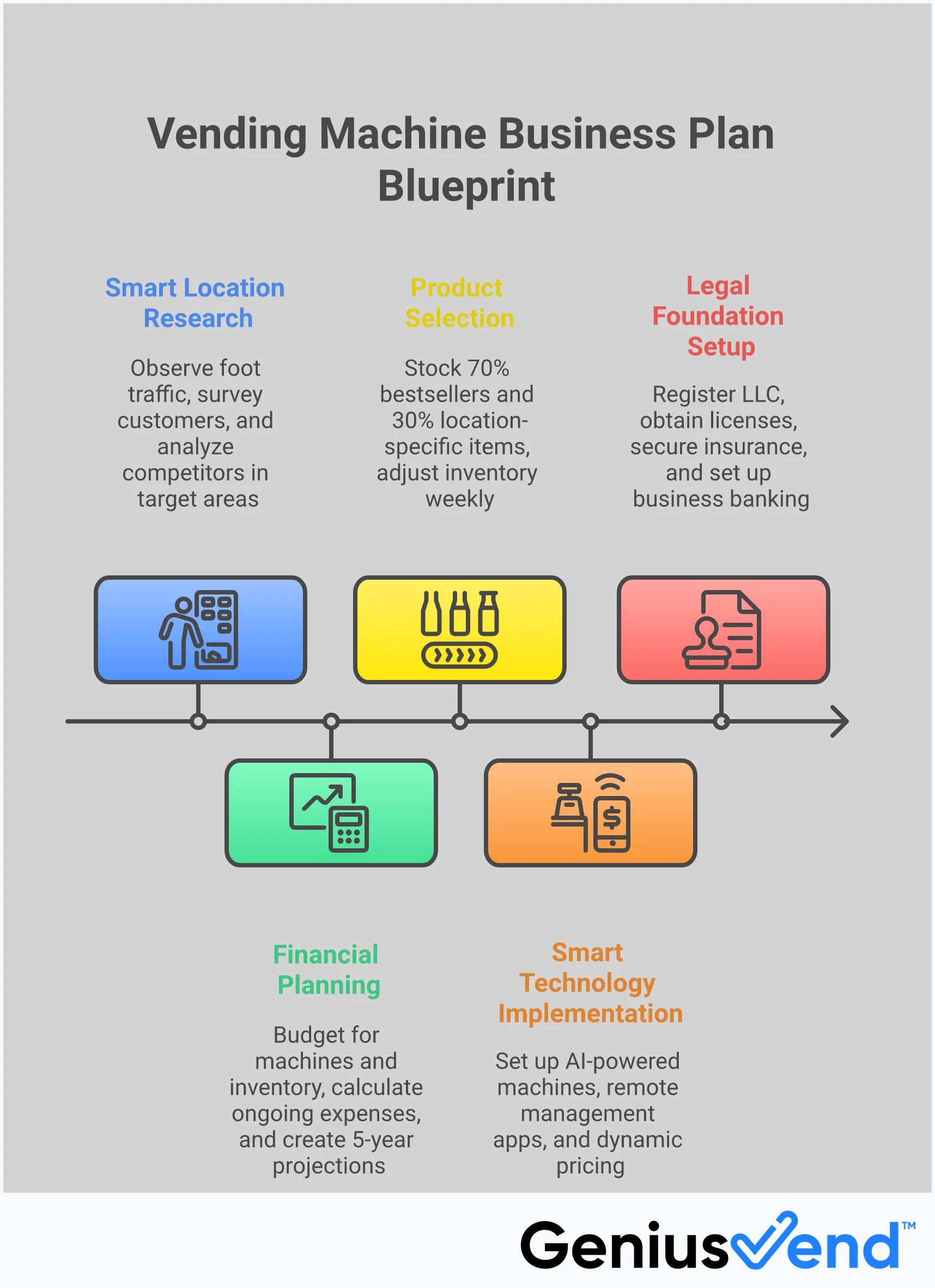
A strong business plan is essential for a successful vending machine business. It helps you deal with problems, make more money, and stand out from the competition. Whether you're starting with a single machine or planning a multi-location route, this document will be your guide. It should cover everything from your big-picture vision to the nitty-gritty details of your daily operations. Getting these ideas down on paper helps you spot potential weaknesses before they cost you money and gives you the confidence to move forward. We’ll walk through the most critical sections you need to include: a compelling executive summary, a deep dive into your market, and realistic financial projections.
Write a Strong Executive Summary
Your executive summary is the highlight reel of your entire business plan. It’s the first thing anyone reads, so it needs to grab their attention and clearly communicate your vision. Think of it as a firm handshake and a quick, confident pitch. This section should briefly touch on your company’s mission, the types of vending services you’ll offer, who your ideal customers are, and a snapshot of your financial goals. Even though it appears first, I always recommend writing this part last. It’s much easier to summarize your plan once you’ve already worked through all the details.
Analyze Your Market and Audience
This is where you prove there’s a real need for your vending machines. Start by defining your ideal customer. Are you targeting busy office workers who need a midday snack, students looking for late-night study fuel, or gym-goers wanting a healthy post-workout drink? Once you know who you’re serving, you can research the best locations to reach them. A great way to start is by creating a customer profile to guide your decisions. Scope out the competition to see what they’re doing right and, more importantly, where the gaps are. Maybe local machines are filled with junk food, creating an opportunity for you to offer healthier, fresh options.
Project Your Finances and Revenue
Let’s talk numbers. Your financial section is the heart of your business plan, showing that your vending concept is not only cool but also profitable. You’ll want to create financial projections for at least the next three to five years. If you’re just starting, these will be educated estimates based on your market research. If you’re expanding an existing route, you can use your past performance to inform future forecasts. Be sure to include a detailed breakdown of your startup costs—like purchasing your smart vending machines—as well as ongoing expenses like inventory, insurance, and potential location fees. This will help you determine your pricing and break-even point.
How to Choose Profitable Vending Machine Locations
The old real estate saying, "location, location, location," is the golden rule of the vending business. The right spot can be the difference between a machine that barely breaks even and one that becomes a reliable source of income. Placing your machine where the right people can easily find it is the first step toward building a profitable route.
Find High-Traffic Spots
Your vending machine needs to be seen to be used. Think about places with a constant flow of people who might need a quick snack or drink. Vending machines perform best in busy locations like hospitals, schools, large office buildings, and apartment complexes. Even places like laundromats, hotels, and bus stations are prime real estate because they have a captive audience. Look for areas where people are waiting or passing through regularly. These high-traffic zones provide a steady stream of potential customers throughout the day, giving your machine the best chance for success.
Evaluate Demographics and Foot Traffic
Once you’ve identified a high-traffic area, the next step is to understand who is actually there. A deep understanding of your target audience is crucial for stocking the right products. Are they students who want affordable, sugary snacks, or are they office workers looking for healthier lunch options? Spend some time observing the location. What are people buying from nearby stores? What’s missing? Tailoring your product selection to the specific demographics of a location will make your machine the go-to choice and set you apart from any local competition.
Build Relationships with Property Managers
You can’t just place a machine anywhere you’d like; you need permission from the property owner or manager. This is where building strong professional relationships comes into play. When you approach a decision-maker, come prepared with a clear proposal that outlines the benefits of having your machine on their property—it’s a zero-effort amenity for their employees or customers. As one operator noted, building good relationships with property managers is a huge factor in business growth. A positive connection can lead to better placement, fewer issues, and even referrals to other locations.
What Products Sell Best in Vending Machines?
Choosing the right products is one of the most critical parts of running a profitable vending business. The snacks and drinks you stock can make or break a location. While there’s no single magic formula for every machine, the core principle is simple: know your audience. The best-selling items in a high school will be completely different from those in a corporate office or a hospital waiting room. Your goal is to become a student of your locations, paying close attention to who is there and what they might need at any given moment.
A great way to start is by thinking about the "why" behind a purchase. Is someone looking for a quick sugar rush between classes, a healthy lunch alternative, or a caffeine fix to get through the afternoon? Answering that question will guide your inventory decisions. The beauty of using a smart vending machine is that you get real-time sales data, taking the guesswork out of the equation. You can see exactly what’s selling and what’s not, allowing you to fine-tune your product mix and maximize your profits on every single route.
Stock Popular Snacks and Drinks
You can never go wrong by starting with the classics. Think about the go-to snacks and drinks that people have loved for decades: popular brands of chips, chocolate bars, cookies, and sodas. These items are familiar, comforting, and reliable sellers, especially in high-traffic areas like malls, airports, and hotels. People in these locations are often in a hurry and will grab something they already know and like.
A good strategy is to research the top-selling snack brands in the country and stock a variety of those. Offering a mix of sweet and savory options ensures there’s something for everyone. While it’s tempting to get creative, building a solid foundation of popular favorites will create a dependable revenue stream for your business.
Offer Healthy and Specialty Items
As more people focus on wellness, the demand for healthy vending options has skyrocketed. Gone are the days when vending machines were just for junk food. Now, you can attract a whole new customer base by offering items like protein bars, granola, baked chips, and trail mix. Drinks are also a huge category here—think bottled water, sparkling water, iced tea, kombucha, and cold-brew coffee.
This is where a machine like a Genius Vend smart cooler truly shines, as it allows you to sell fresh food like salads, yogurt parfaits, and fruit cups. Offering these healthier choices is a game-changer for locations like gyms, yoga studios, hospitals, and modern offices with corporate wellness programs. It shows you’re listening to consumer trends and catering to their needs.
Choose Products Based on Location
Ultimately, the most successful vending operators tailor their product mix to each specific location. The key is to match your inventory to the demographics and daily routines of the people who will be using the machine. For example, a machine at a construction site might do incredibly well with energy drinks and hearty snacks, while one in a library might sell more coffee, tea, and quieter snacks.
Before placing a machine, talk to the property manager and do some people-watching. Are you serving students, office workers, or hospital visitors? In a school, you’ll need to consider lower price points and potential nutritional guidelines. In an office, you might offer premium snacks and drinks for an afternoon pick-me-up. By understanding your customers on a location-by-location basis, you can stock items they actually want to buy.
How Much Does It Cost to Start a Vending Business?
Let’s talk numbers. Figuring out your startup costs is one of the most critical steps in your business plan. While there’s no single magic number, you can get a clear picture by breaking down your expenses into three main categories: your initial investment, your ongoing operational costs, and the administrative fees to get everything set up legally.
The biggest variable will be the type and number of machines you decide to buy. A refurbished, traditional machine will have a very different price tag than a brand-new, AI-powered smart cooler. As you map out your budget, think about not just the upfront cost, but how your equipment choice will affect your long-term expenses and profit potential. A solid financial projection shows potential partners and property managers that you’ve done your homework and are serious about building a sustainable business.
Calculate Your Initial Investment
Your biggest upfront cost will be the vending machine itself. A new machine typically costs between $3,000 and $5,000, while a used or refurbished one might run you closer to $2,500. The price depends on the machine’s size, features, and technology. A simple coil machine for snacks will be on the lower end, while a smart fridge with advanced payment systems will be a larger investment. Don’t forget to budget for your initial inventory—you’ll need to fill the machine before you can make your first sale. If you need help funding these initial purchases, you can explore different small business loans to find one that fits your needs.
Plan for Ongoing Expenses
Once your machine is in place, you’ll have recurring costs to keep it running smoothly. While the profit margin on most vended items is around 50%, that isn’t pure profit. That margin needs to cover all your ongoing expenses. The most significant recurring cost is restocking your inventory. You’ll also need to budget for fuel to travel between locations, routine maintenance, and any commission or rent you pay to the property owner. Modern smart machines may also have a small monthly software fee for remote management, which often pays for itself in saved time and optimized inventory. Tracking these operating expenses carefully is key to understanding your true profitability.
Factor in Insurance, Licenses, and Legal Fees
These are the costs that make your business official and protect you from risk. First, you’ll need to get the right business licenses and permits to operate in your city and state. You can usually find a list of requirements on your local government’s website. Next, business insurance is a must. It protects you from liability and covers your assets in case of theft or damage. Vending machine insurance typically costs between $300 and $1,000 per year. Finally, consider the cost of legally structuring your business, such as forming an LLC, to protect your personal assets. These administrative steps are an essential investment in your company’s long-term health and security.
Should You Use Traditional or Smart Vending Machines?
When you're drafting your business plan, one of the biggest decisions you'll make is what kind of hardware to invest in. Traditional vending machines—the ones that take cash and drop a coil-held snack—have been around for decades. They're familiar, but they also come with limitations. Smart vending machines, on the other hand, are packed with technology that can completely change how you run your business and how customers interact with your products.
Choosing between the two isn't just about the initial cost; it's about your long-term vision. Do you want a hands-on business that requires frequent site visits for cash collection and inventory checks? Or do you prefer a more streamlined, data-informed operation you can manage from your phone? Smart machines offer a level of efficiency and customer insight that traditional models simply can't match, making them a powerful choice for a modern vending business. Let's break down what that means for you.
The Benefits of AI-Powered Smart Vending
Smart vending machines use advanced tech to make life easier for both you and your customers. Think real-time inventory tracking, a wide array of cashless payment options, and interactive touchscreens. Instead of guessing when a machine needs a refill, you’ll get an alert on your phone. This technology streamlines your daily tasks, saving you from unnecessary trips and lost sales from an empty machine. For the customer, it means a frictionless "tap, grab, and go" experience without fumbling for change, which is exactly what people expect today.
Manage Your Business from Anywhere
One of the most significant advantages of a smart machine is the freedom it gives you. You can monitor sales, check inventory levels, and see how each machine is performing from a single app on your phone. This remote management capability is a game-changer. It allows you to make data-driven decisions about what to stock and when, optimizing your product mix for each specific location. You can run your entire vending route from your home office—or the beach—which means more efficiency, better responsiveness, and a business that truly works for you.
Improve the Customer Experience
A happy customer is a repeat customer. AI-powered vending machines create a far better shopping experience by making transactions quick and simple. Some can even offer personalized recommendations based on past purchases, helping customers discover new products they might love. This isn't just about convenience; it's about building a positive association with your brand. When a customer knows they can count on your machine for a seamless and personalized experience, they're more likely to come back. That loyalty is the foundation of a stable, growing business.
How to Research Your Vending Market
Before you place a single machine, you need to do your homework. Solid market research is the foundation of a profitable vending business, helping you avoid costly guesswork and stock your machines with products people actually want to buy. Think of it as creating a roadmap for your route. You wouldn’t start a long drive without checking the map, and you shouldn’t start a vending business without understanding the landscape. This process doesn’t have to be complicated. It’s about answering three simple questions: Who are my customers? Who is my competition? And what is already selling well?
Getting clear answers will help you identify the best locations, choose the right products, and find gaps in the market that your business can fill. For example, you might discover an office park full of health-conscious workers with no access to fresh, healthy snacks. Or you could find a college campus where the existing machines are old, unreliable, and only take cash. Each of these scenarios presents a clear opportunity. By taking the time to research upfront, you can build a business that meets a real need, making it much easier to attract and retain loyal customers. Let’s break down how to get started.
Survey Customers to Find What They Want
The most direct way to find out what people want is to ask them. If you have a potential location in mind, like a local gym or office building, spend some time there and talk to people. You can also create a simple online poll or a one-page paper survey to leave at the front desk. Ask about their favorite snacks and drinks, what they wish they had access to during the day, and if they prefer options like healthy, gluten-free, or vegan products. This direct feedback is invaluable and helps you build a product inventory that’s practically guaranteed to sell from day one.
Analyze Your Competition
Take a look at the other vending machines in your target area. What are they selling? What do their machines look like? Note their pricing and the condition of their equipment. This isn't about copying them; it's about finding your competitive edge. If every machine is full of the same old chips and candy bars, you have an opportunity to offer something different, like fresh food or premium snacks. A competitor with old, cash-only machines is an easy target for a modern, AI-powered machine that offers a seamless "Tap, Grab & Go" experience. A thorough competitive analysis helps you pinpoint what others are missing so you can fill that gap.
Use Sales Data to Spot Trends
Once your machines are up and running, your sales data becomes your most powerful research tool. It tells you exactly what’s selling, what’s not, and when certain items are most popular. With a traditional machine, this means manually tracking inventory and sales. But with a smart vending machine, this data is collected automatically. You can check your operator app from anywhere to see real-time sales figures and inventory levels. This allows you to spot trends quickly, adjust your product offerings based on performance, and make data-driven decisions that keep your customers happy and your profits growing.
How to Market Your Vending Machine Business
A great machine in a prime location is a good start, but smart marketing will set your business apart. For a vending business, this means building strong local partnerships, creating a professional online presence, and pricing your products thoughtfully. Focusing on these areas helps you attract the best locations and build a profitable business that lasts.
Partner with Local Businesses
Your success often depends on where your machines are, and that comes down to relationships. Think of yourself as a partner providing a valuable amenity that keeps employees or residents happy. Identify potential locations like offices, gyms, and apartment complexes, then reach out to property managers with a professional pitch. Explain the benefits of a modern "Tap, Grab & Go" system that's quick and easy. As one operator noted, building good relationships is a key driver for growth. Leave a business card and follow up consistently to show you're a reliable operator.
Use Social Media to Grow Your Brand
Even a local vending business needs a digital footprint. A simple website and active social media profiles build credibility and help potential location partners find you. You don't need to be an expert; just be consistent. Post clear photos of your clean, well-stocked machines and announce new products. This online presence shows you're a professional and modern operator. Using some basic digital marketing tools can help you stand out and attract high-quality leads for new machine placements, proving you’re serious about your business and the service you provide.
Set the Right Prices
Pricing your products is a balance between covering costs and providing good value. A common rule of thumb is to aim for a profit margin of around 50%, but this can change based on the location and product. Premium snacks in a corporate office can be priced higher than standard chips in a school. Before setting prices, get a clear picture of all your expenses, including the cost of goods, gas, and maintenance. Having a solid business structure, like an LLC, also helps you keep finances separate, making it easier to track your actual profitability and make smart pricing decisions.
How to Manage Your Day-to-Day Operations
Once your vending machines are in place and stocked, your focus shifts to the day-to-day rhythm of running the business. This is where consistency and efficiency really pay off. Strong daily operations are what separate a side hustle from a scalable, profitable enterprise. It’s about more than just refilling snacks; it’s about creating a smooth, reliable service that keeps customers happy and revenue flowing.
The key is to build systems that save you time, fuel, and headaches. A well-managed route means you’re not making unnecessary trips or showing up to a location only to find the machine is nearly full. This is where technology becomes your best friend. With a smart vending system like Genius Vend, you can remotely manage your entire business from your phone. Instead of guessing which machines need attention, you’ll have real-time data showing you exactly what’s sold, what needs restocking, and if any machines require maintenance. This allows you to work proactively, making informed decisions that directly impact your bottom line.
Create a Restocking Schedule
A reliable restocking schedule is the backbone of your vending business. It ensures your machines are always full of the products customers want, preventing lost sales from empty slots. But a great schedule isn't just about refilling inventory. Each visit is a chance to clean the machine, check for issues, and touch base with the property manager. These small interactions build strong professional relationships and show you’re a dependable partner.
Instead of visiting every machine on a fixed weekly rotation, you can use sales data to create a dynamic, needs-based schedule. Smart vending machines give you a live look at your inventory, so you only visit machines that are running low. This data-driven approach helps you manage inventory more effectively and stops you from wasting time on unnecessary trips.
Keep Your Machines in Top Shape
A dirty or broken-down machine isn’t just an eyesore—it’s a revenue killer. If a customer’s payment is rejected or their snack gets stuck, they probably won’t try again. That’s why regular maintenance is non-negotiable. During each service visit, take a few minutes to wipe down the glass, test the payment readers, and make sure everything is functioning perfectly. This simple habit protects your investment and maintains a professional image.
Preventative care helps you catch small problems before they become costly repairs. Modern machines often come with self-diagnostics that can alert you to issues, but nothing beats a hands-on check. Keeping your machines in excellent working order ensures a seamless customer experience, which encourages repeat business and keeps your sales consistent.
Manage Your Time and Routes Efficiently
As you add more machines to your route, your most valuable resource becomes your time. Driving all over town without a plan will eat into your day and your fuel budget. Smart route management is essential for maximizing your efficiency. Before you head out, plan your stops in a logical sequence to minimize driving time. Grouping visits by neighborhood or along a specific highway can save you hours each week.
This is another area where smart vending technology gives you a major edge. By checking your operator’s app before you leave, you can see exactly which machines need service. This allows you to build the most efficient route for the day, servicing more machines in less time. You can skip the locations that are already well-stocked and focus only on what’s urgent, letting you grow your business faster.
How to Set Up Your Business Legally
Getting the legal side of your business sorted out from the start is one of the smartest things you can do. It might not be as exciting as picking out products or scouting locations, but building a solid legal and financial foundation protects you and sets your business up for long-term success. Think of it as the framework that supports everything else you’re building. Handling these details correctly now will save you from major headaches down the road.
We’ll walk through the three main areas you need to focus on: registering your business, following health and safety rules, and getting your finances in order.
Register Your Business and Get Permits
First things first, you need to make your business official. This starts with choosing a legal structure. Many small business owners opt for a Limited Liability Company (LLC) because it offers personal liability protection, but a sole proprietorship is also a common starting point. It’s a good idea to understand the differences before you choose your business structure. Once you’ve decided, you’ll register your business name with your state.
Next up are licenses and permits. These requirements vary by city and state, so you’ll need to check with your local government to see what’s needed. Beyond official permits, you must always get permission from property owners to place your machines. Don’t rely on a handshake—it’s best to have a signed contract that outlines the terms of your agreement.
Follow Health and Safety Rules
If you're selling food and drinks, you have to follow local health and safety regulations. This isn’t just about avoiding fines; it’s about making sure your customers get safe, high-quality products every time. Your local health department is the best resource for this information. They’ll have specific rules about food handling, storage, and the types of products you can sell.
For example, if you plan to offer fresh or refrigerated items, you’ll need to meet certain temperature standards. This is where a reliable machine like a Genius Vend smart cooler really shines, as it ensures your products are always kept at the proper temperature. Staying on top of these rules builds trust with both your customers and the locations that host your machines.
Set Up Your Taxes and Record Keeping
Good financial habits are non-negotiable. The very first step is to open a dedicated business bank account. Keeping your business money separate from your personal money is crucial for clear bookkeeping and makes tax time infinitely easier. To open an account, you’ll likely need an Employer Identification Number (EIN), which is like a Social Security number for your business. You can apply for an EIN for free on the IRS website.
You’ll also need to get familiar with sales tax. Most states require you to collect and remit sales tax on vending machine sales. Finally, keep good records of all your income and expenses. Meticulous paperwork will help you track your profitability, make smart decisions, and avoid any trouble with taxes.
How to Plan for Growth and Scale Your Business
A solid business plan isn't just a document you create once and file away; it’s a living roadmap that guides your growth. Thinking about expansion from day one sets you up for long-term success. As your business finds its footing, you’ll want a clear plan for how to add routes, manage more machines, and increase profits without getting overwhelmed. Planning for scale means you’re ready to seize opportunities when they appear, from adding a new location to upgrading your technology. It’s about building a sustainable business that can grow with you.
Track Your Cash Flow and Profits
Knowing your numbers is non-negotiable if you want to scale. The best way to stay on top of your finances is to create detailed financial plans that project at least five years into the future. This should include your income statements, cash flow statements, and balance sheets. While it might sound like a lot, this practice gives you a clear picture of your business's financial health. It helps you understand exactly where your money is coming from and where it’s going, so you can make informed decisions about when to invest in new machines or locations. Modern tools, like the operator’s app that comes with Genius Vend machines, make it easy to track sales and inventory in real-time, simplifying this process immensely.
Avoid These Common Business Plan Mistakes
Learning from the mistakes of others is one of the fastest ways to get ahead. Many new vending operators run into the same beginner mistakes, like underestimating the true cost of a cheap, unreliable machine or choosing a poor location without enough foot traffic. Another common pitfall is over-investing in a massive amount of inventory before you’ve tested the market to see what actually sells. Don’t forget about the basics, either. Ignoring a schedule for regular maintenance can lead to broken-down machines and lost sales. A thoughtful business plan helps you anticipate these challenges and create strategies to avoid them from the start.
Plan Your Expansion Strategy
Once your first few machines are consistently profitable, it’s time to think about how to grow your business. A multi-faceted approach works best. Start by scouting for more high-traffic locations and consider diversifying your product offerings to appeal to new customers. Upgrading to advanced smart machines can be a game-changer, as features like cashless payments and remote inventory management make it much easier to manage a larger route. You can also explore partnerships with local businesses to get your machines into exclusive spots. To keep customers coming back, consider implementing loyalty programs that reward repeat purchases. A clear expansion strategy ensures your growth is manageable and profitable.
Related Articles
- How to Start a Vending Machine Business
- The Essential Mini Vending Machine Guide
- Where Can I Buy a Vending Machine? A 2025 Guide
- Vending Machine for Sale: A Buyer's Guide for 2025
- Vending Business for Sale: What You Need to Know
Frequently Asked Questions
How many machines should I start with? There's no magic number, but I always suggest starting with one to three machines. This approach lets you learn the business—from stocking and maintenance to building relationships with property managers—without a massive upfront investment. It gives you the chance to test different locations and product mixes on a small scale, so you can figure out what works before you start expanding your route.
Is a vending business really a source of passive income? While a vending business offers incredible flexibility, it's not completely hands-off. Think of it as semi-passive. You still have to restock inventory, maintain the machines, and manage your finances. However, using a smart machine dramatically cuts down on the active work. Instead of driving to a location just to see what's sold, you can check inventory from your phone, which makes managing your time and routes far more efficient.
What's the single biggest mistake new vending operators make? The most common mistake is choosing a location based on a gut feeling instead of solid research. It’s easy to get excited and place a machine anywhere you can, but a bad location will never be profitable, no matter how great your products are. Taking the time to analyze foot traffic, understand the local demographics, and talk to potential customers is the most important work you can do to ensure your success.
Do I really need a formal contract with property owners? Absolutely. A written agreement is a sign of a professional and protects both you and the property owner. A simple contract should outline the commission structure, the length of the agreement, and who is responsible for what. It prevents misunderstandings down the road and establishes a clear, professional foundation for your business relationship from day one.
How do I know when it's the right time to expand my route? You should start thinking about expansion once your first few machines are consistently profitable and you have a solid handle on your operations. Look at your sales data to see which types of locations and products are your top performers—this information is your roadmap for what to look for next. When your cash flow is stable and you feel confident in your systems, that's the green light to start scouting for your next great location.