

The classic vending machine—clunky, coin-operated, and prone to jamming—is quickly becoming a thing of the past. Today, the industry is driven by smart technology that makes running a vending route more efficient and profitable than ever before. Modern machines offer cashless payments, remote inventory tracking, and a seamless grab-and-go experience for customers. For a new operator, this technology isn't just a nice-to-have feature; it's a competitive advantage. If you’re ready to buy a vending machine, this guide will explain why embracing this new tech is the smartest move for your business and how to choose a unit that will work for you.
Key Takeaways
- Secure Your Location First: The most successful vending businesses start with a great location, not a great machine. Your location's specific needs—from its audience to its available space—should guide your decision on what type of machine to buy.
- Invest in Modern Tech for Better Returns: Don't overlook features like cashless payment options and remote inventory management. This technology is essential for attracting modern customers and running your business efficiently, saving you time and increasing your profit potential.
- Look Beyond the Sticker Price: The cheapest machine is rarely the best investment. Factor in long-term costs like maintenance, energy use, and potential lost sales from outdated technology to understand the true value and profitability of your machine.
What Types of Vending Machines Can You Buy?
When you picture a vending machine, you probably think of the classic coil machine dispensing chips and soda. While those are still around, the world of vending has expanded quite a bit. The right machine for you depends entirely on your location, your customers, and how you want to run your business. Choosing the right type is the first major step in building a profitable vending route. Let's walk through the main categories you'll encounter, from the tried-and-true classics to the high-tech options that are changing the game.
Traditional Snack and Drink Machines
These are the workhorses of the vending world. Traditional machines use a spiral coil system to dispense pre-packaged snacks, candy, and bottled or canned drinks. They are straightforward, and customers instantly know how to use them. You can find them everywhere, from office breakrooms to laundromats. Many operators start here because you can often find certified used vending machines at a lower upfront cost, making them an accessible entry point into the business. The main drawback is that they often rely on older technology, which can mean limited payment options (cash only) and the occasional product jam that requires a service call.
All-in-One Combo Machines
What if your ideal location doesn't have enough space for two separate machines? That's where all-in-one combo machines come in. These units offer the best of both worlds, featuring sections for both snacks and drinks in a single footprint. This allows you to provide a wider variety of products, catering to more customer preferences without doubling your equipment costs or space requirements. A combo vending machine is a fantastic solution for smaller offices, waiting rooms, or any location where you want to maximize your offerings in a compact space. They offer convenience for both you and your customers.
Smart, AI-Powered Machines
This is where vending gets really exciting. Smart, AI-powered machines are completely changing what’s possible for operators. Instead of coils, these machines often use shelves and sensors, allowing for a simple "Tap, Grab & Go" experience. Customers tap their card, open the door, take what they want, and are automatically charged. For you, the operator, the benefits are huge. These machines connect to the internet, giving you real-time inventory tracking and sales data right on your phone. You can manage everything remotely, from pricing to promotions, which means fewer wasted trips and more profit. They are the future of unattended retail.
Specialty Vending Machines
Think beyond chips and soda. Today, you can vend almost anything. Specialty vending machines are designed to sell a specific type of product, opening up a whole new world of niche markets. You can find machines that dispense fresh salads, frozen meals, hot pizza, or even non-food items like electronics, beauty products, or laundry supplies. If you have a unique product idea or want to serve a specific audience, a specialty machine could be your ticket. These machines prove that with the right concept and location, you can create a successful vending business around virtually any product.
6 Things to Consider Before Buying a Vending Machine
Buying your first vending machine is a huge step. To make sure you're making a smart investment that will pay off for years, let's walk through the six most important factors to think about before you make a purchase. Getting these details right from the start will save you time, money, and a lot of headaches down the road.
Finding the Right Size for Your Location
The golden rule of vending is to match the machine to the location. A slim, drinks-only machine might be perfect for a small office breakroom, but it would be completely overwhelmed in a busy hotel lobby or apartment complex. Before you buy, think about the space you have and the people you’ll be serving. Do they want cold drinks, snacks, or a full meal? Don’t buy a snack-only machine if your customers are thirsty. A versatile combo machine often provides the best of both worlds, ensuring you can meet customer demand and maximize your sales potential in any given vending machine location.
How Will Customers Pay?
How many times have you walked away from a purchase because you didn’t have cash? Your customers are no different. While coin and bill acceptors are still standard, they shouldn't be the only option. Modern machines that accept credit/debit cards and mobile payments like Apple Pay are no longer a luxury—they're a necessity. Offering these convenient, cashless payment options can significantly increase your sales, as customers are more likely to make an impulse buy when they can just tap their card or phone. Make sure any machine you consider is equipped to handle the way people prefer to pay today.
Tech and Remote Management Features
This is where modern vending machines truly shine. Smart machines with internet connectivity and remote management capabilities are a game-changer for operators. Instead of driving to a machine just to see what’s sold out, you can check inventory levels in real-time from your phone. This technology allows you to see sales data, track your best-selling products, and get alerts for any technical issues. This isn't just about convenience; it's about running a more efficient and profitable business. You can optimize your restocking routes and ensure you never miss out on a sale due to an empty slot.
Product Capacity and Versatility
An empty machine doesn't make money. When choosing a machine, consider its product capacity. How many items can it hold? A larger capacity means less frequent restocking trips, which saves you valuable time and fuel. Think about your schedule and how often you can realistically service the machine. You also want a machine that offers versatility. Can you adjust the slots to fit different-sized products? The ability to offer a wide range of items—from chips and candy bars to healthy snacks and refrigerated meals—allows you to adapt to customer preferences and keep your offerings fresh and exciting.
Energy Use and Maintenance Needs
Your vending machine will be running 24/7, so its energy consumption is an ongoing cost you can't ignore. Newer models are often much more energy-efficient, which can save you a surprising amount on your monthly electricity bill. Beyond that, think about maintenance. A clean, well-maintained machine is far more appealing to customers. While most machines are built to last for over a decade, they need regular care to look and work their best. Look for a machine that is easy to clean and service, as preventative equipment maintenance is key to protecting your investment for the long haul.
Warranty and Support You Can Count On
When you buy a vending machine, you're not just buying a piece of equipment—you're making a significant business investment. What happens if it breaks down a month after you set it up? This is why a solid warranty and reliable customer support are absolutely essential. Before you buy, understand exactly what the warranty covers and for how long. Find out what the process is for getting technical help or replacement parts. A company that stands behind its product with strong customer support gives you peace of mind and a partner you can rely on as you grow your business.
How Much Does a Vending Machine Cost?
Figuring out your budget is one of the first steps to starting your vending business. The price of a machine depends on its age, features, and technology. While a lower upfront cost can be tempting, it’s important to think about the total cost of ownership, including potential repairs and ongoing expenses. A smart investment from the start can save you headaches and money down the road. Let's break down the key costs you'll need to consider.
New vs. Used Machine Pricing
When you start shopping, you'll see a clear price difference between new and used machines. A brand-new vending machine typically costs between $4,500 and $6,500, but it usually comes with a one-year parts warranty and the latest technology. This gives you peace of mind and ensures you have a reliable machine from day one. On the other hand, a used machine might only cost between $3,000 and $4,000. While the initial savings are attractive, they often come with a much shorter warranty—sometimes just 90 days—and a higher risk of needing repairs sooner. Weighing the initial investment against long-term reliability is key to making the right choice for your business goals.
Exploring Financing and Payment Plans
You don't always need to pay the full price of a machine upfront. Many suppliers offer financing options to make the purchase more manageable, which is a huge help when you're just starting out. You can often find plans with little to no money down and deferred payments, giving you time to get your machine up and running before your first payment is due. Some companies even offer 0% interest plans if you pay off the machine within a certain period. Exploring these flexible payment plans can help you preserve your cash flow while still investing in high-quality equipment for your new venture.
Factoring in Hidden and Ongoing Costs
The sticker price is just the beginning. To get a true picture of your investment, you need to account for the ongoing costs of operating your machine. These include the cost of inventory to stock your machine, fuel for restocking trips, and any commissions you might pay to the location owner. You should also budget for credit card transaction fees, potential maintenance, and software fees for remote management features. Using an online profit calculator can help you estimate your potential revenue and expenses, giving you a clearer idea of what to expect as you run your business.
Where Can You Buy a Vending Machine?
Finding the right supplier is just as important as choosing the right machine. You can buy vending machines directly from manufacturers, from specialized retailers, or even secondhand. The best partner won’t just sell you a piece of equipment; they’ll provide the technology and support you need to run a profitable business. Your choice of supplier will shape everything from your daily operations to your long-term growth. Let's look at a few places to start your search and what to watch out for along the way.
Why Genius Vend is a Smart Choice
If you're focused on maximizing profit and minimizing hassle, starting with a smart vending machine is the way to go. At Genius Vend, we specialize in AI-powered machines that create a seamless "Tap, Grab & Go" experience for customers. This isn't just about convenience; it's about better business. Our machines come equipped with cashless payment systems and real-time inventory tracking that you can manage from a free app on your phone. This means fewer site visits for you and a modern, reliable experience for your customers, helping you build a more profitable vending route from day one.
Other Vending Machine Suppliers
While smart machines offer a clear advantage, there are traditional suppliers that cater to different needs. Companies like Vending.com have been in the business for decades and sell a wide variety of machines, including new and certified used models. For entrepreneurs who want to move quickly, suppliers like Vendtek offer "Buy Now" machines that you can purchase online without waiting for a quote. These sellers can be a good starting point if you're looking for a basic machine or exploring the used market, but be sure to check for modern payment and management features.
Red Flags to Watch for in a Supplier
No matter where you shop, it's crucial to vet your supplier carefully. A major red flag is a company that doesn't offer a warranty or any support after the sale. This often signals a lack of confidence in their own equipment. Also, be wary of any salesperson who pressures you into a quick decision without giving you time to review the machine's history or features. A trustworthy partner will be transparent and supportive, ensuring you feel confident in your investment. Making a rushed decision is one of the most common mistakes new operators make.
Avoid These 5 First-Time Buyer Mistakes
Jumping into the vending business is exciting, but a few common missteps can trip up even the most enthusiastic entrepreneurs. Learning from the mistakes of others is one of the smartest things you can do. Here are five major pitfalls to watch out for as you get started.
Buying a Machine Without a Location
It’s tempting to start shopping for machines right away, but this is one of the biggest mistakes you can make. The golden rule of vending is: secure your location first. The right machine for a high-end office building is completely different from one that would succeed in a factory breakroom or a gym. Your location dictates the size of the machine you’ll need, the types of products that will sell, and the payment options your customers will expect. Don’t put the cart before the horse; finding a great location is your first priority and will guide all your purchasing decisions.
Focusing Only on the Upfront Price
A cheap machine might feel like a win, but it can quickly become your biggest expense. Focusing only on the initial price tag ignores the total cost of ownership. Older, cheaper machines often lack modern payment systems, break down more frequently, and don’t have remote management features, costing you sales and time. Think about the long-term picture. Investing a bit more in a reliable, modern machine with features that attract customers and simplify your operations will almost always lead to higher profitability and fewer headaches down the road.
Overlooking Modern Tech and Payment Options
We live in a world where people rarely carry cash. If your vending machine doesn’t accept credit cards or mobile payments, you’re leaving a lot of money on the table. Modern customers expect convenience. Beyond payment options, technology like remote inventory management is a game-changer. Instead of driving to a machine just to see what’s sold out, you can check stock levels from your phone. This tech saves you time, gas, and ensures your machine is always stocked with what sells. Prioritizing machines with these essential features is key to running an efficient and successful business.
Stocking What You Like, Not What Sells
It’s easy to fall into the trap of filling your machine with your personal favorite snacks and drinks. But your tastes don’t pay the bills—your customers’ do. Success in vending comes from understanding the specific audience at each location and catering to their preferences. The health-conscious crowd at a yoga studio will want different options than the late-night study group at a university library. Do your research. Talk to the location manager, survey potential customers, and pay close attention to your sales data to find the right product mix.
Underestimating Maintenance and Support
Every minute your machine is out of order is a minute you’re losing money. Many first-time buyers don’t factor in the time and cost of ongoing maintenance and potential repairs. Before you buy, ask hard questions about the warranty, the availability of technical support, and how easy it is to get replacement parts. A supplier with a reputation for excellent customer service can be a lifesaver when you run into an issue. Reliable vending machine support isn’t just a bonus; it’s a crucial part of protecting your investment and keeping your revenue flowing.
How to Find a Profitable Vending Location
You can have the most advanced, well-stocked vending machine in the world, but if it’s sitting in an empty hallway, it won’t make a dime. Finding the right location is arguably the most critical step in building a successful vending business. It’s a process that requires a bit of research, some observation, and a solid plan. A great location has a steady stream of people who are likely to want what you’re selling, whether that’s a cold drink after a workout or a quick snack during a study break.
Before you even think about signing a contract for a machine, you should have a few potential locations in mind. The ideal spot is a "captive audience" environment where people can't easily walk to a convenience store. Think about places where people work, wait, or gather. The process involves more than just finding a busy spot; you also need to understand the people there, get formal permission to place your machine, and even think about how you’ll market it once it’s installed. Getting these four steps right will set your new vending machine up for success from day one.
Scout High-Traffic Commercial Spots
The foundation of a profitable vending location is consistent foot traffic. You’re looking for places where large groups of people congregate daily. Start by brainstorming a list of potential businesses and facilities in your area. Great options often include office buildings, manufacturing plants, hospitals, car dealerships, and college campuses. Even places like apartment complexes, hotels, and busy laundromats can be hidden gems.
Once you have a list, it’s time to do some in-person scouting. Visit a potential location at different times of the day to see how many people are actually there. An office building might be bustling at lunchtime but dead by 5 p.m., while a 24-hour gym has a completely different flow. Look for a visible, accessible spot where your machine will be easy to see and use. People often make vending purchases on impulse, so placement in a breakroom, lobby, or main hallway is key to attracting customers.
Understand Your Target Audience
Once you’ve found a high-traffic area, the next step is to understand the people who frequent it. The "who" is just as important as the "where" because it dictates what products will sell best. A machine at a fitness center should be stocked with protein bars, electrolyte drinks, and healthy snacks. In contrast, a university dorm is the perfect place for energy drinks, instant noodles, and classic candy for late-night study sessions. Don't just guess what people want.
If you can, talk to the location manager or employees to get insights into their preferences. Ask what kinds of snacks and drinks they currently buy or wish were available. This simple market research can make the difference between a machine that needs constant restocking and one that gathers dust. Tailoring your product mix to the specific audience is the secret to keeping customers happy and coming back for more.
Secure Your Location Agreement
You can’t just place a vending machine wherever you want—you need permission from the property owner or manager. Approaching a business to pitch your vending service is a crucial step. Prepare a professional proposal that outlines the benefits of having your machine on their premises, such as convenience for their employees or customers. Highlight the modern, hassle-free experience your Genius Vend machine offers.
If they agree, you’ll need a formal location agreement. This is a simple contract that protects both you and the property owner. It should clearly state the terms, including the specific placement of the machine, the length of the agreement, and whether you’ll pay a commission on sales. It should also clarify who is responsible for the electricity costs. Having a written contract ensures everyone is on the same page and establishes a professional foundation for your business relationship.
Market Your Machine for More Sales
Marketing isn’t just for online stores; your vending machine is a mini-storefront that benefits from good presentation. Your machine itself is your best marketing tool. Keep it clean, well-lit, and fully stocked at all times. A dirty or half-empty machine can turn potential customers away. Consider using a custom wrap or signage to make your machine stand out and clearly display what you offer. The sleek design and easy "Tap, Grab & Go" system of a Genius Vend machine is a powerful marketing feature on its own.
You can also get creative with promotions. For example, you could work with the location manager to announce new products or special deals in their company newsletter. Make sure your contact information is clearly visible on the machine so customers can report any issues. Excellent customer service, even for a vending machine, helps build trust and encourages repeat business.
Launch Your Vending Business Successfully
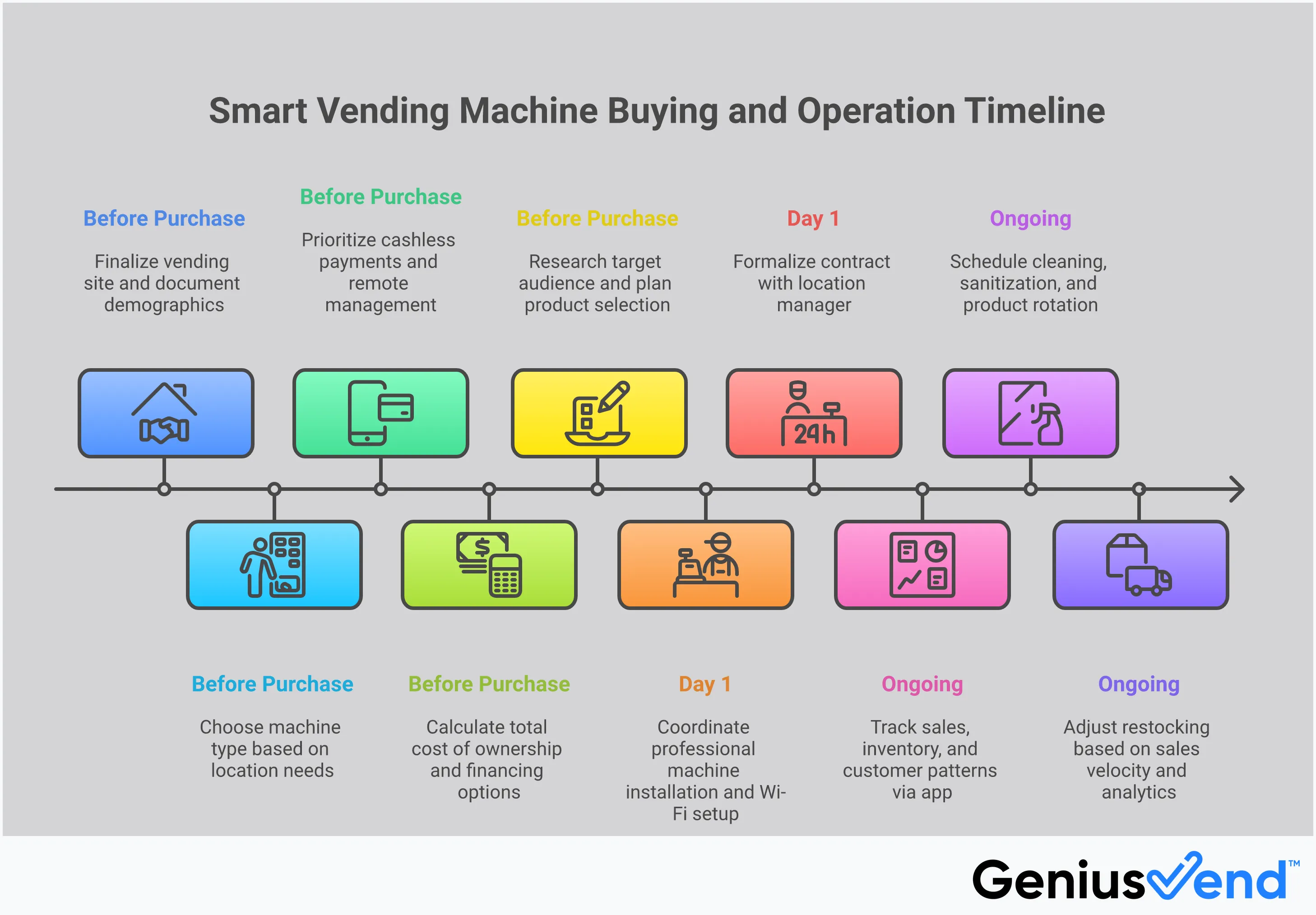
You’ve chosen your machine and secured a fantastic location—now it’s time to get your business up and running. The launch phase is where all your planning pays off, turning your investment into a real, revenue-generating asset. Getting these next few steps right will set the foundation for a profitable and scalable vending route. It’s all about a smooth installation, smart product choices, and keeping a close eye on your performance from day one. Think of it as your grand opening. By focusing on a great customer experience and efficient operations, you’ll start building a loyal customer base and a steady stream of income.
This is the exciting part where you see your vision come to life. From the moment the machine is plugged in, you're officially in business. The key is to start strong by being prepared, stocking wisely, and using the tools at your disposal to understand your customers. A successful launch isn't just about filling the machine and walking away; it's about creating a reliable and appealing service that people will want to use again and again. We'll cover how to handle the physical setup, how to curate a product selection that sells, and how to use data to refine your strategy for maximum profit. Let’s walk through exactly how to make your launch a success.
Your Guide to Installation and Setup
The most important rule in vending is to secure your location before you buy the machine. As one veteran operator put it, "This is a mistake a lot of beginners make... You don't know what type of machine will work best until you have a location." Once your agreement is signed, you can coordinate delivery. Make sure you have a clear path for the machine and that the electrical outlet is compatible. Modern machines are designed for a simple plug-and-play setup, so you can get operational quickly. Just connect it to power and Wi-Fi, and you can begin stocking products and configuring settings right from your phone.
Choose Products and Manage Your Inventory
It’s easy to fall into the trap of stocking your machine with your personal favorites. But a common beginner mistake is to "consider the vending machine as their own pantry." Instead, your product mix should be tailored to your location’s audience. A gym might need protein bars and electrolyte drinks, while an office breakroom will do better with coffee, sodas, and satisfying snacks. A versatile combo machine is often a great starting point for locations with diverse preferences. Pay attention to what sells and don't be afraid to swap out items that aren't moving.
Track Performance to Maximize Your Profits
Your vending machine is a source of valuable data. To grow your business, you need to "analyze sales data, customer preferences, and other metrics to make informed decisions." Smart machines make this incredibly simple. Using an operator's app, you can see real-time inventory levels, track which products are best-sellers, and identify sales trends without ever leaving your home. This information helps you optimize your stock, prevent sold-out items, and maximize your profits on every trip. You can even use this data to implement customer loyalty programs, rewarding repeat buyers and encouraging even more sales.
Related Articles
- Automated Vending Machines: The 2025 Guide
- Where Can I Buy a Vending Machine? A 2025 Guide
- Smart Vending Machines: The Ultimate Guide
- 7 Best Vending Machines to Buy for High Profits
- The Essential Mini Vending Machine Guide
Frequently Asked Questions
What's the absolute first thing I should do when starting a vending business? Before you even browse for machines, your first and most important job is to find a great location. The people, the space, and the needs of that specific place will tell you exactly what kind of machine you need. Securing your spot first guides every other decision you'll make and is the foundation of a profitable business.
Is it better to save money with a used machine or invest in a new one? It's tempting to go for the lower upfront cost of a used machine, but it's important to think about the total investment. A new machine comes with the latest payment technology, a solid warranty, and the reliability you need to build your business. A used machine might save you money initially, but you could face more frequent repairs and miss out on sales if it doesn't accept modern payments.
How do I figure out what snacks and drinks will actually sell? The secret is to stop thinking about your own favorite snacks and start thinking like your customers. The best approach is to do a little research. Talk to the manager at your location and ask what their employees or customers might like. A machine in a gym will need very different products than one in an office breakroom. Pay close attention to your sales data once you're up and running to see what's popular and what's not.
Are smart vending machines really that different from traditional ones? Yes, they are a complete game-changer for operators. Instead of driving to your machine to check inventory, a smart machine lets you see exactly what's sold in real-time from an app on your phone. This saves you countless hours and fuel costs. For customers, it means a simple tap-and-go experience with no jammed products. It's about running a more efficient, modern business from day one.
Besides the machine itself, what other costs should I budget for? The price of the machine is just your starting point. You'll also need to budget for your initial inventory to fill it up. Other ongoing costs include fuel for service trips, credit card transaction fees, and any commission you agree to pay the location owner. Thinking about these operational expenses from the beginning gives you a much more realistic picture of your business's finances.