

If you’ve ever operated a traditional vending route, you know the headaches: emergency calls for stuck candy bars, wasted trips to restock machines that were still full, and lost sales because customers didn't have cash. AI vending machines were designed to solve these exact problems. The "Tap, Grab & Go" model eliminates product jams, and remote inventory management puts an end to guesswork. This advanced technology is what you're paying for. Understanding the ai vending machine cost is about recognizing the value of a smoother operation and a better customer experience. Here, we’ll explore the full investment, including the features that save you time and make you more money.
Key Takeaways
- Match the Machine to Your Budget: AI vending machine costs vary based on size and technology, with entry-level models starting around $3,000 and premium options exceeding $15,000, allowing you to find a fit for your specific business goals.
- Look Beyond the Initial Price Tag: The higher upfront cost is an investment in greater long-term profit, driven by a seamless customer experience and smart, data-driven inventory management that reduces waste and maximizes sales.
- Plan for Recurring Business Expenses: To get a true sense of your investment, create a realistic budget that accounts for ongoing operational costs like product inventory, software subscriptions, location fees, and business insurance.
How Much Do AI Vending Machines Cost?
When you start shopping for an AI vending machine, you'll quickly see that prices can vary quite a bit. The final cost really depends on the machine's size, its features, and just how sophisticated its technology is. Think of it like buying a car—you can choose a reliable base model that gets the job done, or you can opt for a luxury vehicle loaded with all the latest tech. To give you a clear picture of what to expect, we can break down the costs into three main tiers: entry-level, mid-range, and premium. This will help you find the right fit for your budget and business goals, whether you're placing a single machine in your office breakroom or building an entire vending route from the ground up.
Entry-Level Machines ($3,000-$8,000)
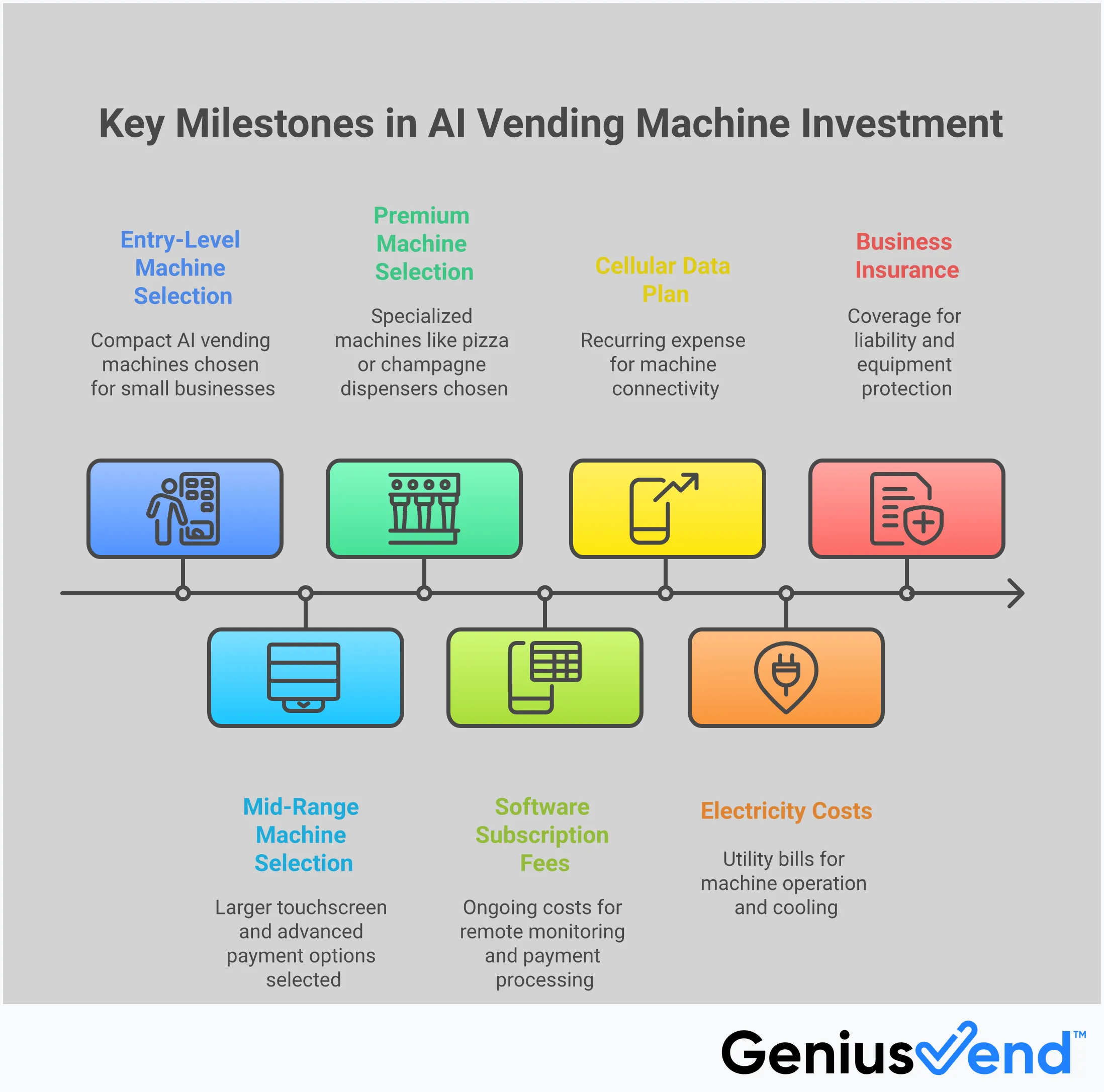
If you're just getting started or working with a smaller budget, an entry-level AI vending machine is a fantastic place to begin. These machines typically cost between $3,000 and $8,000. In this range, you’ll find more compact models or those with the essential AI features, like smart inventory tracking and cashless payment systems. For example, you might find a new "mini-market" style machine for around $4,300. These machines are perfect for entrepreneurs launching their first vending machine business or for companies looking to provide a simple, modern amenity for their employees without a massive upfront investment.
Mid-Range Machines ($8,000-$15,000)
For those with a bit more to invest, mid-range machines offer a significant step up in features and capacity. Priced generally between $8,000 and $15,000, these models often include larger touchscreens, more advanced product recognition cameras, and a wider variety of cashless payment options. This tier is ideal for established vending operators looking to upgrade their routes with smarter technology or for businesses in high-traffic locations that want to provide a more engaging and seamless customer experience. The investment here gets you more robust hardware and software, leading to better sales data and more efficient operations.
Premium Machines ($15,000+)
At the top end of the market, you'll find premium and specialized AI vending machines, with prices starting at $15,000 and going much higher. This category includes large-capacity machines, smart freezers, or those designed for unique, high-value products. For instance, some specialty machines that dispense items like fresh pizza or even champagne can cost anywhere from $38,000 to over $100,000. These high-end solutions are built for specific niche markets or luxury settings where the goal is to offer a truly unique retail experience. While the price is higher, these machines deliver unparalleled technology and can become a major attraction in their own right.
What Factors Influence the Price?
When you start shopping for an AI vending machine, you’ll notice that prices can vary quite a bit. This isn't random; the cost is tied directly to the machine's capabilities and features. Think of it like buying a car—the base model will get you from point A to point B, but adding features like a better engine, advanced tech, and more space will increase the price. Understanding what drives the cost will help you choose a machine that fits both your budget and your business goals. From the core AI technology that enables the "grab and go" experience to the machine’s physical size and the software that lets you run your business from your phone, let’s break down the key factors that determine the final price tag.
AI and Camera Technology
The "genius" part of a smart vending machine is its advanced AI and camera system. This is the technology that allows a customer to simply open the door, grab what they want, and walk away. The machine uses cameras to "see" and identify which products were taken, charging the customer automatically. More sophisticated AI technology means faster, more accurate transactions and a smoother customer experience. This core feature is often the biggest price driver. A machine with a highly reliable recognition system prevents theft and mischarges, making it a worthwhile investment for ensuring both customer trust and accurate sales data.
Payment Options
Gone are the days of digging for exact change. Modern customers expect convenient payment methods, and AI vending machines deliver. The ability to accept a wide range of cashless payments is a major factor in the machine's cost. A unit equipped to handle credit cards, debit cards, and mobile payments like Apple Pay and Google Pay requires more complex hardware and software. While this adds to the upfront cost, offering flexible payment options is essential for maximizing sales. A machine that makes it easy for people to buy is a machine that will make you more money.
Machine Size and Capacity
Just like with traditional models, the physical size of an AI vending machine directly impacts its price. A larger machine simply costs more to build, ship, and install. The key benefit, however, is its increased capacity. A high-capacity smart cooler or freezer can hold a wider variety of products and serve more customers before needing a restock. This is especially important for high-traffic locations where you want to minimize service trips. While a larger machine has a higher initial price, its ability to hold more inventory can lead to greater sales volume and operational efficiency over time.
Remote Management Software
One of the most powerful features of an AI vending machine is the ability to manage it from anywhere. This is all thanks to sophisticated remote management software. This software gives you a real-time look at your sales, tells you exactly what’s in stock, and even helps you plan your restocking routes. You can monitor your entire business from a simple app on your phone. This level of control and data access is a game-changer for operators, saving countless hours of manual work. The software and the hardware needed to support it contribute to the machine's price, but the long-term savings in time and fuel are substantial.
Brand and Build Quality
Finally, the brand's reputation and the machine's physical construction play a significant role in its cost. Established brands with a proven track record of reliability and excellent customer support often come with a higher price tag. You're paying for peace of mind and a quality product. The build quality is also crucial. A machine made with durable materials is built to withstand constant use in busy environments like offices, gyms, or schools. Investing in a well-built machine from a reputable brand means fewer maintenance headaches and a longer lifespan for your equipment, protecting your investment for years to come.
Exploring the Types of AI Vending Machines
Once you start looking into AI vending machines, you'll quickly see they aren't a one-size-fits-all solution. The market is filled with different types of machines, each designed for specific products, locations, and customer needs. Think about what you want to sell and where you plan to place your machine. Are you catering to a health-conscious gym crowd that wants cold protein drinks, or an office that needs a mix of snacks and frozen lunches?
Understanding the main categories will help you narrow down your options and find the perfect fit for your business goals. From sleek glass-front coolers to versatile combo units and even compact desktop models, there’s a smart machine built for almost any scenario. Let's walk through the most common types you'll encounter and what makes each one unique. This will give you a clearer picture of the landscape and help you match a machine's capabilities to your vision.
AI-Powered Smart Coolers
AI-powered smart coolers are the modern answer to the classic drink machine. These units are designed to vend cold beverages, fresh salads, yogurts, and other refrigerated items. They use AI not just to track what’s taken, but also to monitor temperature and optimize inventory based on what’s selling. Prices can range from about $3,000 for a basic model to over $7,000 for a larger, more advanced unit like the Smart Cooler 1200. These are perfect for high-traffic locations like gyms, corporate offices, and university campuses where customers want fresh, grab-and-go options. The technology ensures a seamless experience and keeps your product offerings perfectly chilled and managed.
Smart Combo Vending Machines
If you want to offer a little bit of everything, a smart combo vending machine is your best bet. These versatile machines provide a mix of snacks, candies, and drinks all in one unit, making them a complete micro-market solution. Models like the AI Smart Mini-Market Combo often come equipped with large touch screens and multiple payment options, creating a user-friendly experience. With prices typically falling between $4,000 and $5,000, they offer great flexibility for locations like apartment building lobbies, break rooms, and waiting areas where customers appreciate having a variety of choices.
AI-Powered Smart Freezers
Expanding beyond traditional snacks and drinks, AI-powered smart freezers open up a whole new market for vended products. These machines are perfect for selling frozen meals, ice cream, and other frozen treats. The AI technology is crucial here, as it meticulously tracks inventory and sales data to help you stock the right products. A Genius Vend smart freezer, for example, can hold over 330 items, making it a powerhouse for busy locations like hospitals, large office complexes, and residential buildings. This innovation allows you to cater to customers looking for quick, convenient meal solutions any time of day.
Compact Desktop Models
Don't have a lot of floor space? No problem. Compact desktop models offer the full power of AI vending in a smaller package. These units are designed to sit on a countertop, making them ideal for smaller offices, teacher's lounges, or reception areas where a full-size machine wouldn't fit. For instance, the NANO™ desktop cooler can hold around 245 drinks and costs about $3,500. It provides the same "Tap, Grab & Go" convenience as its larger counterparts, giving you a way to serve customers and generate revenue in locations that were previously out of reach for traditional vending.
Don't Forget These Ongoing Costs
The initial price of your AI vending machine is just the first step. To get a clear picture of your potential profit, you need to account for the recurring expenses that come with running a vending business. These ongoing costs are a normal part of operations, and planning for them from the start will set you up for long-term success. Think of it like owning a car—the sticker price is one thing, but gas, insurance, and maintenance are what keep it on the road. Factoring these expenses into your business plan ensures you price your products correctly and accurately project your earnings.
Software and Maintenance Fees
Modern AI vending machines run on sophisticated software that enables features like cashless payments and remote inventory tracking. This technology often comes with a monthly or annual subscription fee. While it’s an added expense, this software is what makes the machine "smart" and can lead to more customers and higher sales. Regular maintenance is also key. Just like any piece of equipment, your machine will need occasional check-ups or repairs to keep it running smoothly. Setting aside a small budget for potential maintenance will help you avoid any unexpected downtime and keep the sales coming in.
Inventory and Restocking
Your biggest and most frequent ongoing cost will be the products you sell. Keeping your machine stocked with popular items is essential for customer satisfaction and steady revenue. The beauty of an AI-powered machine is that you can remotely manage your inventory, so you always know what’s selling and what needs to be replenished. This data-driven approach saves you from making unnecessary trips or buying products that don’t move. Remember to factor in not just the cost of the goods themselves, but also the time and fuel it takes to restock your locations.
Location Fees or Commissions
A great location is key to a profitable vending machine, but it rarely comes for free. Most property owners will require some form of payment for placing your machine in their high-traffic area. This usually takes one of two forms: a flat monthly rental fee or a commission, which is a percentage of your monthly sales. It’s crucial to negotiate these terms upfront and get them in writing. A fair agreement benefits both you and the location owner, creating a solid foundation for a long-term business relationship.
Power and Connectivity
Your vending machine needs to be plugged in 24/7, which means you’ll have an ongoing electricity bill. The exact cost will depend on the machine's size and features. For example, an AI-powered smart cooler or freezer with a powerful cooling system will naturally use more energy than a machine selling only shelf-stable snacks. Beyond power, your smart machine also needs a constant internet connection to process cashless payments and send data to your management app. This usually requires a cellular data plan, which is another small but important monthly expense to add to your budget.
Business Insurance
Protecting your investment is non-negotiable, and that’s where business insurance comes in. A good policy will cover you in several ways. General liability insurance protects you if a customer has a bad experience with a product, while property insurance covers the machine itself against theft, vandalism, or damage. While it might seem like just another bill, having the right business insurance provides peace of mind and financial security. It’s a fundamental cost of doing business that safeguards your hard work and your valuable assets.
AI vs. Traditional: Is the Investment Worth It?
When you’re looking at the price tag of an AI vending machine next to a traditional one, it’s easy to get sticker shock. The initial investment is definitely higher, and that’s a major factor for any business owner or route operator. But the real question isn’t just about the upfront cost—it’s about the return on that investment. Is the advanced technology worth the extra money?
The answer lies in looking at the bigger picture. An AI machine isn't just a box that dispenses snacks; it's a smart retail point that can transform your operations and customer interactions. It offers a completely different experience, both for the person buying a drink and for you, the person running the business. From a frictionless payment process to data that tells you exactly what to stock, these machines are designed to solve the biggest headaches of the traditional vending world. Let's break down how the initial spend on an AI machine can lead to greater efficiency and higher profits over time.
The Upfront Cost
Let's be direct: an AI vending machine costs more than a standard coil machine. You can expect the initial investment for an AI-powered machine to fall somewhere between $3,000 and $7,000, with larger or more advanced models costing even more. When you compare that to a used traditional machine that might only cost a thousand dollars, the difference is significant. This initial outlay is the biggest hurdle for many entrepreneurs. However, it's important to view this cost not as just buying a piece of equipment, but as an investment in a more powerful and efficient business tool that’s built for long-term growth.
Long-Term Profit
This is where that higher upfront cost starts to make sense. The primary goal of any business is to be profitable, and AI vending machines are engineered to maximize revenue. In fact, operators using a Genius Vend machine can see their profits increase by two to three times compared to traditional routes. This isn't just a random fluke; it's the direct result of a better customer experience that encourages more sales, dynamic pricing capabilities, and inventory management that ensures you never miss a sale on a popular item. Over the life of the machine, this substantial increase in revenue can far outweigh the initial price difference.
A Better Customer Experience
Think about the last time you used a traditional vending machine. Did your item get stuck? Did you have to find exact change? AI machines eliminate these frustrations with a simple "Tap, Grab & Go" experience. Customers tap their card or phone, open the door, grab whatever they want, and walk away. The machine’s sensors and cameras figure out what they took and charge them automatically. This seamless process makes buying multiple items effortless, which often leads to larger purchases. A happy customer is more likely to become a repeat customer, turning a one-time sale into a reliable source of income.
Smarter Inventory Management
Guesswork is the enemy of profit. One of the most powerful features of an AI vending machine is its ability to give you real-time inventory data. Instead of driving to a location just to find out a machine is fully stocked, you can check everything from your phone. An operator’s app lets you see exactly what’s selling and what’s not, so you can make data-driven decisions about your product mix. This remote management capability means fewer wasted trips, less time spent on manual tracking, and perfectly stocked machines that are always ready to make a sale.
Top AI Vending Machine Brands to Consider
Once you start shopping for an AI vending machine, you'll notice a few key players in the market. Each brand offers a slightly different approach to smart vending, so it’s helpful to understand what makes them unique. Whether you’re looking for an all-in-one machine and software package or a technology provider to upgrade existing hardware, these are the names you’re likely to come across. Getting familiar with them will help you make a more informed decision for your business.
Genius Vend
We specialize in AI-powered vending machines designed to make your life easier and your business more profitable. Our core promise is the "Tap, Grab & Go" experience, which eliminates the clunky interface of traditional machines. Customers simply tap their card, open the door, take what they want, and walk away. Our AI and camera systems handle the rest. We offer a full lineup of smart coolers and freezers that can function as combo machines, giving you total flexibility. Plus, every machine comes with access to our free operator's app, so you can manage inventory, check sales, and monitor performance from anywhere.
Haha Vending
Based in Dallas, Texas, Haha Vending is another company focused on bringing AI technology to the vending space. They offer a similar product lineup, including smart coolers and freezers that use artificial intelligence to track purchases. Their machines are designed to provide a modern, frictionless experience for customers, moving away from the traditional coil-and-drop system. As you explore their offerings, you'll find they also emphasize the convenience and efficiency that AI brings to vending operators, making them a notable brand to consider in your search.
Cantaloupe Systems
You might run into Cantaloupe as you research smart vending. They are a major technology provider in the unattended retail industry. While they offer their own hardware, they are widely known for their comprehensive platform that integrates cashless payments, real-time inventory tracking, and management software. Many vending operators use Cantaloupe's solutions to power their routes, whether they're using AI machines or retrofitted traditional ones. They are a key player in the backend technology that makes the entire smart vending ecosystem run smoothly.
Features That Justify the Price Tag
When you see the price of an AI machine, it’s easy to wonder if it’s worth it. But the investment goes far beyond just a new piece of hardware. These machines are packed with features that create serious operational efficiency. Real-time inventory tracking means you’ll never make a wasted trip to restock an empty machine or carry products that aren’t selling. The seamless cashless payment options cater to modern consumers and can lead to higher sales. It’s a shift from simply selling products to managing a smarter, more data-driven retail business.
Related Articles
- Cost to Buy a Vending Machine: 2025 Pricing Guide
- How Much Does It Cost to Buy a Vending Machine?
- How Much to Buy a Vending Machine? A Cost Breakdown
- Where Can I Buy a Vending Machine? A 2025 Guide
Frequently Asked Questions
How does the "Tap, Grab & Go" system actually prevent theft? This is a great question because the technology is what makes these machines so effective. The system uses a combination of cameras and sensors to create a virtual shopping cart for each customer. When someone taps their card or phone, the machine links that payment method to them. As they take items, the cameras identify exactly what was removed from the shelf. Once the door is closed, the machine automatically charges the card on file for the items taken. It’s a secure and accurate process that ensures you get paid for every product.
Besides the machine, what other costs should I budget for when starting out? The machine itself is the biggest initial investment, but you'll want to plan for a few other key expenses. First is your initial inventory—all the drinks and snacks to fill the machine. You'll also need to account for any location fees or commissions, which you'll negotiate with the property owner. Finally, it's wise to set up business insurance to protect your new asset. Thinking about these costs from the beginning helps you build a solid financial plan for your business.
Can I really make 2-3x more profit than with a traditional machine? Yes, and it comes down to a few key factors. The seamless customer experience is a huge part of it. Since people can grab multiple items easily without worrying about product jams or finding enough cash, they tend to buy more per transaction. Plus, the remote management software gives you real-time sales data. This means you can stock your machine with only the best-selling products and avoid wasting money on items that don't move, ensuring every inch of your machine is working to make you money.
Do I need a special kind of location for an AI vending machine? AI machines perform best in environments where there's a sense of community or trust, like office break rooms, apartment building lounges, gyms, or university dorms. Because the system is so open and convenient, these controlled locations are ideal. The goal is to place the machine where people will see it regularly and appreciate the quick, hassle-free access to snacks, drinks, or meals.
How much technical skill do I need to operate one of these machines? You don't need to be a tech expert at all. The remote management software is designed to be incredibly user-friendly and runs from an app on your smartphone. If you're comfortable using apps to order food or check your email, you have all the skills you need. The app shows you your sales, tells you what's running low, and helps you manage your business from anywhere, making the whole process simple and straightforward.