

As a vending operator, you’re likely managing a diverse route with different types of machines. You might have brand-new smart coolers designed for cashless "Tap, Grab & Go" convenience right next to a classic snack machine that still relies heavily on cash. While the future is cashless, your current profits depend on every machine working flawlessly. A faulty vending machine bill acceptor on just one of your units can create service calls and eat into your bottom line. This article is for the modern operator who manages it all. We’ll walk through the essentials of keeping your cash-based machines running smoothly so your entire route stays profitable.
Key Takeaways
- Invest in Security and Compatibility: A bill acceptor is your first line of defense against fake currency. When choosing a model, prioritize strong counterfeit detection and double-check that its voltage and physical design are a perfect match for your machine to ensure smooth operation.
- Proactive Maintenance Prevents Lost Sales: Most bill acceptor errors, like jams or rejected bills, are caused by a simple buildup of dust and ink residue. A quick, regular cleaning of the sensors and rollers is the most effective way to keep your machine running reliably and prevent customer frustration.
- Shop Smart for Replacements: You can find great value in both new and professionally refurbished bill acceptors, but always buy from a reputable seller that offers a warranty. As you upgrade, ensure your chosen model integrates seamlessly with a cashless payment system to provide every customer with a convenient way to pay.
What is a Vending Machine Bill Acceptor?
Think of the bill acceptor as the gatekeeper of your vending machine's cash flow. It’s the component that determines whether a customer's dollar bill is real or fake, valid or damaged. A high-quality bill acceptor is one of your most important assets, ensuring every transaction is quick, accurate, and secure. When it works flawlessly, customers get their snacks without a hitch, and you get paid. When it doesn't, it can lead to frustration, lost sales, and service calls that eat into your profits.
While modern machines like those from Genius Vend offer a "Tap, Grab & Go" experience, many locations still rely on cash transactions, making this component as relevant as ever. Understanding how a bill acceptor works is crucial for any operator. This device is more than just a slot for money; it's a sophisticated piece of technology designed to scan, validate, and secure currency in a matter of seconds. It uses a combination of sensors and software to protect your revenue and keep your machine running smoothly. From the moment a bill is inserted, the acceptor begins a complex process to verify its authenticity before stacking it safely away.
How It Works: Key Parts & The Validation Process
When a customer inserts a dollar bill, it’s pulled along a pathway lined with advanced sensors. These sensors are the heart of the validation process. They use a combination of light—including infrared and ultraviolet—to scan the bill. The machine reads the unique magnetic and optical properties of the ink and paper, essentially checking the bill’s "fingerprint." This data is instantly compared against a database of authentic currency profiles stored in the acceptor's software. If everything matches, the bill is accepted and neatly stacked in the cash box. If not, it’s rejected and returned to the customer. This entire currency authentication happens in just a few seconds.
Spotting Fakes: How It Detects Counterfeit Bills
Bill acceptors are your first line of defense against counterfeit money. They use several clever methods to spot a fake. One key technique is fluorescence detection. Real U.S. currency is printed on a cotton-based blend that doesn't glow much under ultraviolet (UV) light. However, many counterfeit bills are made with standard paper containing bleaching agents, which cause them to glow brightly under a UV lamp. The acceptor’s sensors can immediately spot this difference. Additionally, they check for the magnetic properties of the ink and the specific way the bill reflects infrared light—features that are incredibly difficult for counterfeiters to replicate. This multi-layered security ensures the cash in your machine is legitimate.
Keeping the Line Moving: What Affects Transaction Speed
A slow or finicky bill acceptor can frustrate customers and cost you sales. The biggest culprit affecting transaction speed is often simple dirt and grime. Over time, dust, lint from pockets, and even ink residue from bills can build up on the internal sensors and rollers. This buildup can interfere with the sensors' ability to read a bill correctly, causing it to be rejected or processed slowly. That’s why performing regular cleaning is one of the most important maintenance tasks you can do. A clean bill path ensures the machine can quickly and accurately validate currency, keeping the line moving and your customers happy.
Key Features to Look for in a Bill Acceptor
Choosing the right bill acceptor, or validator, is about more than just finding one that fits. The right model can save you from headaches like bill jams, counterfeit cash, and frustrated customers. When you're shopping for a replacement or upgrading your machine, focusing on a few key features will ensure you get a reliable unit that protects your profits and keeps your machine running smoothly. Think of it as an investment in your business's efficiency and security.
Check for Compatibility: Model & Voltage
Before you buy anything, the first step is to make sure the new bill acceptor will actually work with your machine. The easiest way to do this is to check the label on your current validator to find its make and model number. You also need to confirm the voltage your machine requires, which is typically 110V or 24V. Installing a validator with the wrong voltage can damage both the acceptor and your vending machine. If the label is missing or unreadable, many vending parts suppliers offer guides to help you identify what you need based on your machine's model.
Prioritize Security & Counterfeit Detection
A bill acceptor’s most important job is to verify that the cash it accepts is real. Modern validators use a combination of optical and magnetic sensors to check for security features in banknotes, ensuring you don't lose money to fakes. A high-quality acceptor provides a crucial line of defense for your revenue. When comparing models, look for those with a high acceptance rate for real bills and advanced currency authentication technology. This protects your bottom line and gives you peace of mind that every transaction is secure.
Consider Maintenance & Ease of Cleaning
Over time, dust and ink residue from bills can build up on the acceptor's sensors, leading to slower transactions or rejected bills. To keep your machine running efficiently, look for a bill acceptor that is easy to open and clean. Some models are designed with tool-free access, allowing you to quickly clear out debris without a service call. Regular, simple maintenance can prevent most common performance issues and extend the life of your equipment. Choosing a model that’s simple to care for will save you time and keep your customers happy.
Look for Flexible Programming Options
Currency designs change, and you’ll want a bill acceptor that can keep up without needing to be replaced. Look for models with flexible programming options that allow you to easily update the firmware to accept new bills. Some validators can be updated using a flash drive or a handheld programming device. This flexibility is also helpful for troubleshooting. An acceptor with clear diagnostic features and accessible support can help you resolve issues like jams or sensor errors on your own, getting your machine back in service faster.
Comparing the Best Bill Acceptor Brands
Once you know what features you need, it's time to look at the brands themselves. The market has a few key players, and understanding their strengths will help you make a smart investment for your machines. Whether you’re buying new or refurbished, choosing a reliable brand is the first step toward fewer service calls and happier customers. Let’s break down the top brands, the pros and cons of new versus used, and what really matters for performance.
Bill Acceptors That Work With Genius Vend
Our Genius Vend smart coolers are designed for a modern, cashless "Tap, Grab & Go" experience, so a traditional bill acceptor isn't part of the standard setup. We focus on providing the most seamless, convenient payment process for your customers. However, we know many operators run a diverse route with different types of machines.
If you're equipping other machines in your fleet, choosing the right bill acceptor is crucial. When you're evaluating options, prioritize reliability, security, and overall vending machine compatibility. You want a validator that works seamlessly with your machine's existing systems and minimizes customer frustration. A reliable bill acceptor is a component that should work quietly in the background, keeping your sales consistent.
Top Brands at a Glance: CoinCo, Conlux & MEI
When you start shopping, you'll see a few names pop up again and again: CoinCo, Conlux, and MEI. These are the heavy hitters in the industry, each with a reputation for quality. MEI (now part of Crane Payment Innovations or CPI) is often seen as the market leader, known for its incredibly reliable and durable validators. CoinCo is another trusted brand that offers a range of solid, dependable models. Conlux, now also part of CPI, is a popular choice, especially for its value and performance. When browsing for bill acceptors, you'll also need to match the power type—typically 24V, 34V, or 110V—to your specific vending machine.
New vs. Refurbished: Which is Right for You?
Should you buy new or save some cash with a refurbished model? A new bill acceptor gives you the latest anti-counterfeiting technology and a full manufacturer's warranty, which is great for peace of mind. On the other hand, a refurbished unit can save you a significant amount of money—a huge plus when you're outfitting multiple machines. Don't let the "refurbished" label scare you. Reputable dealers put these units through a rigorous process where they are taken apart, cleaned, and have worn parts like belts replaced. These rebuilt bill validators are fully tested to ensure they work like new, offering a reliable, budget-friendly alternative for your business.
Understanding Key Performance Differences
Beyond the brand name, what really separates a great bill acceptor from a frustrating one is its day-to-day performance. Look at the acceptance rate—you want a model that accepts crisp and even slightly worn bills on the first try. Speed is another factor; a slow validator can create lines and deter customers. But performance isn't just about the hardware you buy; it's also about how you maintain it. To keep your acceptor running smoothly, regular cleaning is a must. Over time, dust and banknote ink can build up on the sensors, affecting the machine's speed and accuracy. A simple cleaning routine can make a huge difference in the mechanics of bill acceptors and keep your sales flowing.
How to Troubleshoot Common Bill Acceptor Issues
A malfunctioning bill acceptor is more than just a minor annoyance—it’s a direct hit to your sales and customer trust. When a customer’s crisp dollar bill is repeatedly rejected, they’re likely to walk away, and you’ve lost a sale. Fortunately, many common issues can be fixed with a little troubleshooting. Before you call for a replacement, let’s walk through a few steps you can take to get your machine back up and running smoothly.
Fixing Bill Jams and Feeding Problems
Bill jams are one of the most frequent headaches for vending operators. They’re often caused by something simple, like a customer trying to use a wrinkled, torn, or wet bill. The first step is to open the unit and carefully remove any stuck currency. Check the bill path for any foreign objects like paper clips or coins that might be causing an obstruction. Over time, dust and ink from banknotes can build up on the internal rollers, affecting the machine's ability to feed bills smoothly. Wiping down the rollers and ensuring they are clean and free of residue can often solve persistent feeding problems and keep transactions quick.
Solving Sensor and Bill Recognition Errors
If your machine is rejecting valid bills, the issue likely lies with the optical sensors. Bill acceptors use these sensors to scan an inserted bill and compare it to stored information of what real currency looks like. If the sensors are dirty, they can’t get a clear reading, leading to false rejections. Gently wiping the sensors with a soft, lint-free cloth can often resolve the problem. In some cases, the issue might be software-related. If you’ve recently started seeing new bill designs in circulation, your acceptor’s firmware may need an update to recognize them. Check with your manufacturer for any available software updates to keep your validator’s library current.
Your Guide to Cleaning & Regular Maintenance
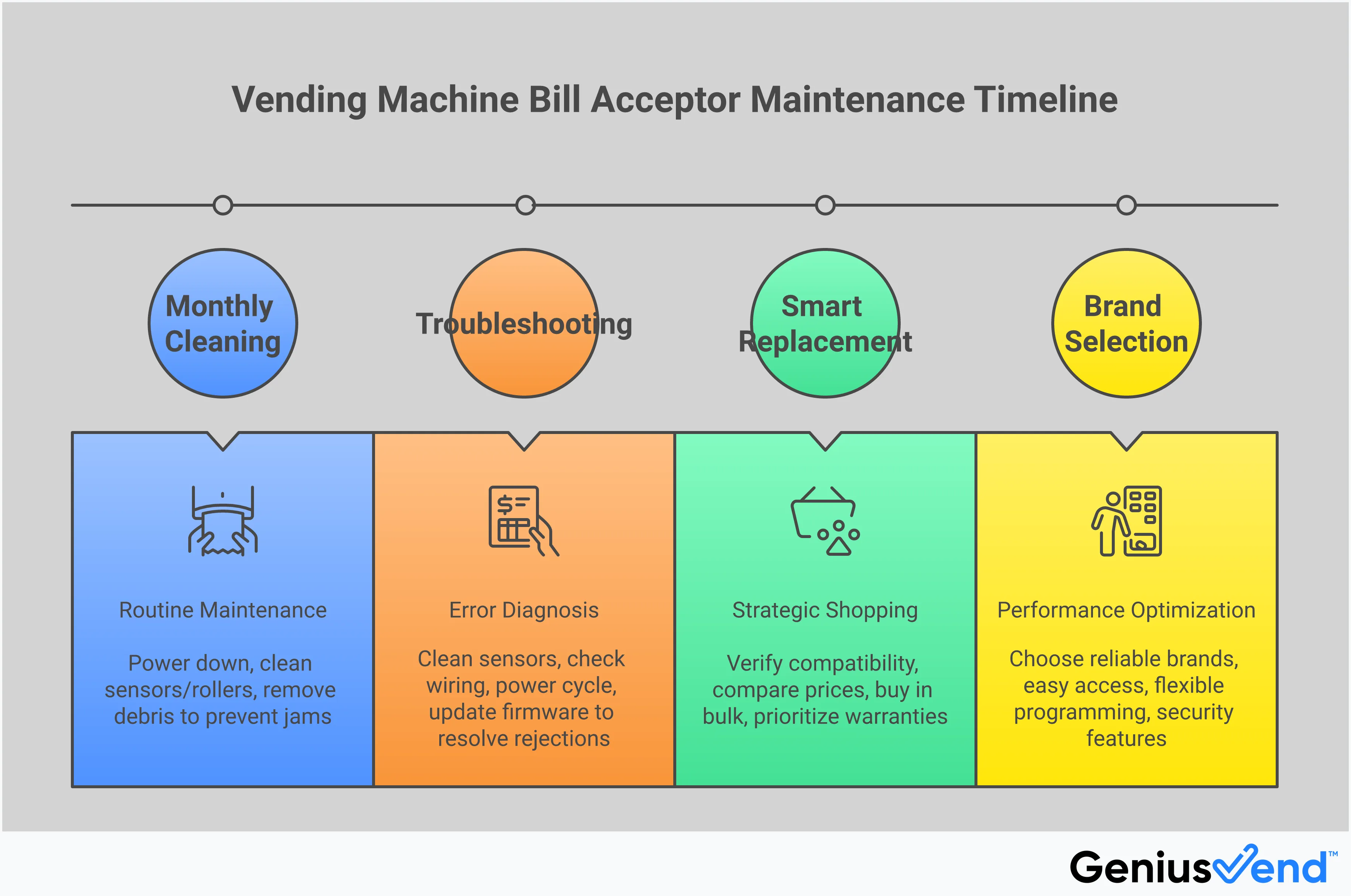
Preventative maintenance is the best way to avoid future issues. Regular cleaning is essential to keep your bill acceptors working their best. At least once a month, you should power down the machine and perform a quick cleaning. Use a can of compressed air to blow out any dust or debris from the bill path. Then, take a soft, dry cloth—or one lightly dampened with a mild cleaner like isopropyl alcohol—and gently wipe down the pulleys and rollers. This simple routine takes only a few minutes but can dramatically reduce the frequency of bill jams and recognition errors, saving you time and money in the long run.
Troubleshooting Power and Programming Glitches
Sometimes, the problem isn’t mechanical at all. If your bill acceptor is completely unresponsive, start by checking the power source. Ensure the wiring harness is securely connected to both the acceptor and the vending machine's mainboard. A loose connection is a common culprit. If the power is fine, the unit might have a programming glitch. A simple power cycle—unplugging the machine for a minute and then plugging it back in—can sometimes reset the acceptor and clear the error. For more complex issues, you may need to consult technical documentation for your specific model, as some units have diagnostic codes or reset procedures that can help pinpoint the problem.
Where to Find the Best Deals on Replacements
When your bill acceptor starts acting up, a quick replacement can save you from lost sales and customer frustration. But you don't have to pay top dollar to get your machine back in business. Knowing where to look can help you find quality parts without breaking the bank. From online marketplaces to authorized dealers, there are plenty of options for finding the right replacement at the right price. Just remember to factor in shipping costs, warranties, and compatibility to make sure you’re getting the best overall value for your vending route.
Find Deals at Online Marketplaces & Authorized Dealers
Online marketplaces are a great starting point for finding a wide variety of bill acceptors at competitive prices. Sites like eBay are treasure troves where you can often find specific models, like a Coinco BA30B Dollar Bill Acceptor, from multiple sellers. This lets you compare prices and conditions side-by-side. You can find both new and refurbished units, giving you flexibility based on your budget. Searching for a general term like "vending bill acceptor" can also reveal exclusive deals and sellers who offer fast shipping, which is a huge plus when you need a quick fix. Don't forget to check out authorized dealers who specialize in vending parts for reliable, high-quality options.
How to Compare Prices & Save on Bulk Orders
If you operate multiple machines, buying bill acceptors one at a time can be inefficient and costly. This is where bulk ordering comes in handy. Platforms like Amazon and specialized vending suppliers often provide discounts when you purchase multiple units at once. Before you buy, take a few minutes to compare prices across different sites. Look at the per-unit cost, shipping fees, and any available bulk discounts. Planning ahead and buying several replacements at once means you’ll always have a spare on hand for a quick swap, minimizing your machine’s downtime and saving you money in the long run.
Don't Forget the Warranty & Return Policy
Whether you're buying new or refurbished, the warranty and return policy are your safety nets. A good warranty protects you if the part fails prematurely, saving you the headache and cost of another replacement. Many reputable suppliers offer rebuilt bill validators that come with a warranty, giving you peace of mind at a lower price point. Before you click "buy," always read the fine print. Understand the length of the warranty, what it covers, and what the return process looks like. This simple step can save you from getting stuck with a faulty part or the wrong model for your machine.
Ensuring Cashless System Compatibility
In a world of tap-and-go payments, cash is no longer king. While a bill acceptor is essential for taking dollars, it’s just one piece of the modern payment puzzle. Your machines need to cater to customers who prefer paying with cards or mobile wallets. That's why it's so important to ensure your bill acceptor is compatible with a cashless payment system. These systems work alongside your bill acceptor to process credit, debit, Apple Pay, and Google Pay. When upgrading or replacing your acceptor, confirm it can integrate smoothly with your card reader to provide a seamless payment experience for every customer.
Related Articles
- Vending Machine for Sale: A Buyer's Guide for 2025
- Vending Machine with Touch Screen: Buyer's Guide
- How to Buy a Vending Machine: A Starter Guide
- Vending Machine Best Buy: The Ultimate 2025 Guide
- Best Card Reader for Vending Machine (2025 Guide)
Frequently Asked Questions
How often should I actually clean my bill acceptor? A quick cleaning once a month can save you from a lot of future headaches. Think of it as preventative care. Use a can of compressed air to clear out dust and a soft cloth to wipe down the sensors and rollers. This simple five-minute task dramatically reduces bill jams and false rejections, keeping your machine running smoothly and preventing frustrating service calls down the road.
My machine keeps rejecting perfectly good bills. Do I need a new one? Not necessarily. Before you start shopping for a replacement, check the simple things first. More often than not, the problem is just dirty sensors. Give the bill path a thorough cleaning. If that doesn't work, check to see if the acceptor's software needs an update, especially if new currency designs have been released. A replacement should be your last resort after you've ruled out these common and easy-to-fix issues.
Is it really safe to buy a refurbished bill acceptor? Absolutely, as long as you buy from a reputable dealer. A properly refurbished unit isn't just a used part; it's been completely disassembled, cleaned, and rebuilt with new parts for any components that showed wear. These validators are fully tested to ensure they perform just like new. For operators looking to manage costs without sacrificing quality, a refurbished acceptor with a warranty is a smart and reliable choice.
What do I do if my acceptor stops taking a certain type of bill, like the new $20s? This is almost always a software issue, not a hardware failure. Your bill acceptor relies on firmware to recognize what real currency looks like. When new bills are introduced, the acceptor needs to be taught how to identify them. You can typically solve this by getting a firmware update from the manufacturer. The process is usually straightforward and involves a simple programming tool or a flash drive.
If most people pay with cards, do I still need a bill acceptor? While cashless payments are incredibly popular, cash is still a reality. Removing the option to pay with bills can mean turning away customers who prefer cash or don't have another way to pay. The most successful vending setups offer flexibility. Having both a reliable bill acceptor and a modern cashless reader ensures you can make a sale to every single person who walks up to your machine, no matter how they want to pay.