

We’ve all felt that flash of panic: a dead phone at the airport, a forgotten charger before a big meeting, or a broken pair of headphones at the gym. In those moments, convenience is everything. An electronics vending machine is the modern solution, offering instant access to the tech gadgets we can’t live without. For entrepreneurs and business owners, this represents a powerful opportunity to meet a constant consumer need. These automated retail hubs can be placed in high-traffic locations to generate revenue around the clock, providing a valuable service while building a profitable business. This guide will walk you through how these smart machines work and how you can get started.
Key Takeaways
- Modern Tech Leads to Smarter Management: The best electronics vending machines offer more than just products; they provide data. Features like real-time inventory tracking and remote management are essential for running an efficient, profitable business without the guesswork of traditional vending.
- Location and Product Curation Are Everything: Your machine's success hinges on placing it in a high-traffic area and stocking it with products that solve an immediate need for that specific audience. Think like your customer: a traveler needs a charger, while an office worker might need a mouse.
- View Your Machine as a Long-Term Investment: Look beyond the initial purchase price and consider the whole financial picture. Flexible options like leasing can lower the entry barrier, while the machine's ability to generate 24/7 revenue and reduce operational overhead makes it a powerful business asset.
What is an Electronics Vending Machine?
Think beyond chips and soda. An electronics vending machine is a self-service kiosk that dispenses technology products instead of snacks. These machines offer a super convenient way for people to grab gadgets and accessories when they need them most—whether it's a phone charger at the airport, headphones at the gym, or even a laptop from an IT department. They are essentially automated retail stores packed into a secure, compact unit.
For entrepreneurs and business owners, these machines represent a modern way to meet consumer demand for instant gratification. You can place them in high-traffic locations like hotels, college campuses, and corporate offices to sell products 24/7 without the overhead of a traditional storefront. For companies, they can also serve as an internal resource, providing employees with the tech they need to do their jobs efficiently. It’s a simple concept that uses smart technology to solve a common problem: getting the right tech into people's hands, right away.
How Smart Vending Technology Works
The magic behind these machines lies in their advanced technology, which ensures every transaction is smooth and secure. Unlike old-school machines where items might get stuck, smart vending uses a combination of sensors, cameras, and secure payment systems to manage the entire process. A customer simply taps their card or phone to pay, the door unlocks, and they can grab their chosen item.
Genius Vend’s "Tap, Grab & Go" system is a perfect example. AI-powered cameras and sensors identify which product is taken, and the customer’s account is charged automatically after they close the door. This creates a seamless, trust-based experience that feels less like a clunky machine and more like an open-shelf cooler. This smart vending technology is what makes the process reliable for both you and your customers.
Essential Features and Components
What really sets an electronics vending machine apart are the features designed to make your life as an operator easier. These aren't just boxes that hold products; they are powerful business tools. The most critical feature is real-time inventory management. You can see exactly what’s been sold and what needs restocking directly from your phone, which helps you prevent lost sales from empty slots and reduces theft.
Another key component is the ability to manage your entire network of machines from a single, central dashboard. You can update prices, run promotions, and monitor sales data remotely without ever having to visit the machine. This level of control allows you to run your business more efficiently, make smarter decisions based on real data, and ultimately, increase your revenue.
What Electronics Can You Sell?
One of the best parts of running an electronics vending business is the flexibility you have with your product selection. Unlike a snack machine with limited options, a smart vending machine from Genius Vend opens up a world of high-margin tech products. The key is to match your inventory to your location and target audience—a machine in an airport will serve different needs than one on a college campus. To get you started, let's look at some of the most popular and profitable categories of electronics you can offer.
Mobile Devices and Accessories
Think about the items people desperately need when they’re on the go: a phone charger when their battery hits 1%, a pair of headphones for an unexpected call, or a memory card for their camera. These are the perfect products for an electronics vending machine. You can stock everything from power banks and charging cables to wireless earbuds and screen protectors. The demand for these items is constant, making them reliable sellers. Because they solve an immediate problem, customers are happy to pay for the convenience. The global mobile accessories market continues to expand, ensuring these products will stay in demand for years to come.
Computing and Gaming Products
Beyond mobile accessories, there's a huge opportunity in computing and gaming gear. In a corporate office or co-working space, items like wireless mice, USB-C hubs, and flash drives can be lifesavers for busy professionals. On a college campus or near an entertainment venue, you can cater to a different crowd with gaming controllers, high-quality headsets, and other peripherals. The gaming industry is massive, and its fans are always looking for the latest accessories to improve their experience. Offering these specialized products can make your machine a go-to destination for tech enthusiasts and professionals alike.
Smart Home and Lifestyle Electronics
Smart home gadgets are no longer just for early adopters; they've become mainstream household items. Your vending machine can make it incredibly easy for people to pick up these popular devices. Think about stocking smart plugs, colorful smart bulbs, or even entry-level smart speakers. These products make fantastic last-minute gifts and are popular impulse buys, especially in high-traffic areas like shopping malls or residential building lobbies. By offering a curated selection of the latest lifestyle tech, you can tap into the rapidly expanding smart home market and provide customers with the connected devices they’re excited to try.
Electronics Vending vs. Traditional Vending
When you hear “vending machine,” you might picture a clunky box that eats your dollar and refuses to drop your snack. But electronics vending machines are in a completely different league. They aren't just dispensers; they're sophisticated, automated retail storefronts that offer a far superior experience for both the operator and the customer. The core difference lies in the smart technology that powers them, transforming everything from how you manage inventory to the security of your high-value products.
Traditional machines are simple and operate offline, meaning you have no idea what’s happening inside until you physically show up to check. This old-school approach leads to wasted trips, stockouts on popular items, and a frustrating user experience. Smart electronics vending, on the other hand, is all about data and connectivity. It gives you a live look into your business from anywhere, automates tedious tasks, and provides a secure, modern shopping experience that customers actually enjoy. This shift isn't just about convenience; it's about running a smarter, more profitable, and scalable business.
Advanced Security
Placing high-value electronics in a glass box can feel like a risky move. Traditional machines often rely on a basic lock and key, which is hardly enough to protect thousands of dollars worth of inventory from theft or vandalism. This is where smart vending machines completely change the game. They are designed from the ground up as secure, self-service kiosks built with advanced technology to safely store and dispense valuable items. Features like reinforced glass, secure electronic locks, and integrated camera systems act as powerful deterrents. Plus, models like Genius Vend's use a "Tap, Grab & Go" system, meaning the door only unlocks after a valid payment method is presented, virtually eliminating casual theft.
Real-Time Inventory Management
With a traditional vending machine, managing your stock is a constant guessing game. You have to drive to each location, manually count what’s left, and hope you brought the right products to restock. Smart vending machines eliminate this guesswork entirely. They use sensors and software to track products in real-time, giving you an accurate, up-to-the-minute view of your inventory from your phone or computer. This means you can see exactly what’s selling and what’s not, prevent lost sales from out-of-stock items, and plan your restocking routes with maximum efficiency. This data-driven approach also helps you refine your product mix to match customer demand, ensuring your machine is always stocked with popular, profitable items.
A Better User Experience
Let’s be honest: using a traditional vending machine can be frustrating. Coils get stuck, the machine doesn't accept your wrinkled dollar bill, and you can forget about using a credit card. Smart vending machines are designed to provide a smooth, modern interactive retail experience. Instead of being simple dispensers, they are becoming service hubs that make buying easy. The quick, self-service process lets customers tap their card or phone, grab what they need, and go. This frictionless transaction, combined with bright touchscreens and reliable dispensing, builds customer trust and encourages them to come back. It transforms a simple purchase into a positive, convenient experience that reflects well on your business.
Exploring the Top Electronics Vending Brands
When you start looking for an electronics vending machine, you'll find a few key players in the market. The right brand for you depends on your business goals, the technology you need, and the level of support you want. It's not just about the box; it's about the entire system that will power your business. Let's walk through what makes a great machine and how leading brands stack up so you can make a confident choice.
Genius Vend Smart Vending Solutions
Genius Vend is a leader in the smart vending space, and for good reason. Their machines use AI technology to create a seamless "Tap, Grab & Go" experience for customers. For operators, this translates into serious efficiency and higher profits. In fact, many operators report that replacing a traditional machine with a Genius Vend model can increase revenue by 2-3 times. Their lineup includes various sizes of AI-powered smart coolers and even freezers, all featuring customizable shelving. This flexibility means you can easily stock everything from small accessories like charging cables to larger items like headphones, all in the same machine.
How Other Brands Compare
While other brands offer electronics vending, many still rely on older, traditional technology. These machines often use coil or locker systems that can be restrictive and prone to errors. They typically lack the smart features that define a modern vending experience, like real-time inventory tracking or a frictionless checkout process. Without AI, you're left guessing about stock levels and sales data until you physically visit the machine. This is the key difference: smart vending provides you with the data and tools to manage your business proactively, not reactively.
Key Features to Compare
As you evaluate your options, focus on the technology that will actually help you run a better business. First, consider the level of AI integration. Does the machine automatically track what a customer takes, or does it rely on a more basic system? Second, look at customizability. You need adjustable shelves and the flexibility to sell a wide range of product sizes to meet customer demand. Finally, look for proven revenue potential. A smart machine is an investment, and the provider should be able to show you how their technology helps you earn more from every location.
How Much Does an Electronics Vending Machine Cost?
Figuring out the cost of an electronics vending machine is a key step in planning your business. The final price isn't just a single number; it's an investment that includes the machine itself, plus the ongoing expenses required to keep it running smoothly. The total cost can vary quite a bit depending on the machine's features, whether you decide to buy it outright or lease it, and the products you choose to sell.
To give you a clear picture of what to expect, we’ll break down the three main financial components you need to consider. First, we'll look at the initial purchase price and what drives that number up or down. Then, we'll explore leasing as a flexible alternative to buying. Finally, we'll cover the essential operational costs, like stocking and insurance, that you'll need to factor into your budget for long-term success. Thinking through each of these areas will help you make a smart, informed decision for your business.
Understanding the Purchase Price
The upfront cost of a vending machine can range anywhere from $1,500 to $10,000. A basic, traditional snack machine might fall in the $3,000 to $4,000 range. However, for an electronics vending machine, you’ll likely be looking at the higher end of that spectrum. The price increases with advanced features like secure lockers, large touch screens, and smart technology.
While a higher price tag might seem daunting, machines with modern features like cashless payment systems are a smart investment. In fact, these tech-forward models can lead to increased sales of 20-30% compared to older, cash-only units. Think of it as paying for a better customer experience and a more powerful business tool.
Exploring Leasing Options
If you're not ready to make a large upfront investment, leasing an electronics vending machine is an excellent alternative. Leasing allows you to get a high-quality, modern machine for a manageable monthly payment instead of a significant one-time purchase. This approach is perfect for entrepreneurs who are just starting their vending route or for businesses that want to test a machine in a new location without taking on a major financial risk. By leasing, you can conserve your cash for other essential expenses, like inventory and marketing, while still offering a top-tier vending experience.
Planning for Operational Costs
Once your machine is in place, you’ll need to account for the ongoing operational expenses that keep your business running. The most significant recurring cost will be your inventory. Stocking an electronics machine can cost between $150 and $300 per month, though this will vary based on your product mix and sales volume. You should also budget for business insurance, which typically runs from $200 to $600 annually. Factoring these costs into your financial plan from the start is crucial for accurately projecting your profitability and ensuring your vending business thrives.
The Business Advantages of Electronics Vending
An electronics vending machine is more than just a cool way to sell tech accessories; it’s a strategic business tool. Whether you’re placing a machine in a corporate office to dispense IT equipment or setting one up in a high-traffic public space, the benefits go far beyond the initial sale. These smart machines can fundamentally change how you operate by increasing your revenue potential, streamlining your daily tasks, and giving you more control over your business. It’s about working smarter, not harder, and letting technology handle the heavy lifting.
Generate Revenue 24/7
Unlike a traditional retail store with set hours, an electronics vending machine never sleeps. It’s ready to make a sale 24 hours a day, seven days a week, capturing revenue from late-night travelers, students pulling all-nighters, or employees working unconventional shifts. This constant availability means you’re not missing out on sales just because it’s after 5 p.m. By placing a machine in a strategic location, you can create a consistent and reliable stream of passive income that doesn’t depend on a sales associate being present. It’s the ultimate self-service kiosk, always ready for the next customer.
Improve Operational Efficiency
Think about the time and resources it takes to run a traditional retail operation or manage company assets. Smart vending machines drastically cut down on those operational costs. They reduce the need for dedicated staff to handle sales or distribute items. For companies, this is a huge win for IT departments, who can use the machines to automate the process of giving out and tracking devices like keyboards, mice, and chargers. This frees up your team to focus on more important tasks, making your entire operation more efficient and productive.
Manage Your Business Remotely
One of the most powerful features of a smart vending machine is the ability to manage it from anywhere. With a simple app on your phone, you can get a complete overview of your entire vending operation. Check real-time inventory levels to know exactly when to restock, monitor sales data to see which products are your bestsellers, and adjust pricing on the fly. This level of control means you can manage your business whether you’re at home or on the go. For vending route operators, this technology is essential for scaling your business without being tied to a single location.
How to Choose the Right Machine for Your Business
Choosing the right electronics vending machine is a bit like a puzzle. You need three key pieces to fit together perfectly: the right location, the right products, and the right technology. Getting this combination right is the secret sauce to running a profitable and low-stress vending business. It’s not just about picking a machine that looks good; it’s about selecting a partner for your business that meets the specific demands of your chosen spot and the customers you want to serve.
Think of it this way: a machine stocked with high-end headphones might be a huge hit in an airport terminal but a total flop in a community gym. Likewise, a machine without reliable remote management will create headaches for you as an operator, no matter how great the location is. Before you even look at machine specs, you should have a solid plan. This means understanding your potential customers, what they need, and how technology can make the buying process seamless for them and the management process simple for you. In the following sections, we’ll walk through how to think about each of these pieces so you can build a clear picture of the perfect machine for your goals. We'll cover how to scout the best spots, decide what to sell, and identify the essential tech features you can't live without.
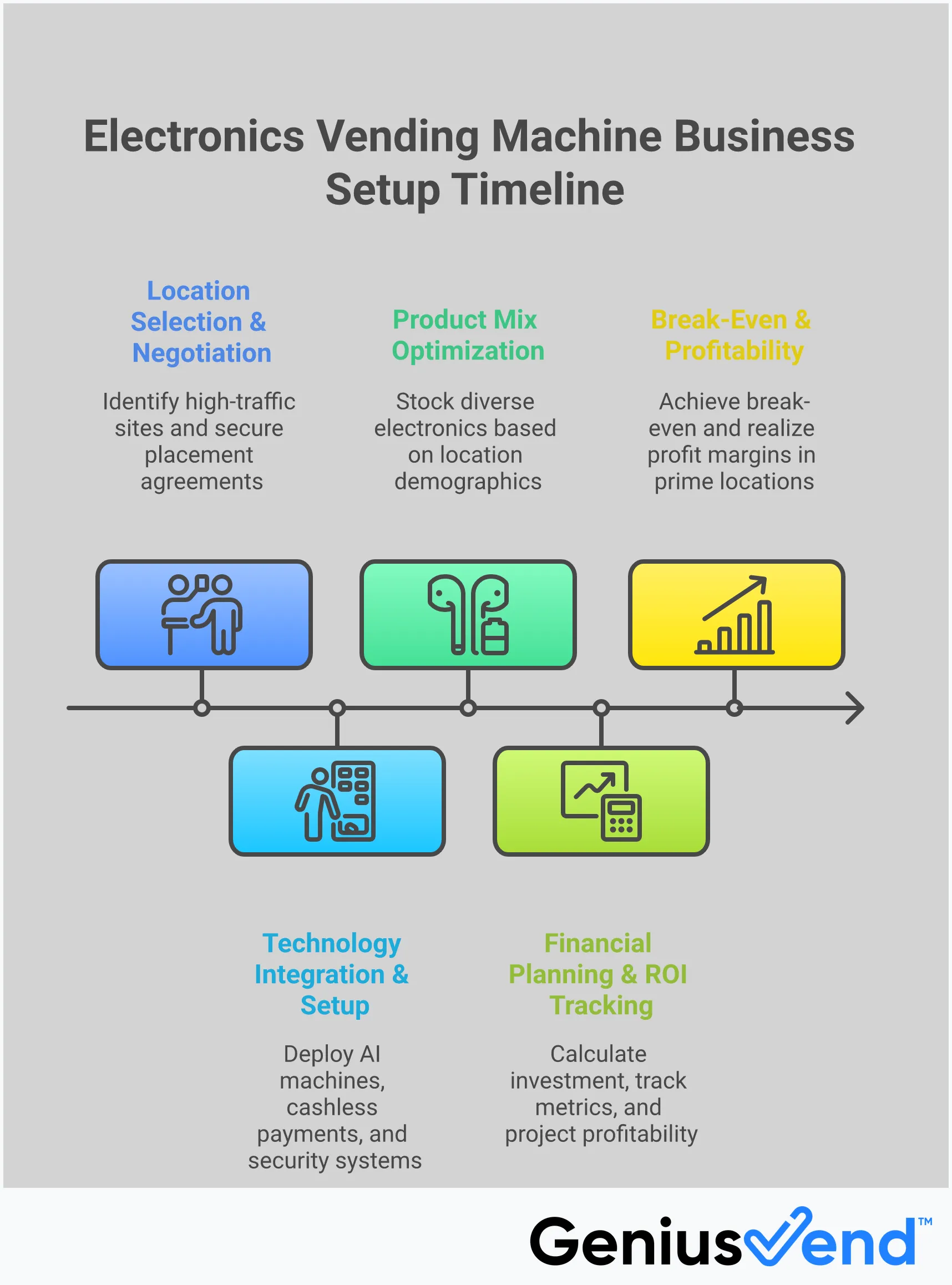
Finding the Perfect Location
Your machine's location is the single most important factor for success. You’re looking for places with high foot traffic and a captive audience that might need electronics on the go. Think about transportation hubs like airports and train stations, where travelers forget chargers or need last-minute headphones. Corporate offices, college campuses, and large hotels are also prime real estate. These spots are full of people who value convenience and might need a new mouse, a charging cable for their phone, or a USB drive for a presentation. The key is to find a location where your products solve an immediate problem.
Curating Your Product Mix
Once you have a location in mind, you can tailor your product selection to the people there. The beauty of a modern electronics vending machine is its flexibility. You can stock anything from phone chargers and power banks to computer accessories, headphones, and even gaming controllers. For a corporate office, you might focus on productivity items like wireless mice and keyboards. In a hotel lobby, travel adapters and portable chargers would be smart choices. Don’t be afraid to start with a core group of popular consumer electronics and use sales data from your machine to refine your offerings over time. The best product mix is one that evolves with your customers' needs.
Evaluating Tech and Support Needs
The technology inside your machine is what turns a simple box into a smart business asset. Look for essential features like real-time inventory tracking, which allows you to see what’s selling and when to restock without visiting the machine. This kind of remote management capability, accessible from your phone, is a game-changer for efficiency. You’ll also want a machine that accepts modern payment methods. Seamless, cashless systems that take credit cards and mobile payments are no longer a nice-to-have; they’re a must. Finally, consider the support you’ll get from the manufacturer. When tech issues arise, you need a reliable partner to help you solve them quickly.
Related Articles
- Where Can I Buy a Vending Machine? A 2025 Guide
- Snack Vending Machine for Sale: A Buyer's Guide
- Refurbished Snack Vending Machines on Sale - AlliedVending™
- Refurbished Combo Vending Machines on Sale - AlliedVending™
Frequently Asked Questions
How does the "Tap, Grab & Go" system actually work? What stops someone from taking everything? It’s a really smart and simple process. A customer first taps their credit card or phone to authorize a payment, which unlocks the door. They can then open it and take whatever they want. AI-powered cameras and sensors inside the machine identify exactly which items are removed. Once the customer closes the door, the system automatically charges their card for only the products they took. Because a valid payment method is required just to open the door, the risk of theft is incredibly low.
I'm new to vending. Is it better to buy or lease a machine to start? Leasing is often a great starting point if you're new to the business or want to test a location without a major upfront cost. It allows you to get a modern, high-tech machine for a manageable monthly payment, which frees up your cash for buying inventory. Buying a machine is a fantastic long-term investment once you're confident in your business plan and location, but leasing is a smart way to reduce your initial financial risk.
How do I figure out the right products to sell in my specific location? The best approach is to think about the people who will be using the machine every day. If you're in a corporate office, focus on items that solve work problems, like wireless mice, USB hubs, and charging cables. In a hotel or airport, travel-focused gadgets like power banks and universal adapters are perfect. Start with a solid mix of essentials and use the machine's sales data to guide you. The remote management app will show you what's selling fast, so you can easily adjust your inventory to match what your customers actually want.
Can I sell larger items like gaming controllers, or am I limited to small accessories? You absolutely can sell larger items. Smart machines like those from Genius Vend are designed with flexible, adjustable shelving. This means you aren't stuck with the fixed coils you see in old snack machines. You can easily change the layout to accommodate a wide variety of product sizes, from small screen protectors to bulkier items in boxes like headphones or gaming controllers, all in the same machine.
How much time does it really take to manage one of these machines? This is where smart technology makes a huge difference. Unlike traditional vending where you're constantly driving to locations to check stock, a smart machine lets you manage everything from your phone. The operator's app gives you real-time inventory data, so you only need to visit the machine for a restock when it's actually necessary. This remote oversight turns what used to be a hands-on job into a much more efficient and scalable business.